Leaving the intensity of Guangzhou behind, we boarded a high-speed train bound for Yangshuo — and in just a couple of hours, everything changed.
At times the train was pushing close to 300 km/h, yet inside it felt effortless. Smooth, quiet, almost disconnected from the speed. It was a fitting transition — from megacity to countryside in what felt like no time at all.
And the first thing we noticed stepping off the train? The air.
It was like perfume. The surrounding trees were in full bloom, and after the density of Guangzhou, it felt fresh, almost surreal — like we’d stepped into a completely different world.
Waiting for us in Yangshuo were
familiar faces — Sacha, Mavis, and their daughter Sammi. From here on,
the trip shifted. It wasn’t just the four of us navigating something new
anymore.
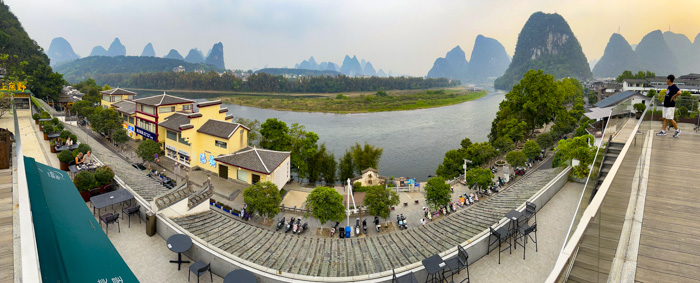
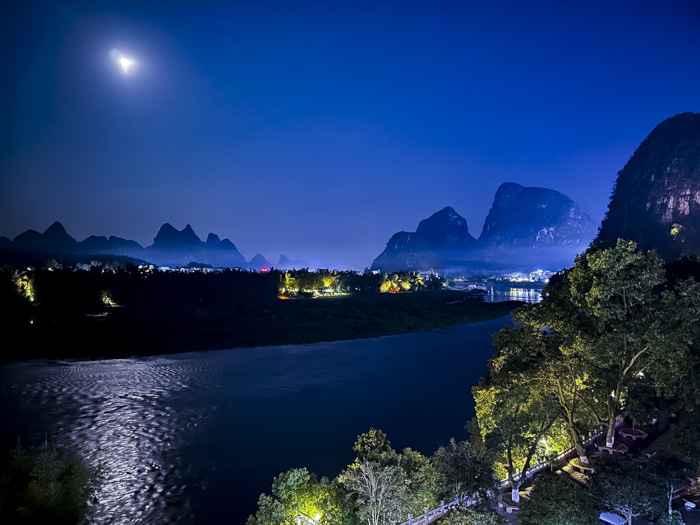
Yangshuo is famous for its karst landscape — those dramatic limestone peaks that rise almost vertically from the ground, scattered across rice fields and rivers like something out of a painting.
The best way to experience it is simply to get out into it.
So that’s what we did.
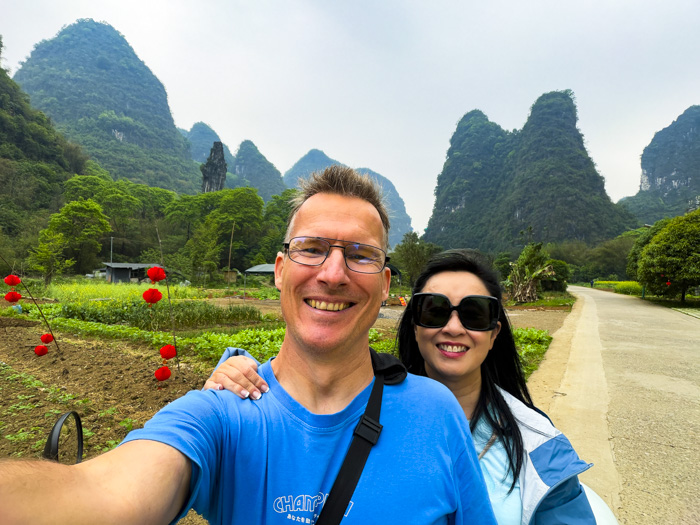
Everyone grabbed bikes — except for Kim and me, who opted for an electric scooter (a wise decision, given the distances and the terrain). With Kim on the back, we set off, following winding roads out of town and into the countryside.
It didn’t take long before we got lost. But in Yangshuo, that’s kind of the point.
We drifted through small villages, along narrow paths, and eventually found ourselves surrounded by rice paddies and towering limestone stacks in every direction. The scenery didn’t feel real — it felt too perfectly composed, like a traditional Chinese landscape painting brought to life.
At one point, we hit complete gridlock in a village — cars, scooters, pedestrians, all tangled together in a standstill. What should have taken minutes stretched out endlessly as we tried to push through.
Thankfully, being on bikes worked in our favour. Slowly, carefully, we squeezed through gaps that cars simply couldn’t.
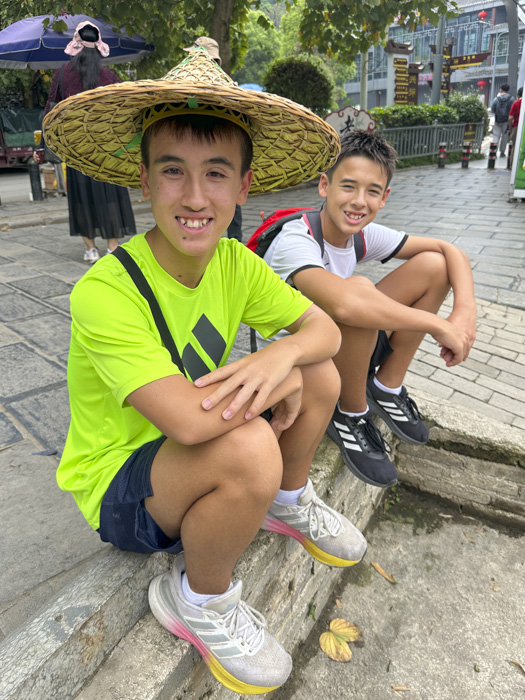
The kids handled it brilliantly. It was a long day, and at times the traffic got chaotic, but they rode with confidence — listening, adapting, and just getting on with it.
There was one moment of tension when Mavis was nudged over by a car in the congestion, but thankfully she came away shaken more than anything else.
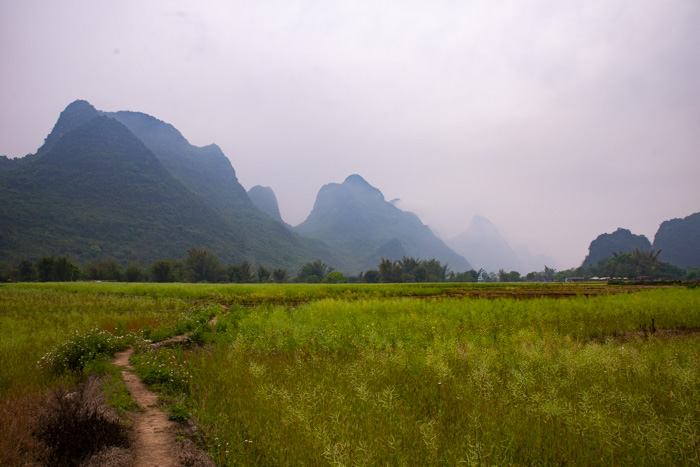
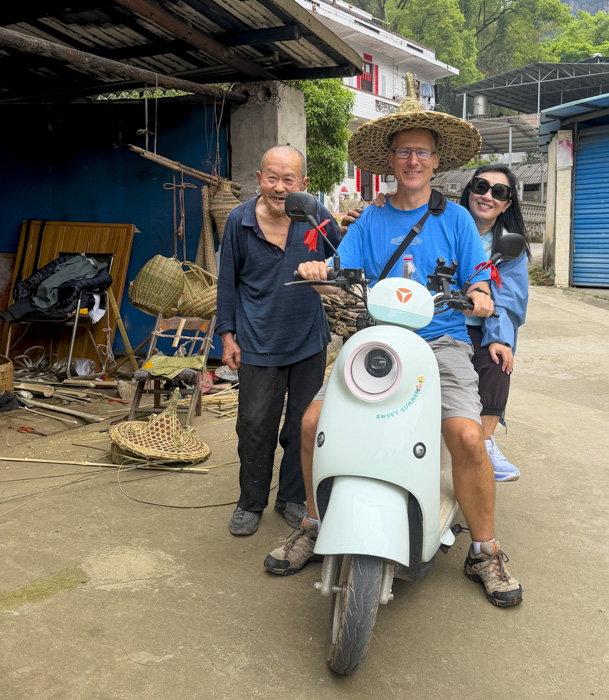
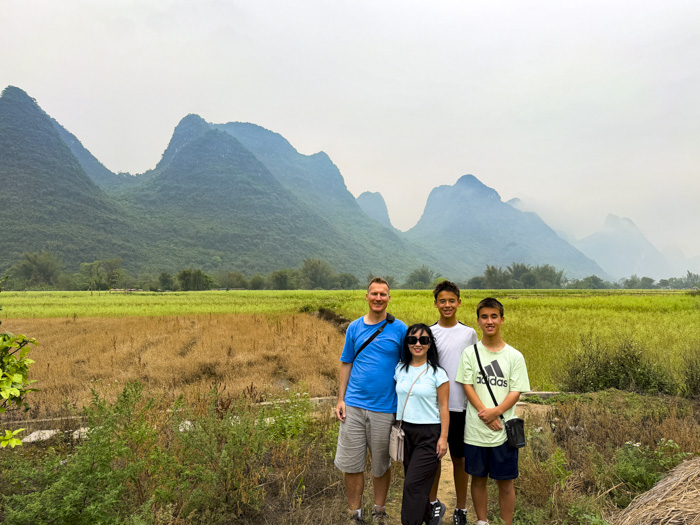
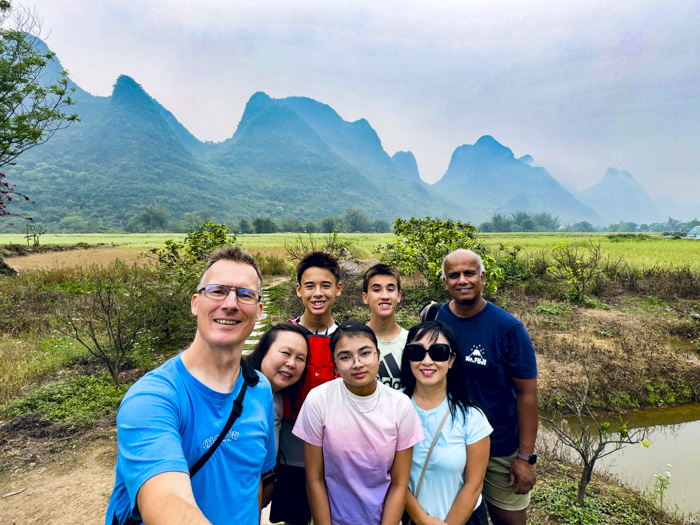
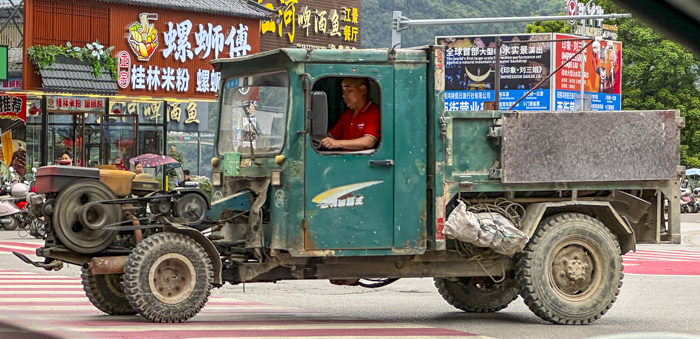
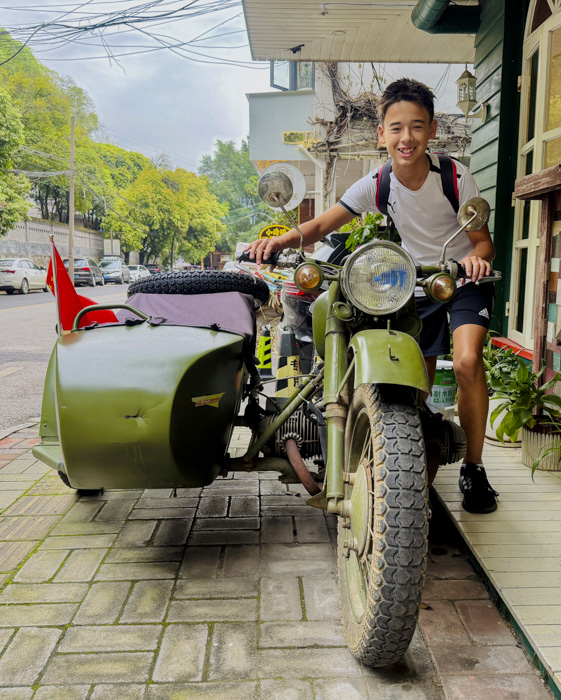
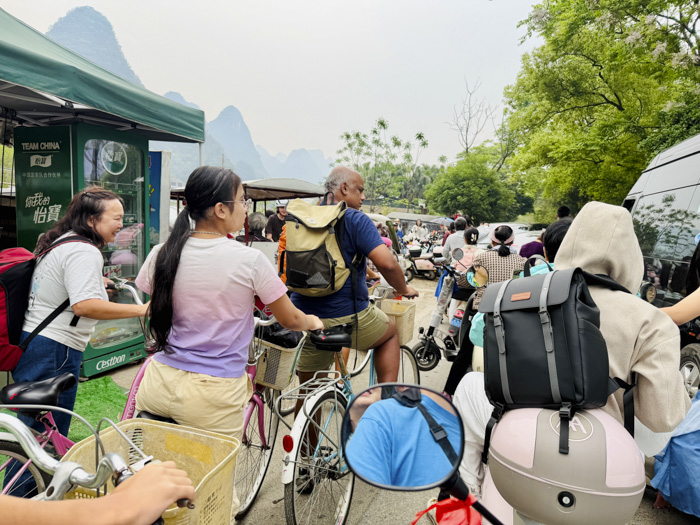
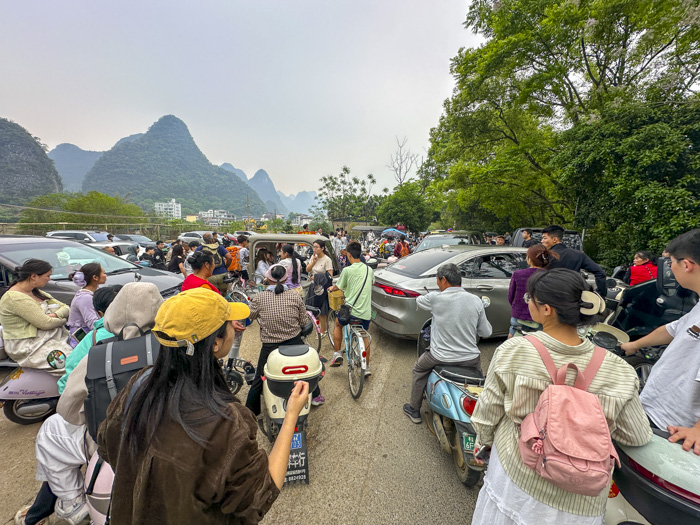
Somewhere along the ride, as we moved between villages and open countryside, we passed something that made us slow down.
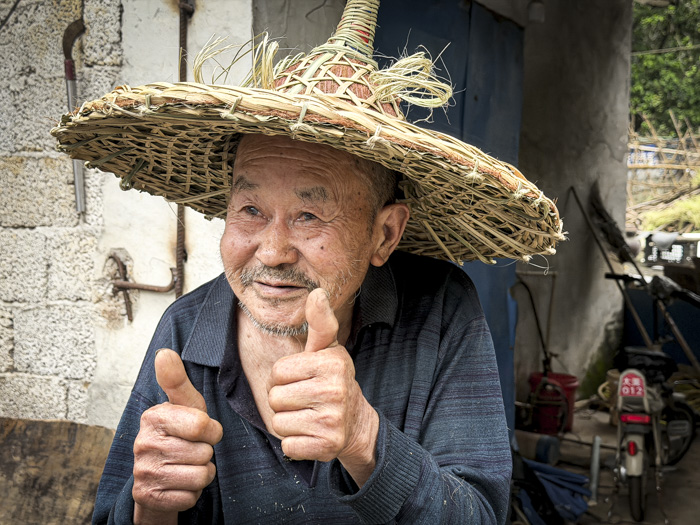
An elderly man — well into his eighties — sitting quietly outside his home, weaving hats by hand.
There was nothing staged about it. No performance, no attempt to attract attention. Just a simple, repetitive motion, practiced over decades. His hands moved with a rhythm that didn’t need thinking — strip by strip, shaping something both practical and beautiful.
We stopped for a while, watching.
In a place where so much is changing so quickly — high-speed trains, digital payments, modern cities rising almost overnight — this felt like a direct connection to something much older. A way of life that hasn’t entirely disappeared, but is slowly becoming harder to find.
There was a calmness to it.
No rush, no urgency — just time, skill, and patience. The kind of work that carries quiet pride, even if it goes largely unnoticed.
For us, it was a reminder that not everything moves at the same pace.
And in that brief stop, somewhere between getting lost and finding our way again, we found one of the most genuine moments of the journey.
Next day it was a short trip out to Xingping that brought one of the most recognisable scenes of the trip.
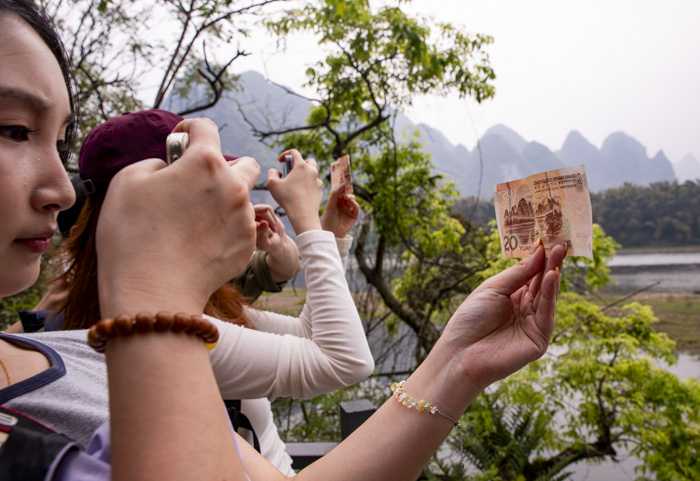
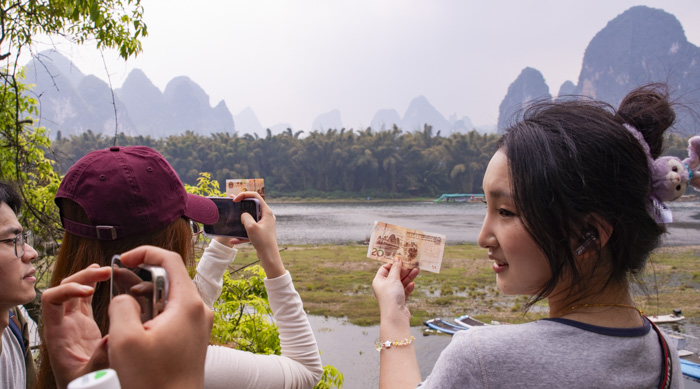
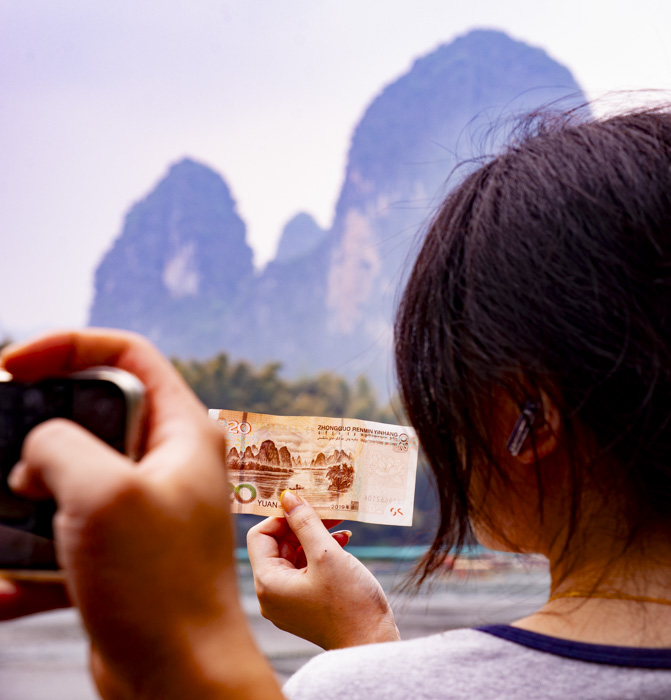
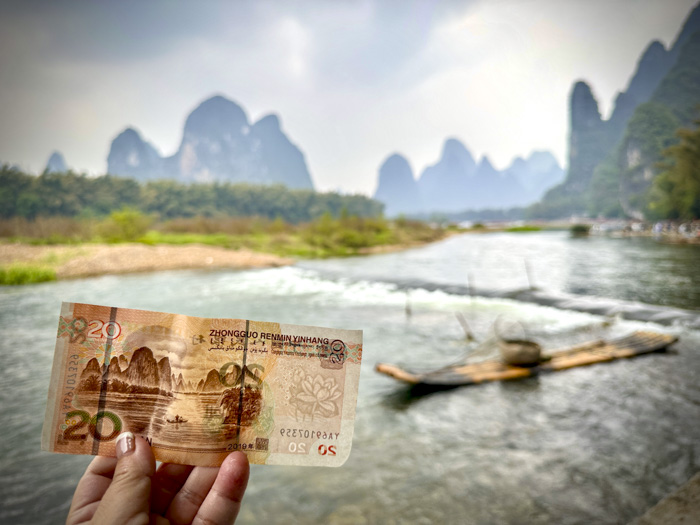
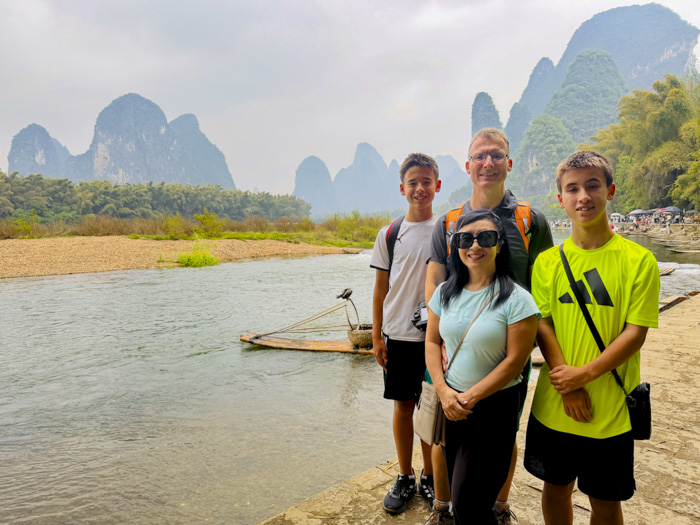
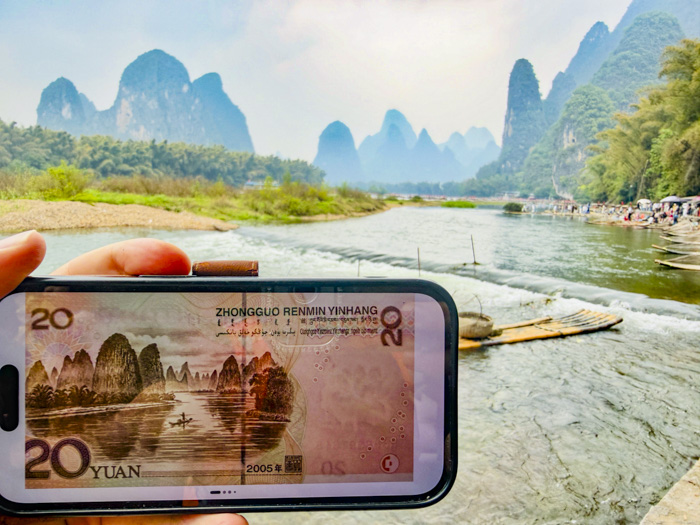
Just outside the town lies a bend in the Li River that’s instantly familiar — even if you don’t realise it at first. It’s the exact landscape printed on the back of the Chinese 20 Yuan note.
And once you see it, it clicks.
The same karst peaks, the same river curve — a view that’s been quietly circulating in millions of wallets for years.
What followed was a surprisingly fun challenge: trying to line up the real view with the image on the note.
There were people everywhere doing the same thing — holding up old 20 Yuan notes, adjusting angles, laughing as they tried to get the perfect match.
The irony wasn’t lost on us.
China today is almost entirely cashless. Paying with a phone is the norm, and physical money feels like a relic. We didn’t even have a note ourselves — we had to borrow one just to take part.
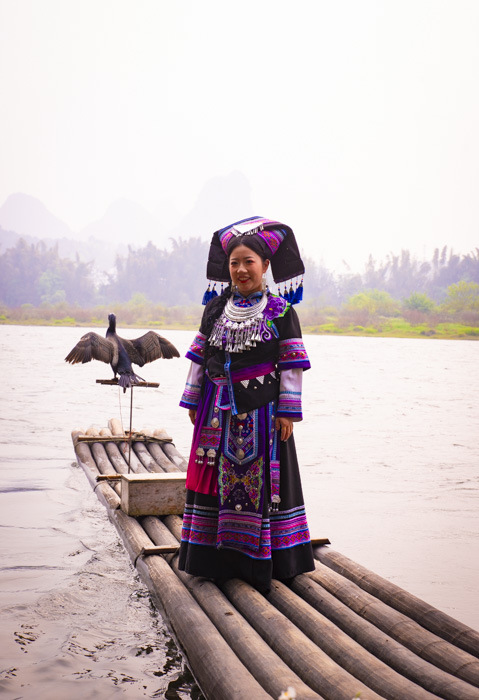
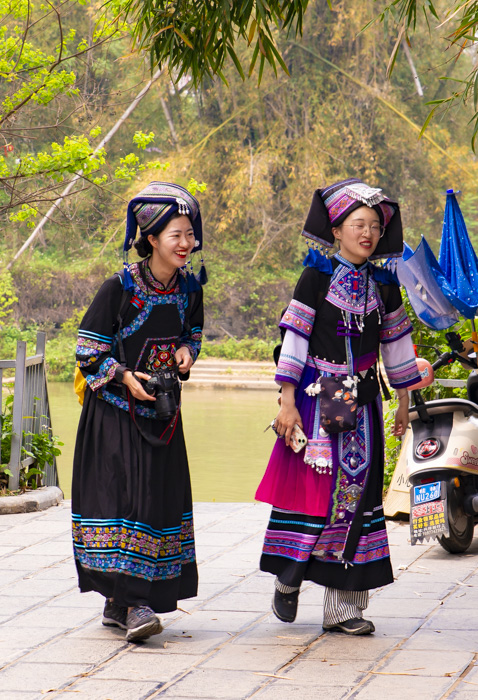
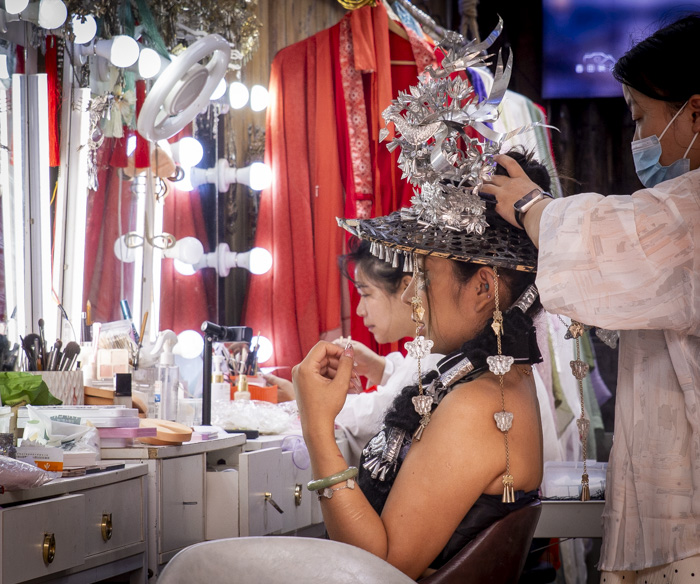
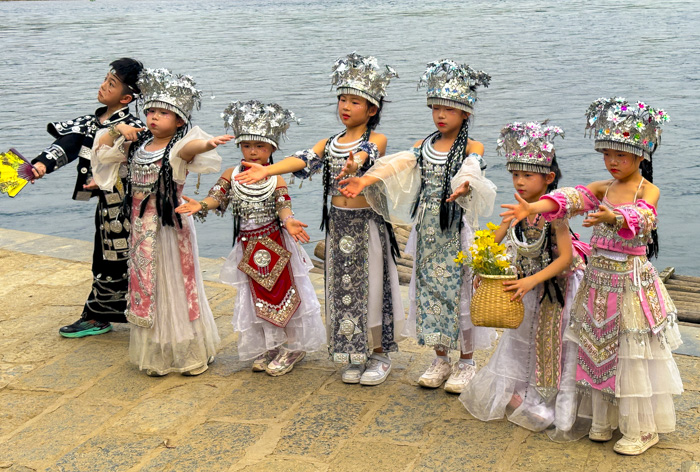
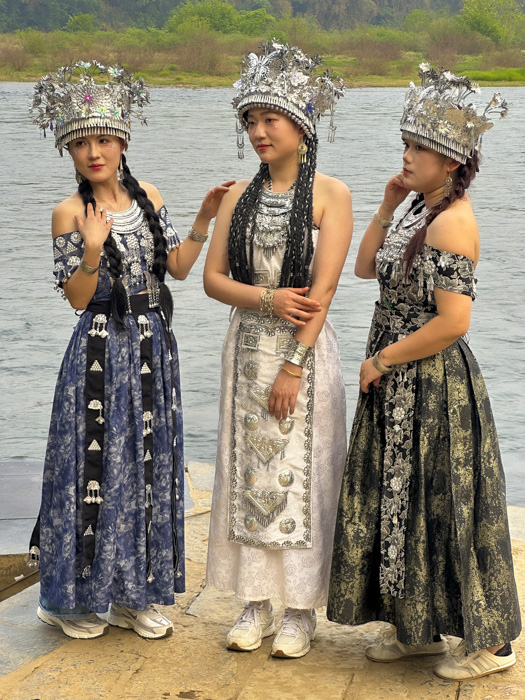
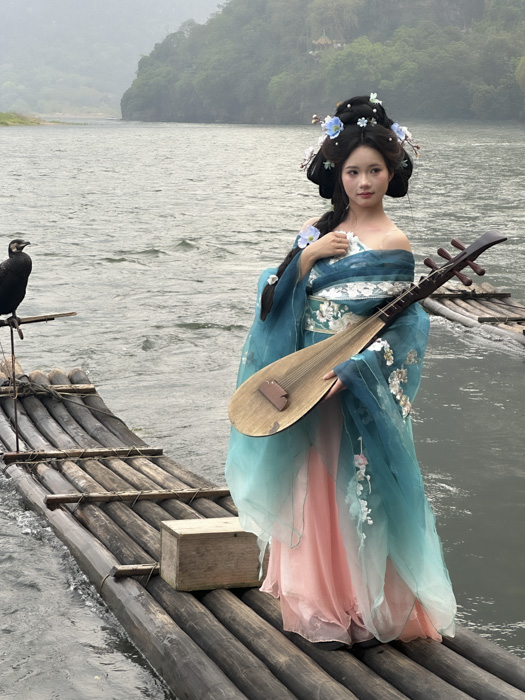
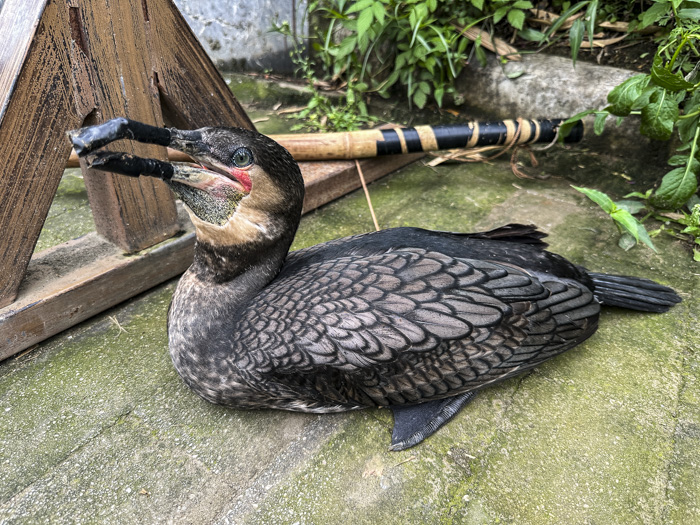
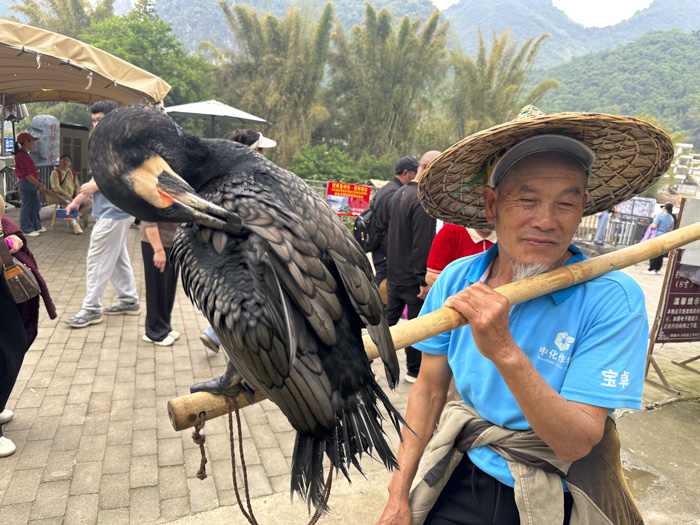
Also lined up along the river were rafts, cormorant birds and people dressed up with hired photographers to have their photo taken.
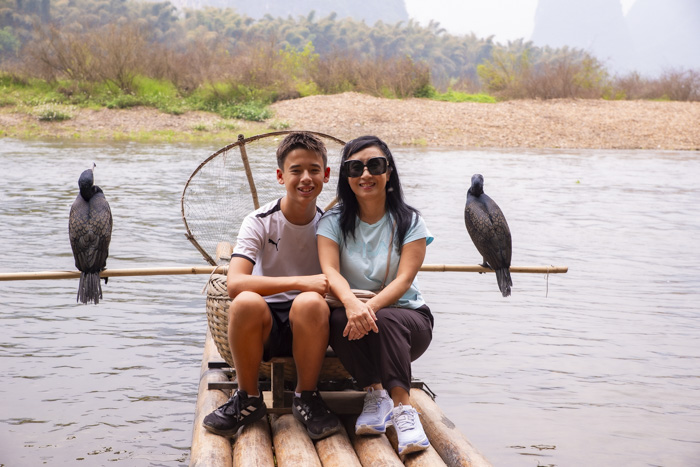
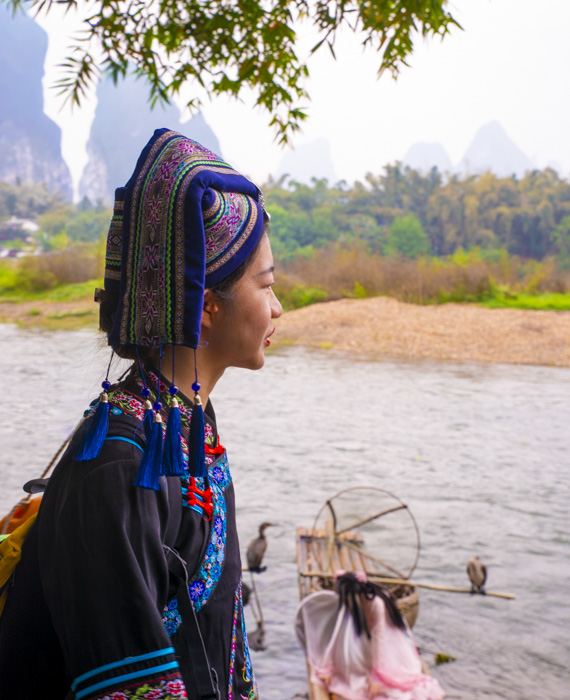
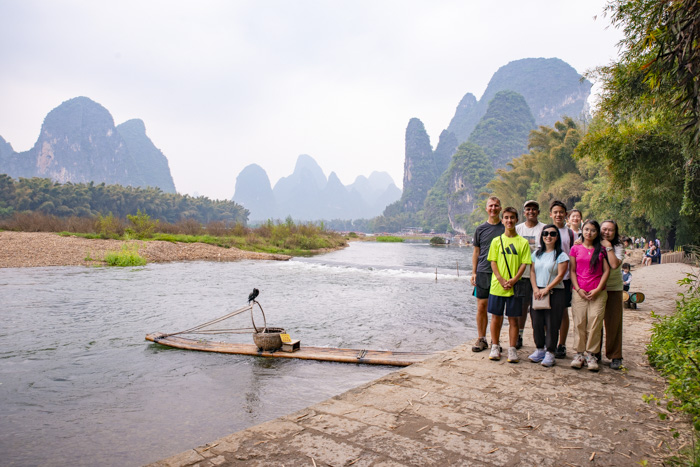
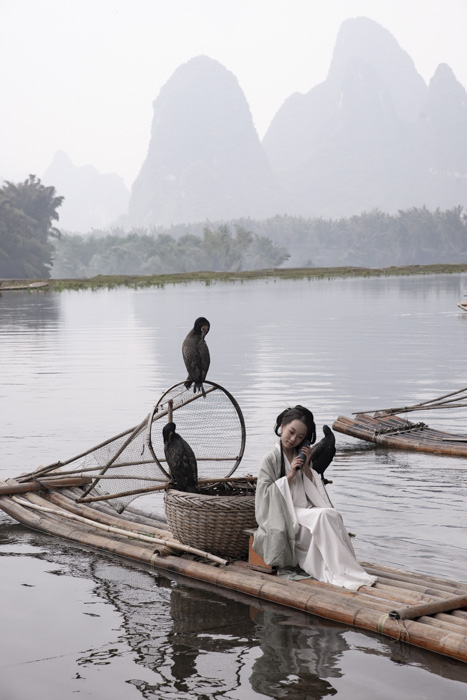
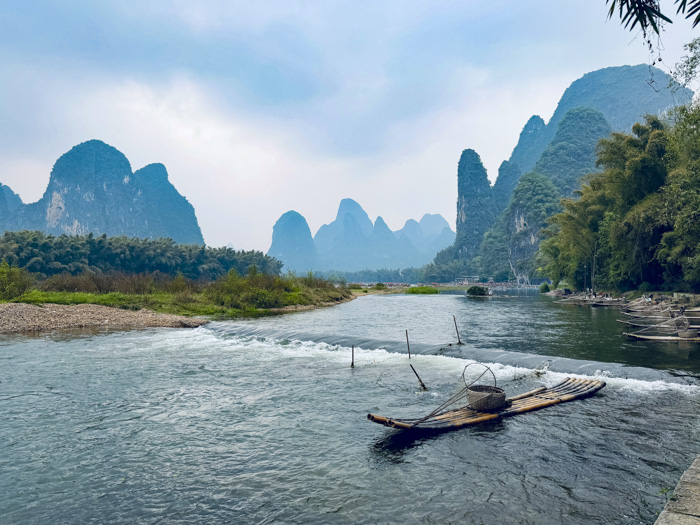


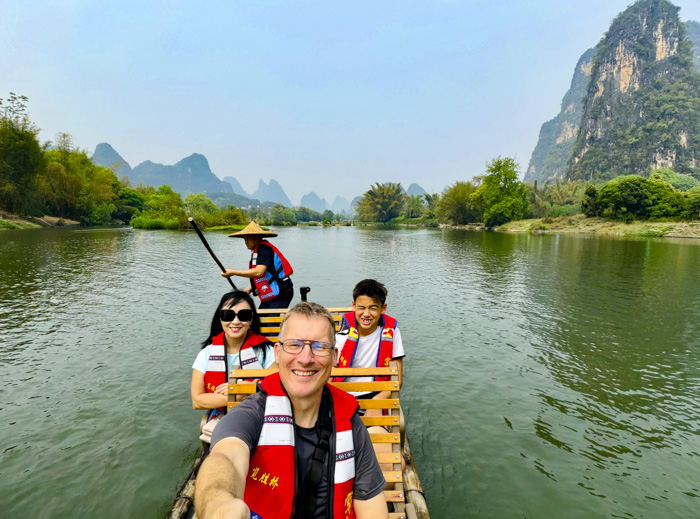
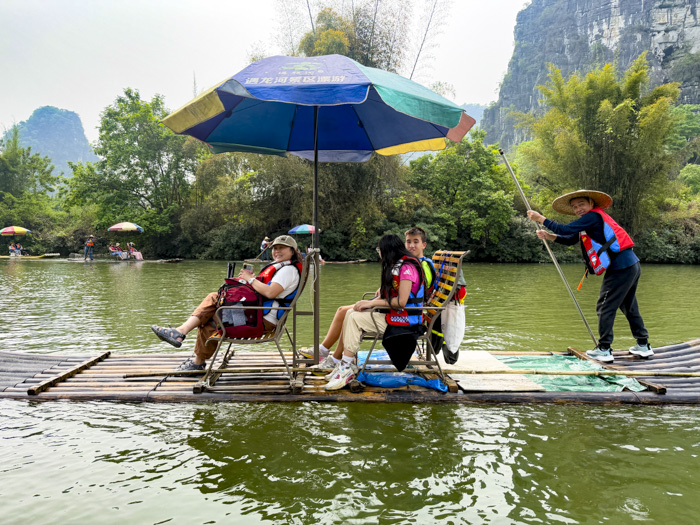
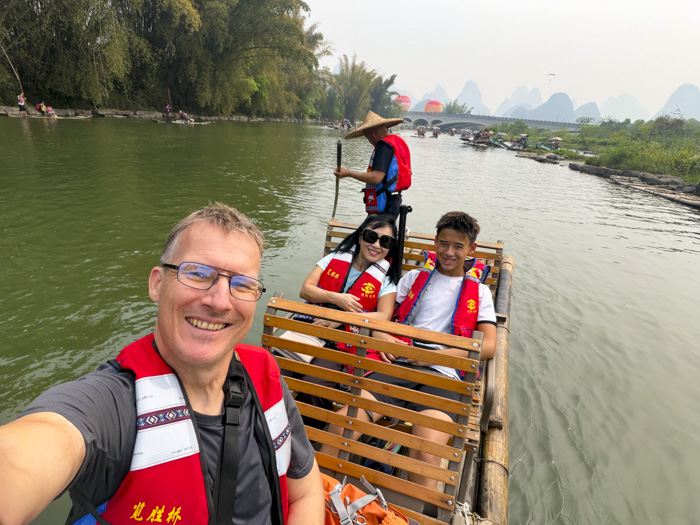
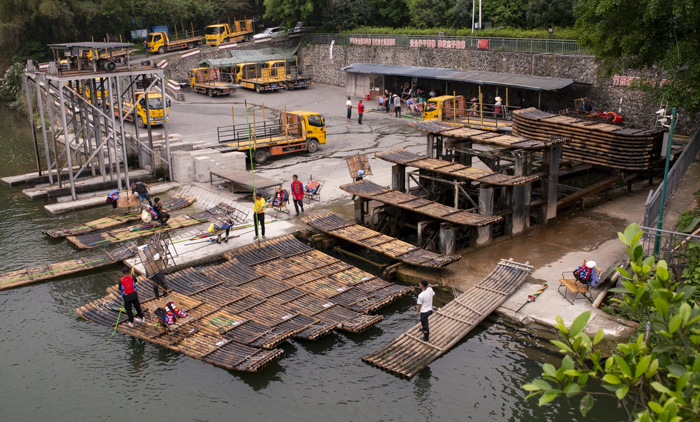
Down by the river, near one of the many low bridges crossing the water, we climbed onto a bamboo raft and set off along the Yulong River.
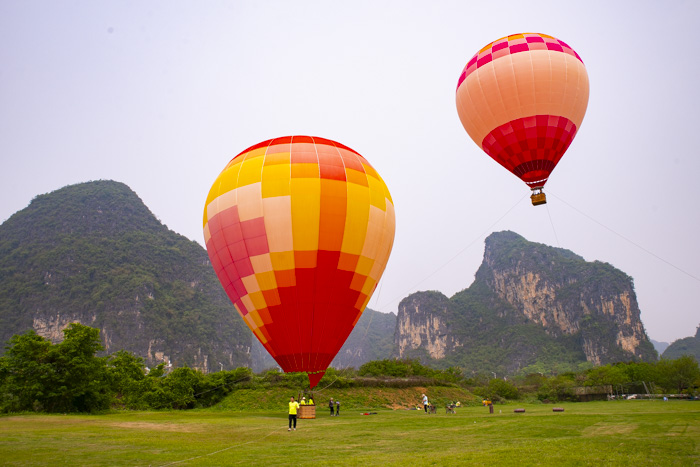
Although this would have been Yangshuo at its most peaceful, it was packed with other rafts, hot air balloons and motorised paragliders.
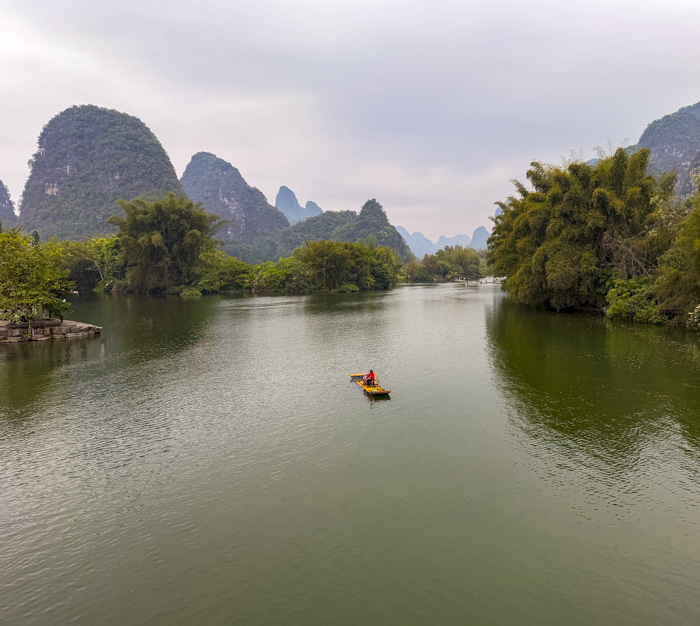
Once we got going the raft glided quietly upstream, the only sounds being the water and the occasional call from the riverbanks. Limestone peaks rose on either side, softened by mist and distance, while reflections shimmered gently below.
On the way back down, everything felt even more relaxed. No rush, no noise — just drifting through one of the most iconic landscapes in China.
As the sun dropped behind the karst peaks, we made our way back into town and joined the evening flow along West Street.
If the countryside had been calm and open, this was the opposite.
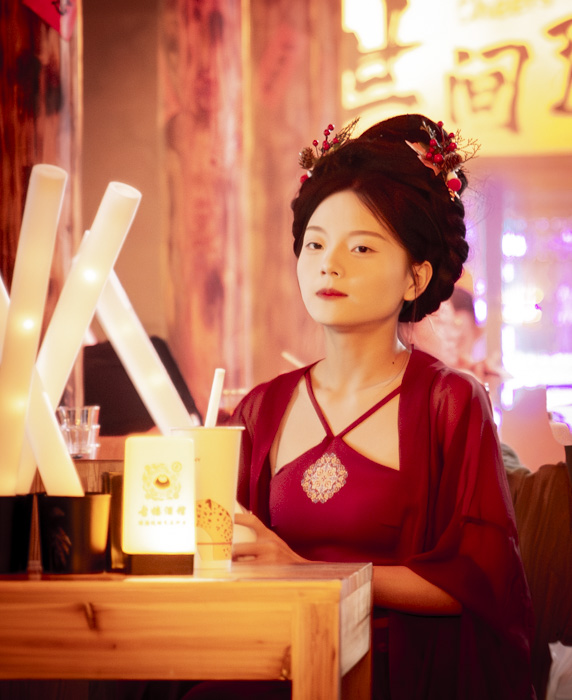
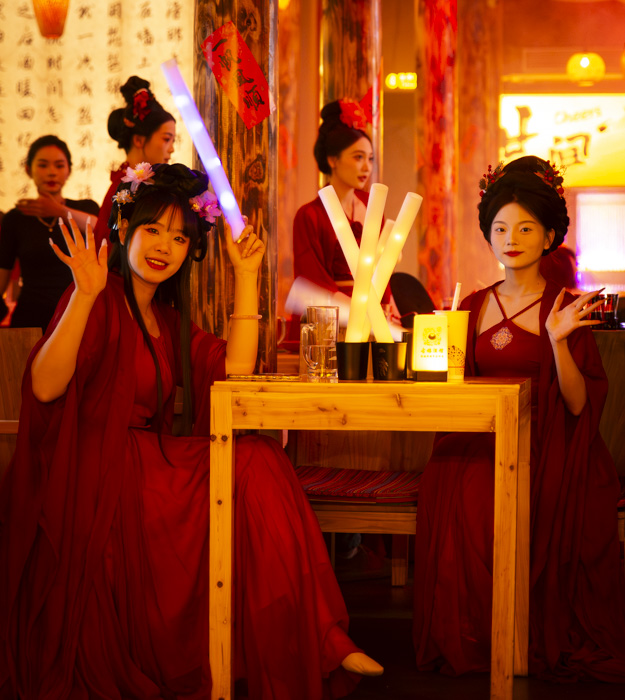
West Street comes alive at night. Lights spill out from shops and restaurants, music drifts through the air, and the narrow street fills with a mix of locals, travellers, and everything in between. It’s lively, a little chaotic, and full of energy.
We wandered without much of a plan — stopping to look at small food stalls, peeking into restaurants, watching musical performers, and just taking it all in. There’s a blend here that feels uniquely Yangshuo: traditional elements sitting right alongside modern tourism, local life mixing with visitors from all over.
For the kids, it was sensory overload in the best way — noise, lights, movement everywhere. For us, it was a chance to just observe. The rhythm of the place, the interactions, the small moments happening all around.
After a day of riding through villages and open landscapes, being back in the middle of it all felt almost surreal.
Yangshuo has that balance — peaceful by day, vibrant by night.
And West Street is where those two worlds meet.


angshuo will be remembered for its landscapes — the limestone peaks, the rivers, the countryside that feels almost unreal.
But for me, that’s not what lingers.
As much as the scenery impresses, it’s the people who stay with you.
The old man weaving hats outside his home. The quiet glances in the alleyways. The locals going about their day, completely untouched by the fact that, for us, this was something extraordinary. Even along the busy stretch of West Street, behind the lights and movement, there were still those moments — brief, unspoken connections with strangers.
As a photographer, that’s what draws me in. Not just the image, but the story behind it. The history carried in a face, the traces of a life lived in a place that’s changing faster than most.
Landscapes can be breathtaking, but they don’t look back at you.
People do.
And in those fleeting moments — a glance, a smile, a moment of curiosity — there’s something real. Something that cuts through language and culture.
That’s what I’ll remember most about Yangshuo.
Not just where we went… but who we encountered along the way.