Home

29. January 2018 21:01
by Rene Pallesen
0 Comments

The War - Laos

29. January 2018 21:01 by Rene Pallesen | 0 Comments

The 'secret' war in the 60's and 70's had a major impact on the country. A massive amount of bombs w
The 'secret' war in the 60's and 70's had a major impact on the country. A massive amount of bombs were dropped by mostly the Americans in mostly the Northern and Eastern part of the country. This was partly an internal civil war but also to stop the North Vietnamese using the country as a supply route.

To get an insight into this was I can highly recommend the books by Christoper Robbins called 'The Ravens' and 'Air America'.

The impact today is that un-exploded ordnance (mines, cluster bombs etc.) is covering large parts of the country and that every year lots of people including children gets injured or killed.

It is also very noticable, especially in the Hmong villages that there is no presence of old men. This is because most of these were killed either during the war where especially they took heavy casualties despite the American support or through 'education' camps after the war.

Last time I went to Laos I went to Plains of Jars which was one of the most heavily bombed areas and the debris was everywhere. We weren't going there on this trip, but to give the family and friends an insight into the history and the dangers to present people we visited the COPE organisation in Vientiane.

Here is Aiden in front of an unexploded (disarmed) clusterbomb. Looks just like a ball and tempting for kids to play with.
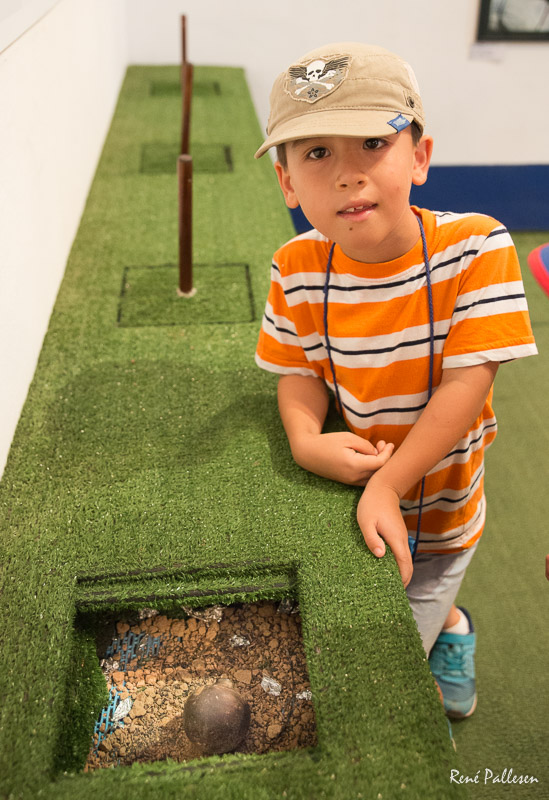


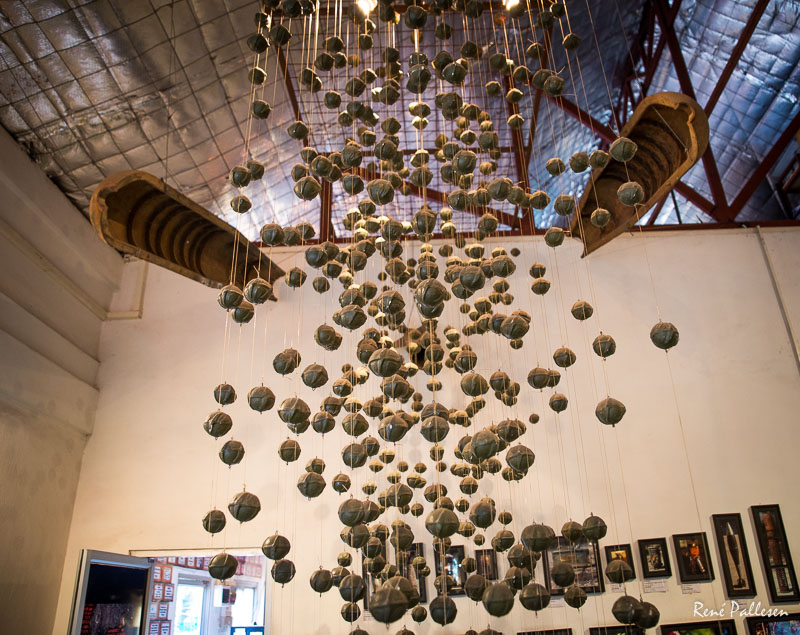
These were dropped from canisters on aircraft with several hundred in each load. It is estimated that 1/3 of these didn't explode on impact.


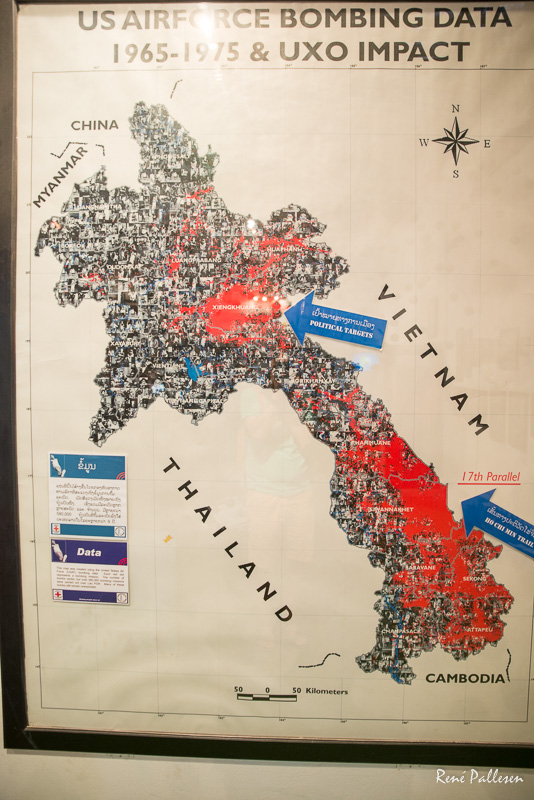
This map shows the areas most effected.


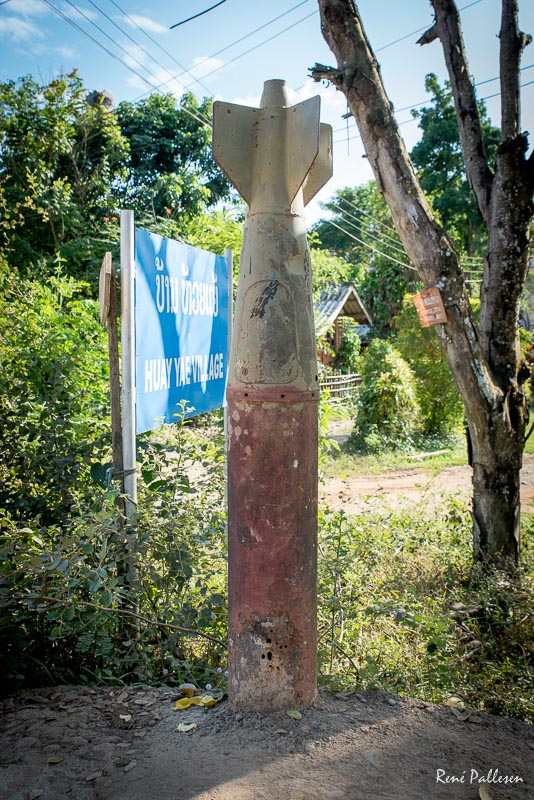
If you look for the bombs they you see them everywhere - mostly disarmed and used as fence posts.


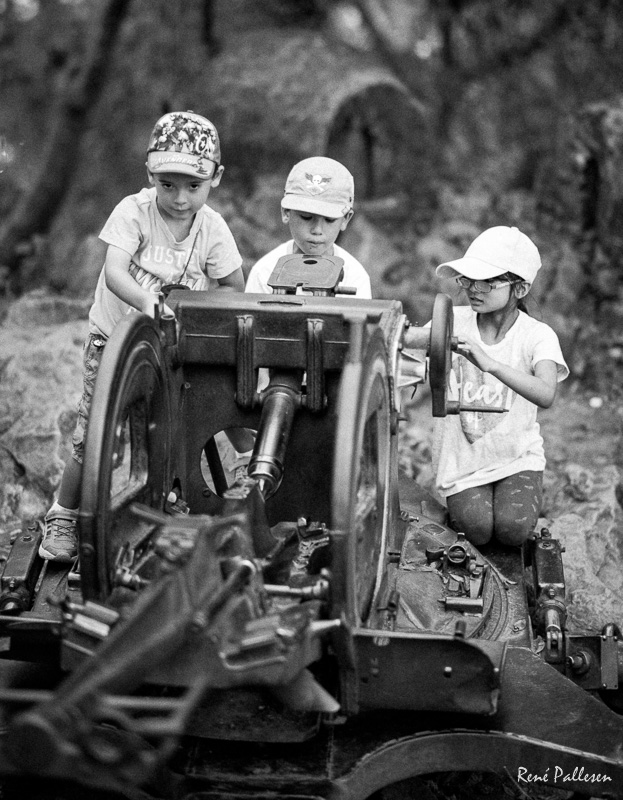
There is also remains of anti aircraft guns such as this one in Luang Prabang. The barrel had been removed but everything else still worked on it and they could turn it by rotating the handles, much to the amusement of the kids. During the war kids only a little older than our kids would have been fighting at the front lines.
Comments are closed
Perfect Moments Photography | The Citadel & Mohammed Ali Mosque

Home

14. November 2004 12:54
by Rene Pallesen
0 Comments

The Citadel & Mohammed Ali Mosque

14. November 2004 12:54 by Rene Pallesen | 0 Comments

the citadel mohammed ali mosque


Our first sightseeing trip after arriving in Egypt was the Citadel and the Mohammed Ali Mosque. The Citadel was once the home of the royal family until 1870, then the military took over this joint until the 1970s. It is still used occasionally by the military but mostly opened to visitors although certain sections are closed off to them.

Neither did our guide tell us much about the Citadel, nor give us the opportunity to explore. So most of the photos here are of the Mohammed Ali Mosque sitting on the Citadel.


The mosque is famous for its alabaster corridors, columns and floors. Alabaster is a cheaper form of marble that seems to be slightly more porous and does not have the smoothness or coolness of normal marble.


Adam, our guide sat everyone down in one corner of the mosque like school kids, and gave everyone some sort of history lesson about Islam and marriage.


The interior of the mosque was magnificent, with globes of light hanging in multiple rings from the ceiling. In the far right corner, there is a gilded green and gold staircase that leads to some sort of pulpit.
Local women were allowed into this mosque, but clad from head to foot. Female tourists were provided with a green abaayas if they were sleeveless or wearing shorts.


During Adam's chat about Islam and its history, René asked for more information about the Citadel, and was rudely scolded for not listening.
Adam did not give any more information about the Citadel for the rest of the trip...


Left: In another corner of the mosque was an enclosure containing the marble sarcophagi and burial place of the mosque's namesake - Mohammed Ali.
Right: The ceiling was also quite beautiful, but I could not use the camera flash and it was a little dark. In each "corner" of the dome were large arabic inscriptions in gold


Cairo has a brown haze over the city. The buildings are made of mud bricks.
Dirty-white and grey are the only other colours one can see.


Apparently there is a number 7 written above one of the doors of the Citadel. History says Napoleon and his troops numbered each of the entrances around the Citadel as he could not understand the local language.

Comments are closed