Home

26. August 2018 15:08
by Rene Pallesen
0 Comments

Blue Mountains

26. August 2018 15:08 by Rene Pallesen | 0 Comments

This winter we went to the Blue mountains with a group of friends. We hired a house at Leura and spe
This winter we went to the Blue mountains with a group of friends. We hired a house at Leura and spend the days going for walks.


This is from the Grans Canyon walk.


And some from the other walks.


26. August 2018 14:08
by Rene Pallesen
0 Comments

Thailand - Floating market

26. August 2018 14:08 by Rene Pallesen | 0 Comments

The floating market is 2 hours drive south of Bangkok. We made a bargain with a taxi driver to drive
The floating market is 2 hours drive south of Bangkok. We made a bargain with a taxi driver to drive us all there in a minivan. In the process he tried to take us to the wrong place 5 kilometers from the market and tried to rip us off by saying we should pay an exorbitant amount to take a boat from there - Kim and I had been there before and remembered that it was possible to drive there. With the assistance from Kim's colleague, the driver was put in his place and took us to the right location, so we still came out ahead and it turned out to be a nice day trip.


The market is very much for tourists these days, but they still have the original boats selling food, although the market itself is all souvernirs.


It is however interesting to observe the other tourists and I managed to capture a couple of good moments.


26. August 2018 14:08
by Rene Pallesen
0 Comments

Bangkok

26. August 2018 14:08 by Rene Pallesen | 0 Comments

After Laos we went back to Bangkok.Bangkok is much the same, however it feels a lot cleaner with reg
After Laos we went back to Bangkok.

Bangkok is much the same, however it feels a lot cleaner with regards to smoke from all the bikes, but the traffic itself is horrendous.


The tuk-tuks are still there, but they try to charge exorbitant prices, so it was far cheaper and more convenient to get a taxi.


As usual there are still lots of interesting choices for food, such as braised pigs head.


Or Scorpions (which are mostly sold to tourists)


When it comes to shopping, Kim was in shoe shop heaven.


The boys however was in their own upside down ice cream heaven.


The nightlife is also much the same, with the more relaxes and romantic atmosphere along the river.


As opposed to the more thrashy massage parlour atmosphere just around the corner from our hotel.


While we were there it was childrens week, much to the joy of the boys.


This also gave me some unique photo opportunities such as the Thai version of Wonder woman.


Evening were spend having nice dinners with friends, Kim's colleagues and by ourselves.


This photo was my all I packed for the entire trip (only thing missing is my camera and the two lenses I brought along). Everything fitted into a small carry-on backpack.


11. March 2018 22:03
by Rene Pallesen
0 Comments

Monks - Laos

11. March 2018 22:03 by Rene Pallesen | 0 Comments

Religion is an integral part of Laos society where the majority are Budhists.


The monks dressed in orange and red ropes are still visible everywhere and it is largely seen as becoming a novice (junior monk) is seen as an opportunity to get an education and support your family if you come from a poor rural area.


The high influx of tourists, especially to Luang Prabang is therefore a bit of a win-win situation for everyone. The tourists support the temples in the area by paying their admission fees to visit and on both my trips I have found that the monks are keen to have a conversation as it is a way of practicing their language skills.

In Luang Prabang the monks walk in procession every morning to collect rice from worshipper along the roads. Before sunrise there are hundreds of monks walking the streets in every direction. There is an equal horde of tourists trying to take photos of these monks and equally tourists handing out (sometimes dubious) rice to them.


There are posters around the city encouraging being there and seeing the monks as well as providing some guidelines such as keeping a certain distance, not using flash photography and if you hand out rice then where to get it from. Most of it common sense really, so it was sad to see how some would be blocking the paths and sticking their camera phones with flashes into the monks faces.
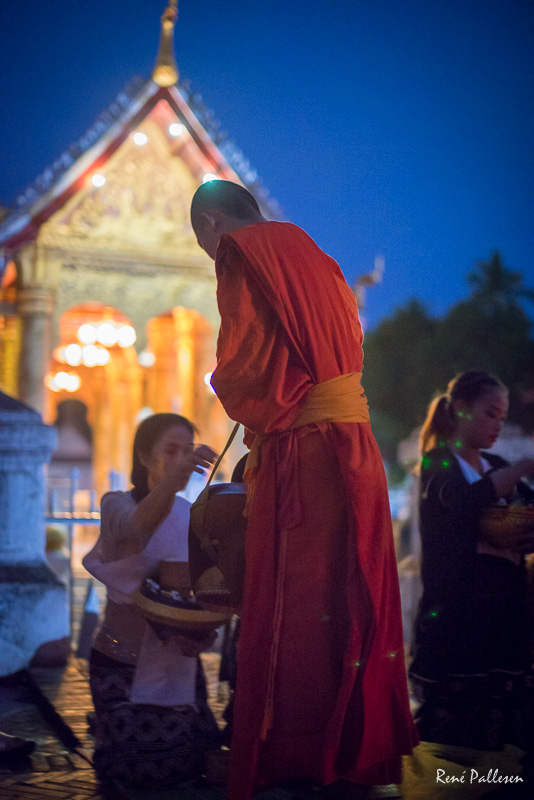


Sacha and I went there a couple of mornings, but because of the time of the year everything was dark and because the monks move quite fast through the streets it was a challenge getting good shots.


One afternoon we walked past a temple and a group of monks were in progress of cutting down a large tree and afterwards trimming off the branches. They were going to use some of the tree trunk for traditional drums and the rest for ornamental purposes inside the temple.
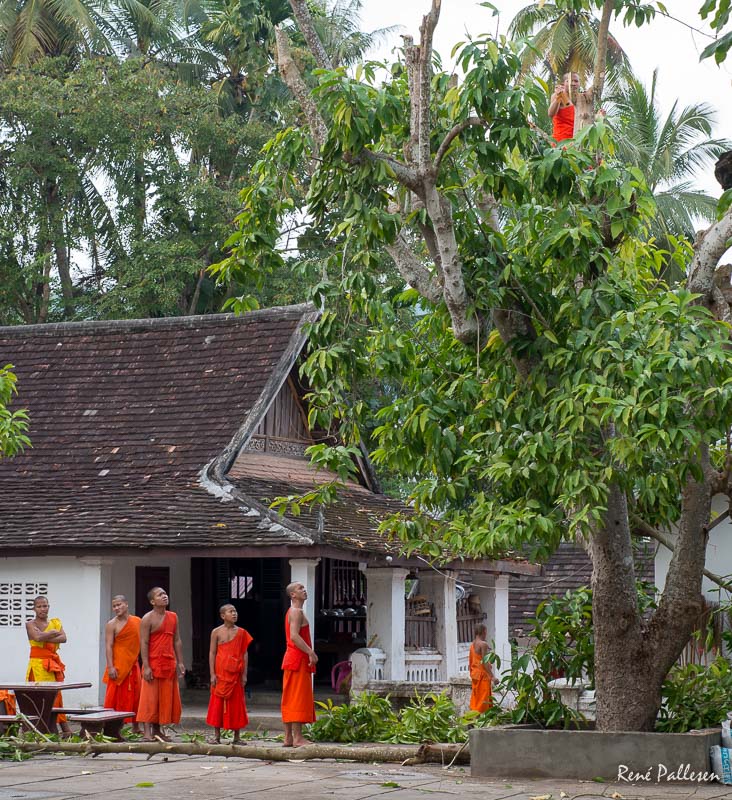


In the late afternoons you would hear them chanting in the small rooms of meditations, chanting and prayer. These are often smaller places of worship and not part of the main temples which are used for more ceremonial purposes.
One evening I heard such chanting and went to investigate and found these monks. Definitely one of my favourite moments in Luang Prabang.


A common assumption and misconception is that the monks live by an ancient code with a simple life, so it is quite interesting to see that even they have adopted modern technology with smart phones and cameras.


11. February 2018 22:03
by Rene Pallesen
0 Comments

Locals transport - Laos

11. February 2018 22:03 by Rene Pallesen | 0 Comments

The locals are still relying on motorbikes to get around. They are far cheaper and more convenient i
The locals are still relying on motorbikes to get around. They are far cheaper and more convenient in the towns. It is even possible to fit an entire family onto a single motorbike.
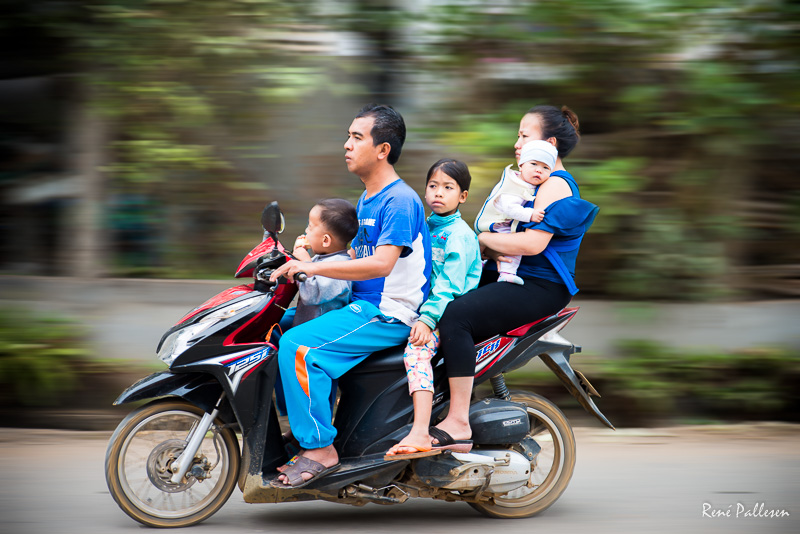


Younger kids and high schoolers ride their push bikes for transport.
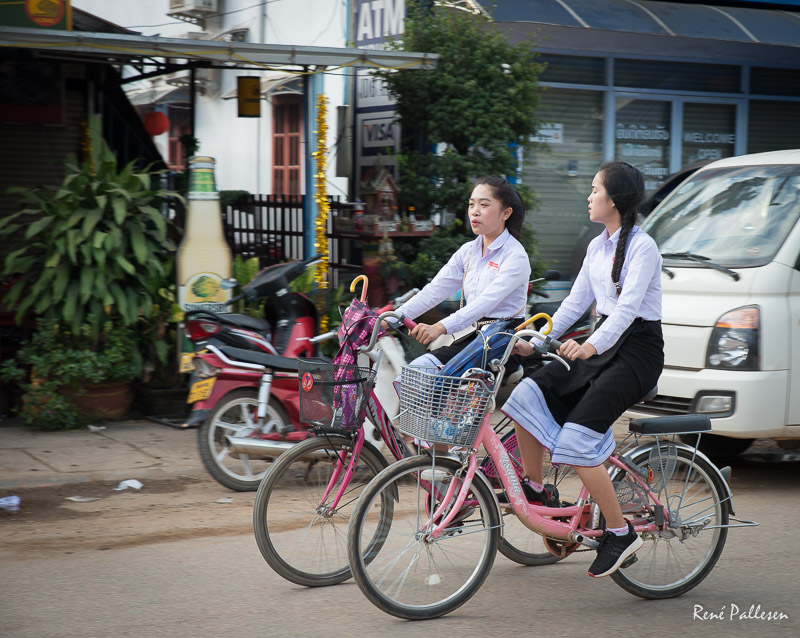


Although Aiden and the other kids definitely preferred the motor bikes.


Nothing too flash for weddings - a normal new car will suffice. If you notice the sign on the door, then I am not sure if the bride was expecting to come home to 'Meat & Sausage'.


There are also some vintage cars around which have survived since colonial times - like this 1952 Citroen.
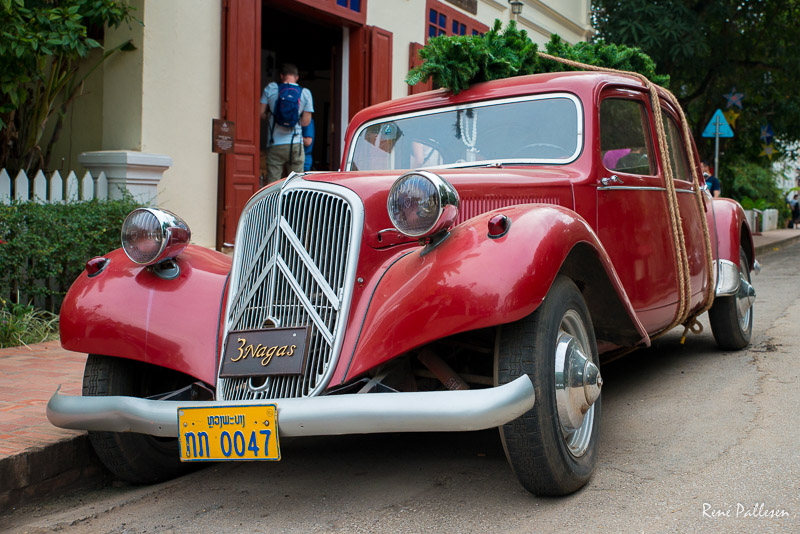
10. February 2018 07:03
by Rene Pallesen
0 Comments

Bowling - Laos

10. February 2018 07:03 by Rene Pallesen | 0 Comments

On the last day in Luang Prabang we went to the local ten pin bowling alley.We had heard and read th
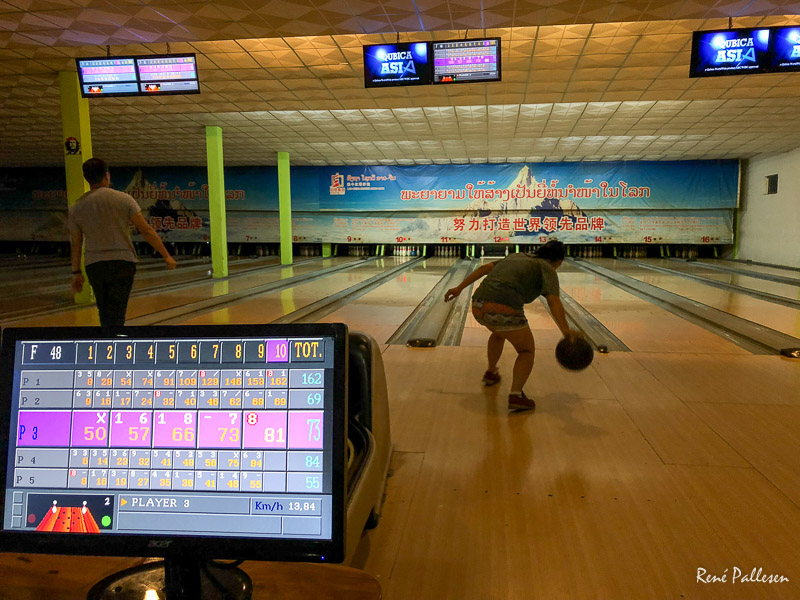
On the last day in Luang Prabang we went to the local ten pin bowling alley.

We had heard and read that this is the place where things are happening in Laos. When we got there the place was totally deserted apart from a few staff members.

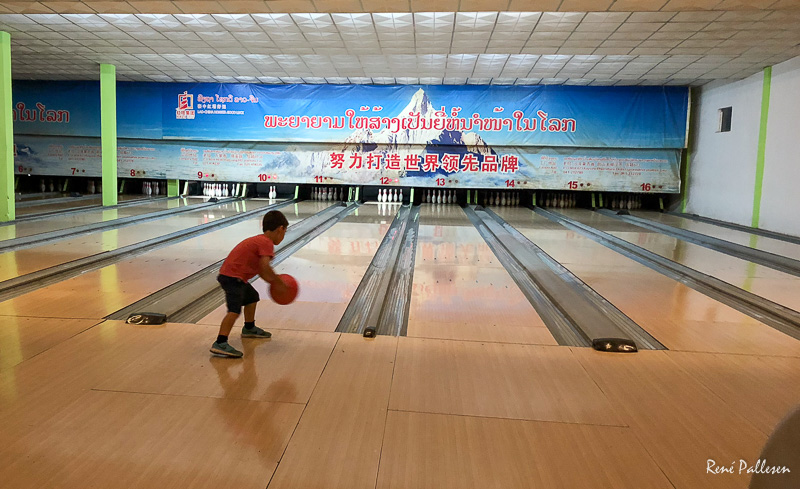
We did play bowling and it is a bit surreal to play by ourselves in this fairly modern centre in Laos.
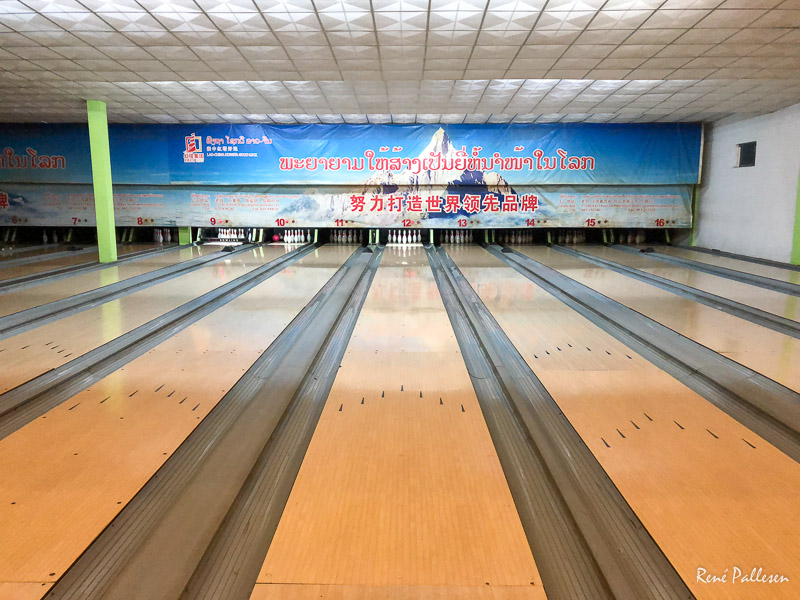


They didn't have any support rails for the kids, but Aiden especially did really well and the kids managed to beat Kim on points.

9. February 2018 07:03
by Rene Pallesen
0 Comments

Water fall - Laos

9. February 2018 07:03 by Rene Pallesen | 0 Comments

Just outside Luang Prabang there is this amazing waterfall cascading down a limestone creek.We decid
Just outside Luang Prabang there is this amazing waterfall cascading down a limestone creek.

We decided to get up early to go a take photos, so that we could be there early before all the crowds arrived.


At the entrance to the park there is also a Bear rehabilitation centre. They rescue bears from captivity and keep them until it is safe to release them back into the wild (if ever). The bears have a big area and seem to love climbing and sleep in the hammocks provided.


8. February 2018 22:03
by Rene Pallesen
0 Comments

The kids and families of Laos

8. February 2018 22:03 by Rene Pallesen | 0 Comments

What I especially remember from my last trip to Laos was the kids. One of my most cherished photos i
What I especially remember from my last trip to Laos was the kids. One of my most cherished photos is one of two little girls holding a bouquet of flowers that I took 20 years ago (it is on this blog if you look for it through the search function).

The children are still there. They are still very shy, dirty and smiling.


They make up their own games such as these kids at a school playing marbles with tamarind seeds.


These kids were playing a game where the kid under the table had to poke the feet of the kids above the table.


And some things never change, kids teasing each other.


The girls in the school yard 'hang out'.


Visiting a local school was great for our kids to get a glimpse of how other kids live.


Along the road we stopped and a family was outside with the mother breastfeeding her son in their outdoor living room. This is where everything happened such as the cooking, washing, feeding etc.


The chicken were running around freely


Here is a rare shot that Kim took with my camera in it.


It is a very family oriented life they live


8. February 2018 22:03
by Rene Pallesen
0 Comments

Our kids - Laos

8. February 2018 22:03 by Rene Pallesen | 0 Comments

Our kids had a blast of a time in Laos. They loved each other company (for the most part) and someti
Our kids had a blast of a time in Laos. They loved each other company (for the most part) and sometime looked like real little travellers.


They were respectful at the temples and even offered a prayer.


At other times they behaved like animals and should be lock away in a cage.


But for the most part they liked exploring things that us adults wouldn't see such as this crater from a crash landed U.F.O.

7. February 2018 21:03
by Rene Pallesen
0 Comments

Catching local transport - Laos

7. February 2018 21:03 by Rene Pallesen | 0 Comments

For getting around the towns in Laos we mainly used Tuk-Tuks. These are small motorbike powered mini

For getting around the towns in Laos we mainly used Tuk-Tuks. These are small motorbike powered minibuses and the experience can be very mixed. Most of them are generally good, but some have bad brakes have a plume of smelly two stroke engine smoke trailing behind them. We could easily fit our two families into one and I'd joke that there would even be room for another couple of adults.
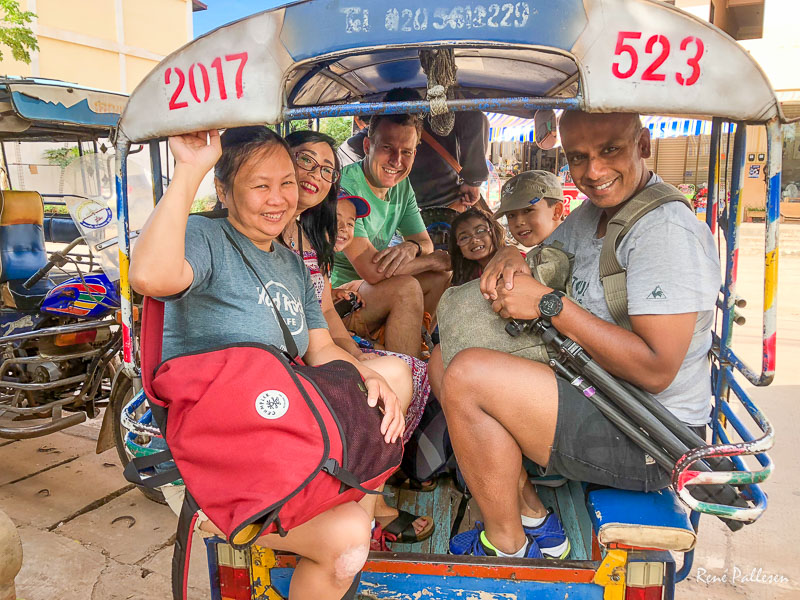


The kids loved the tuk-tuks and have the fresh air blowing in their hair while riding.
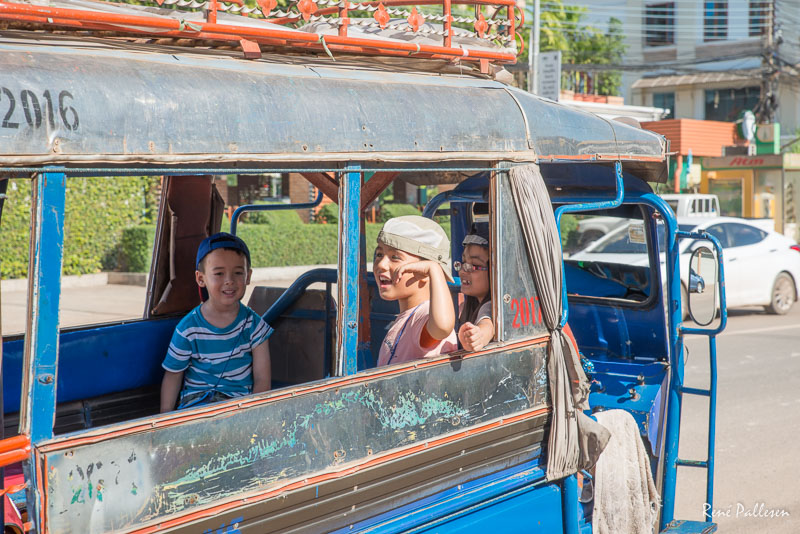


The only downside is that you'd never quite know what the fare would be until you started bargaining and from town to town the fares seemed to be very different. Even though I believe I am reasonable proficient at bargaining, I'm still confident that we paid more that the locals would be paying for the same trips.
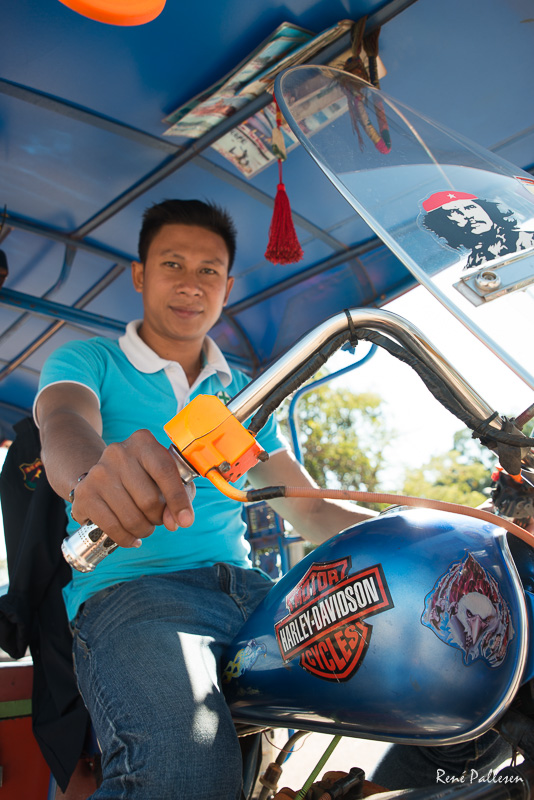
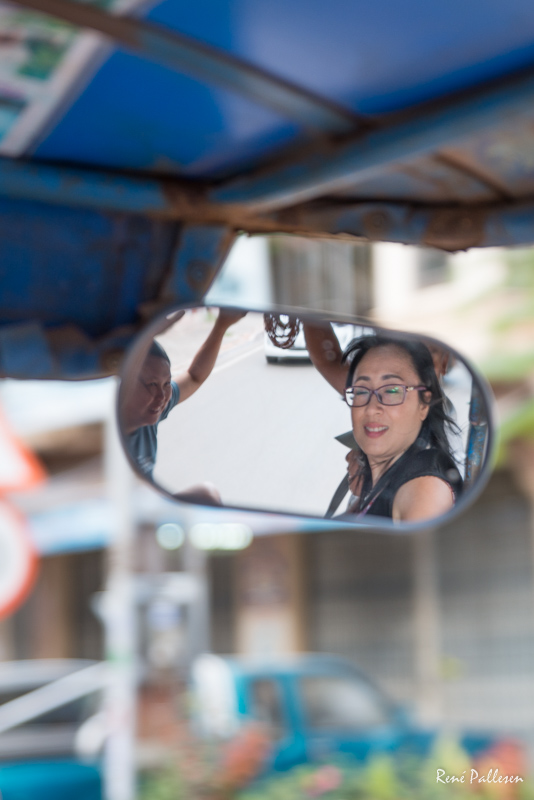
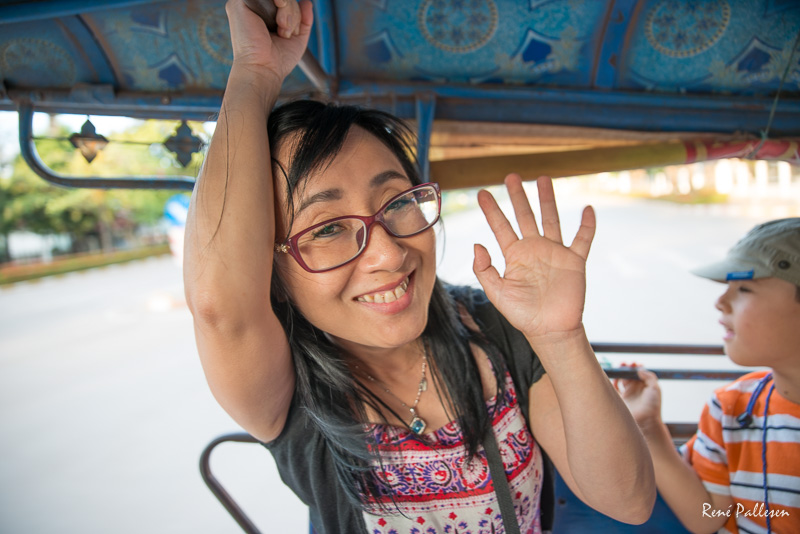
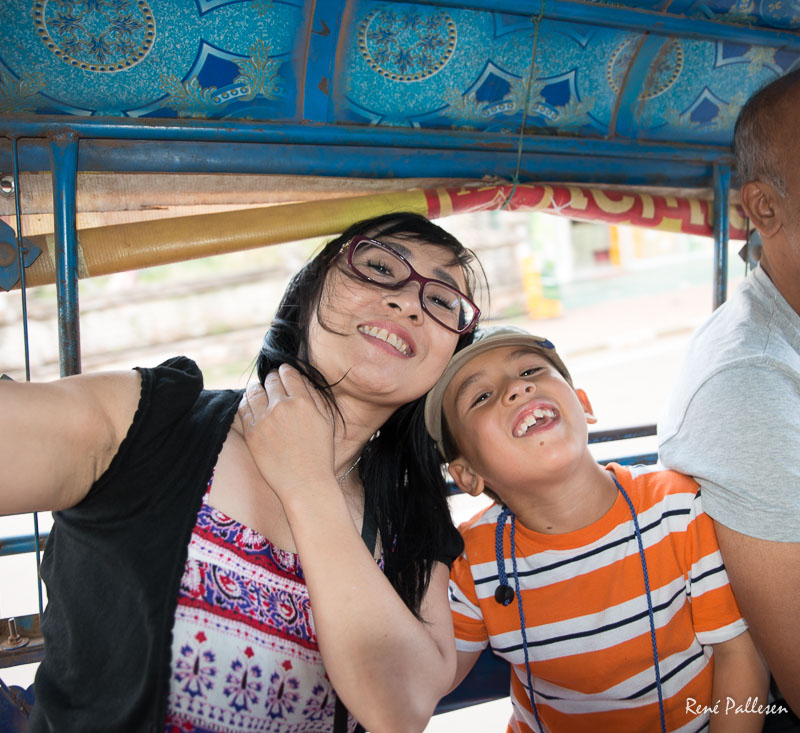
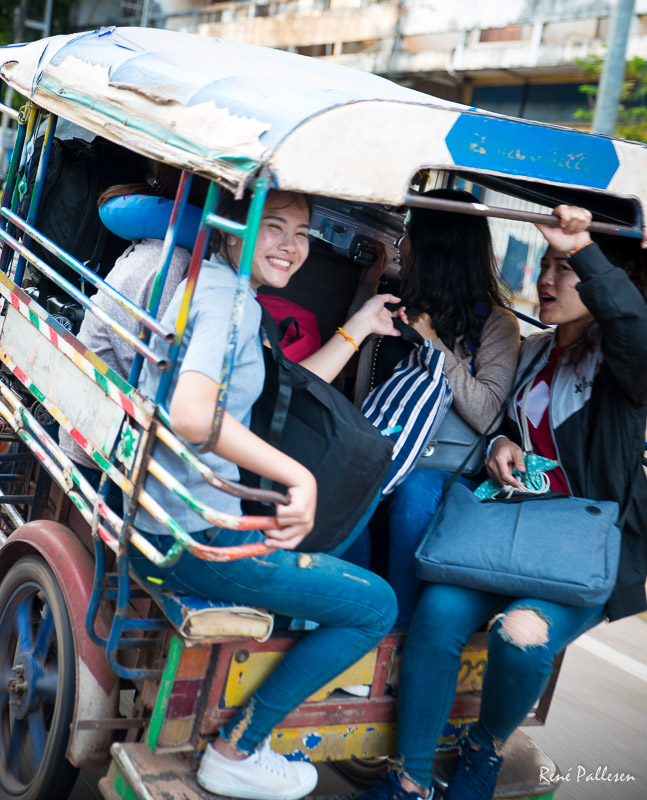


For the longer trips we would catch either local buses (mini vans) or in some instances it was worthwhile us hiring a private bus as we were enough people to fill it.

From Vang Vieng to Luang Prabang we hired a private van taking us across the mountain pass at Kasi. Last time I went through here it was in an open bus and at the pass it was raining and really cold. This time round we had a beautiful clear day with a great view of the valley below from the top.
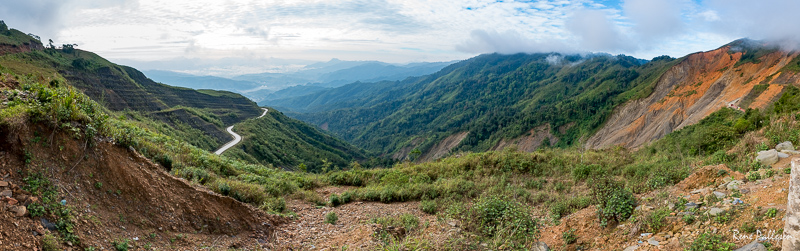


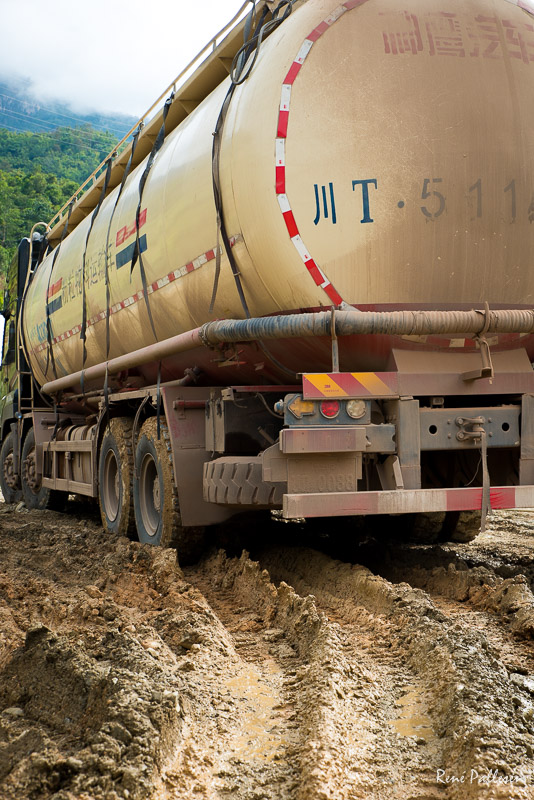
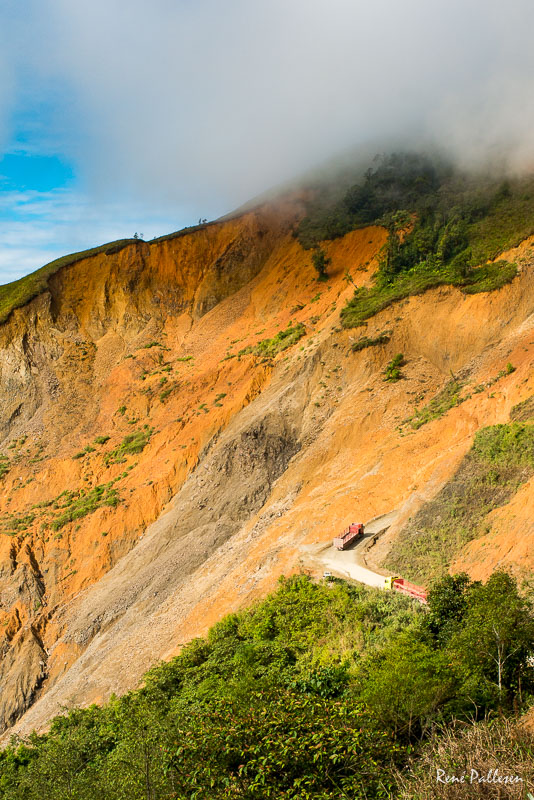
The week before they had a lot of rain and a landslide had taken out large parts of the last section of road (I read in the local newspaper a few days earlier that the road was closed). Our little van was struggling getting enough grip and our driver had to reverse to get enough of a run-up in the next attempt to make it through the steep and muddy section.

The larger trucks were really struggling getting through.


Perfect Moments Photography | A Rene Pallesen Journal

Home

15. January 2001 11:14
by Rene Pallesen
0 Comments

Mt Cook

15. January 2001 11:14 by Rene Pallesen | 0 Comments

mt cook


Mt Cook

Mt Cook
Our ice-climbing group

Alan


Created: 18 Aug 2001 Last Updated: 16 Sept 2001

15. January 2001 10:59
by Rene Pallesen
0 Comments

Mt Cook ( 15 ~ 28 January 2001 )

15. January 2001 10:59 by Rene Pallesen | 0 Comments

mt cook 15 28 january 2001
Above the clouds at Mt Cook - photo competition winner!Mt Cook ( 15 ~ 28 January 2001 )


I decided to do a Technical Ice-Climbing course with Alpine Guides in New Zealand.

I spent 10 days at Mt Cook doing a very challenging course, but I learnt a lot. I learnt all the techniques required to do ice-climbing safely. I also learnt the necessities of surviving in the icy mountains.

Prior to the trip, a lot of preparation was required. Everyday, I went jogging to build up my fitness, so by the time I left for New Zealand, I could run 3km on the sand without getting puffed. I also had to buy some of the equipment. I had to buy cramp-ons (looks like spiked metal soles) to attach to my boots; ice-axe and ice-hammer; a new Gore-tex jacket (I needed a new one anyway) and some other clothing and equipment.

The photo on the right became a 3rd-place winner in a photo competition.

Mt Cook

Our group consisted of 4 other doing the course. There were no prerequisites, other than a love for the mountains and a very high fitness level. Not all of us who do this course go on to climb the great mountains. We also discovered it takes guts and courage to stand on top of the world and feel confident. One cannot be an ice-climber if there is a fear of heights or if unsteady on the feet.

Our ice-climbing group


All of us in the group had come from different backgrounds. Søren was an experienced climber, who had aspirations of going to the Himalayas. Alan was a rock-climber who wanted to try the challenge of ice-climbing. Rob too loved the mountains and wanted the experience and challenge of being on the icey slopes of New Zealand. I had had quite a lot of climbing and mountaineering experience, but this was my first time ice-climbing.


The person holding the camera is Søren. I met him in NZ, whilst waiting for the bus for Mt Cook. To my surprise, he was a Dane living here in Sydney. He was a professional photographer (hence you see him holding the Nikon). He and I had similiar experience so our speed through the course was pretty much the same.

Soren


I actually ended up cracking a rib whilst on the course. I did this during a 'self-arrest' technique, where we actually throw ourselves down a steep slope and try to use our ice-axe to stop ourselves from falling any further. This technique is used in case you fall down a crevass and have nothing to hold onto.

Rob was the other person doing the course. He once dropped his ice-axe and one of us had to abseil down to collect it, as an ice-axe is a piece of equipment that is vital and you only carry one of these each.

We worked in pairs, but had to swap partners as our guide took turns working with each of us.
Søren doing a climbAlan doing a climb
Alan doing a climb


Ice-climbing is nothing like rock-climbing. You cannot use your fingers (well, they will freeze if you take your gloves off), so you really on equipment like ice-axe and ice-picks to anchor yourself into the ice. These pieces of equipment are really important, especially if you are sleeping on a ledge or stopping for a rest. Other than someone belaying you, using ice-picks to secure yourself into the ice is the backup should your belay fail.

We each took turns at ice-climbing! Alan is the one in the blue jacket, Søren is the one in the red.

I guess Søren has more photos of me climbing, whereas I can't take photos of myself!


In the following section, you will see a series of photos of Mt Cook.
If you want to have a look at the black & white version of this (quite artistic), click here.

Photo 1 of Mt CookPhoto 2 of Mt CookPhoto 3 of Mt Cook
Photo 4 of Mt CookPhoto 5 of Mt Cook


17. September 2000 10:58
by Rene Pallesen
0 Comments

Olympic Day Out ( 17th Sept 2000 )

17. September 2000 10:58 by Rene Pallesen | 0 Comments

olympic day out 17th sept 2000
Olympic torch - lit


Last September, Sydney held the Olympic Games. I saw a lot of the events on TV but was disappointed with the coverage of other countries' involvement.

However, I did manage to be at Olympic Park during the Games and also see the first handball match - Denmark vs Norway.

I managed to get tickets for the game and had a very nice day with my girlfriend and the Lenehans. I also managed to get some pretty spectacular photos of the Olympic torch.


Olympic torch from afar

Me with Stadium Australia


Here is Stadium Australia, where the Olympic torch is held. Most of the major track & field events, as well as athletics were held here. It is a pretty spectacular building - and HUGE. During the Olympics, you could not go into just any of the buildings at Olympic Park. You had to have a ticket for an event before you could enter the building.


Stadium Australia

As you can see me, I am wearing my T-shirt supporting Danmark! This is one of the few days that I can wear the T-shirt.


It was a very sunny and warm day and the place was full of people. During the Olympics, you could only get access to the whole of the Olympic Park if you had a ticket. They had quite tight security, and had to go through a detector on the perimeter of the grounds after you got off the train/bus.

Dane in true colours!


The handball game started at about 2pm and we managed to wander round for quite a bit before going into the arena wear the handball was.


The food as amazingly expensive! Normally a fruit salad would only cost about AUD$3, cost up to AUD$8 that day!. Bottles of water was double the price. They really made it a money-making event for tourists! The funny thing too, we noticed that as you entered Olympic Park, all of the signs were in French and English, and all the announcements were given in French first, then English. It was most peculiar!

As we got closer to where the handball games were being held, we saw a lot of Danes and Norwegians dressed in country colours! Danes in red and white and Norwegians... well, there was a guy there who had lots of cow bells around his neck and attached to his clothes. He was wearing a traditional metal helmet and dressed in old-fashioned gear. It was amazing to feel all the atmosphere - just to be there.

True Danish spirit!Lance with Danish flags


We were all in the true Danish spirit! Even my girlfriend was dressed in a white T-shirt and red pants! We painted flags on our faces with some face paint. We were definitely there to support the Danish team!

Even Lance could not help get caught in the moment with us! *smile*


Handball match


A break in the handball game - Danmark vs Norway!

Danmark in red & white, Norway in blue & white.

We had pretty good seats - it was a matter of whoever got there first, had the best seats, although we had to enter through certain doors.

All the journalists and officials sat on the left. We even heard that the crown prince of Danmark was there for the game, even though we could not spot him. There were flags everywhere, Danish and Norwegian waving about. Everytime Norway scored, you could hear countless numbers of cow-bells being rung! A few times, some of the people tried to start a Mexican wave, but that did not work out.

It was a very fast and furious game. It was the only handball game that the Danish lost in the whole Olympic Games, and they eventually came first in the finals!

Group photo


Just after entering Olympic Park, we managed to get a group photo!


As you can see the place is very crowded but very festive - you just had to be there!


Olympic Torch at Sunset


A most glorious sunset!


After the handball match, we wandered around for a bit longer. The day had been quite warm, so the night was a beautiful clear night.

After the Lenehans left, Arumi and I had a look at a small Aboriginal art exhibition located at the Park. We sat on one of the few grassy patches, to watch the flickering of the lights and just enjoy the day.

We eventually went home, but Olympic Park was still swarming with people, who were there to watch events that went on later into the night. Although we did not get the chance to see any other events during the Olympics, it was definitely worth the day we spent there. We would have loved to see the final game when Danmark won, but as usual, we were not very organised...


Below, I have included photos taken on the night of the Closing Ceremony.


These were taken from Graham's apartment on a hill at McMahons Point. We had a spectacular view of the fireworks that went off after the Closing Ceremony. It was really windy on the balcony, but I managed to get some photos of the Olympic rings that were placed on Sydney Harbour Bridge.

Beautiful, isn't it?

Sydney Harbour Bridge at nightSydney Harbour Bridge at nightSydney Harbour Bridge at sunset


15. September 2000 11:05
by Rene Pallesen
0 Comments

New Car in 2000 . . .

15. September 2000 11:05 by Rene Pallesen | 0 Comments

new car in 2000


In September 2000, just after I returned from my trip to Borneo, I had to buy this new car because my girlfriend had written off my car whilst I was away! *smile*

I did not look forward to hunting around for a new car, but I found a good buy locally. This car is a 1997 Ford Futura, with 4.0 litre, 6-cylinder, 220-horsepower, power-steering, central locking and electronic windows (I think I am starting to sound like a car advertisement...)

Frontal view of car


Side view of car

It is pretty much the same colour as my old car, and it feels so nice to drive!

As you can see, pretty similar, but I also really miss my old car! It had a lot of computerised features - from a digital odometer, to adjusting the internal temperature of the car. It was a pretty cool car and wished I could have kept it for another few more years.

Frontal view of car


Side view of car

My first car in Australia!

A huge contrast to my first car!

It is a red hatchback that I bought early 1998, a few months after I arrived in Australia. But someone wrote it off a few months after I bought it. It was a pretty bad accident, but luckily I was alright. I was only covered by Third Party insurance, and to go through a lot of paperwork just to get reimbursement for the car!

15. August 2000 10:43
by Rene Pallesen
0 Comments

Away from Headquarters . . .

15. August 2000 10:43 by Rene Pallesen | 0 Comments

away from headquarters
Ecochallenge ( Sabah 2000 )

Magellan HotelMoving into SilamRepeater StationInjured CompetitorTransporting a Repeater StationBeetleKids in Village
ArrivalSilam / Jungle OpsRepeater StationsThe CompetitorsHelicopterJungle Around UsThe Village

Village people
Away from Headquarters . . .

I managed to explore the villages at Silam.

The people here wore this white stuff on their faces - I guess their form of sunscreen.

These people were refugees from the Philippines.

Kids in the village

The kids were fighting to fit into the photo!

Kids in the village


The kids here were really cute.Caught Monkey

These kids here, had caught a monkey and was trying to sell it at the camp for 5 ringgit (AUD$2.50).


No-one wanted to buy it because they knew if they bought it, and set it loose, the kids would just catch it again, and try to sell it.

In general, there were lots of great photos at Silam village.

Car in a ditch


One of the helicopter pilots was driving through the jungle roads, took a corner too fast, and had a minor mishap.


All of us having dinnerHuge crab dinner!

We headed into Lahad Datu to get some seafood!

An escape from camp food. Camp food was disgusting. There were live worms in the vegetables (yes, after cooked). Most of the food was not fresh, and was pretty boring. The seafood was fantastic here. Whenever we had the chance, we ate lots of seafood.

Yum... Paul did not get to eat all of the crabs - all of us had a portion of it.

Huge lobsterHuge lobster

Yummm... they were huge, but we did not eat them. They were too big for us to eat, pretty impressive though. They were the biggest lobsters I have seen in my life. We saw these at the same place we ate our seafood and frogs (below).

Frog


We had this frog for dinner about 2 min after I took the photo.


This was actually when I went out with Glen in Kota Kinabalu - he asked me to pick some food and to surprise him.

I did not tell him till a year later that he ate frog meat. He asked me what it was, because he reckoned it tasted funny, but I did not tell him at the time.

I think he will only eat it again. Only if he really had to.

The tallest building in the world


Petronis Towers - the tallest twin towers in the world.

Actually, they are the tallest buildings in the world, followed by the Sears Towers in Chicago.

The towers are joined by some sort pedestrian platform.

These towers are located in Kuala Lumpur.

I went to Kuala Lumpur to pick up my Permanent Residency for Australia.

Woohoo!!! After 2 years of lots of paperwork, and correspondence back and forth with Berlin, I finally managed to get it!

The inconvenience of it all, was that I actually had to leave Australia ie collect my PR before re-entering Australia.


Below, is the only photo I have of the Lateral Linking Team that I worked with during the race.

The radio communications team

Back to Top

Return to Borneo Homepage


Created: 7 Dec 2001

15. August 2000 10:42
by Rene Pallesen
0 Comments

The Wildlife in Borneo . . .

15. August 2000 10:42 by Rene Pallesen | 0 Comments

the wildlife in borneo
Ecochallenge ( Sabah 2000 )

Magellan HotelMoving into SilamRepeater StationInjured CompetitorTransporting a Repeater StationBeetleKids in Village
ArrivalSilam / Jungle OpsRepeater StationsThe CompetitorsHelicopterJungle Around UsThe Village

Jungles of Borneo
The Wildlife in Borneo . . .


The jungles in Borneo are really dense, dark and humid.

You will find that some of the photos look as though they have been over-exposed, but in reality, it is just the humidity in the air.

Me in the jungle


I have a photo of this at home - Glen enlarged it for me, and framed it!

Don't ask me why - I think I look rather wasted there.

Glen and I tried to race through the jungle.

The climb to the top of the mountain is rated as a 1.5 hour climb... Glen and I have done it in 26 minutes... actually I was confident that I could do it in less than 20 and so I did!

I held the record of taking 17 minutes to race to the top of Mt Silam, covering a distance of approx 4 kilometres through the jungle, up a mountain.

I was getting really fit (My girlfriend was proud of me).

Glen in the jungleGlen in the jungleGlen in the jungle

This photo shows how dense and dark the jungle can be. It was so humid there... no, not because I hadn't cleaned my lenses.

Glen in the jungleMe in the jungle


You can see how muddy it is in the jungle - I became quite dirty after many trips into the jungle.

Look how big these trees are!Me standing in front of one of these big trees!They look almost as big as the Californian Redwoods!

I think these trees are just as big as the Californian Redwoods. They might not be as old, but definitely just as big.

Beetle


This was taken with a 300mm lens, from 1.5 metres.


The most amazing thing about them, is when they are scared, the curl up into little "marbles".

It looks like a small bug, but it is actually at least 7cm long, which is actually quite big.

Moth in palm of hand


I noticed in Borneo, most of the insects there were huge.


The wingspan of the brown moth was about 15cm wide - huge!

They are mostly active at night, which is quite common for creatures in the jungle.

A couple of the girls stationed in the jungles, was stationed here. Not a wise decision, considering these girls were paranoid about the insects.

(Note: in the photo below, I still had conjunctivitis) I had the red eyes for most of the trip.
Moth on my elbowBrown moth

Big and beautiful, don't you think? You can see how big the black moth is compared to the size of the telephone.

Black mothMoth on wall

Plant with leaves in hexagon formation


These plants were kind of special because each branch split into two, so by the end of it, they formed a hexagonal pattern.


Below, are plants known as the "pitcher" plant.

The pitcher plants are meat-eating plants - you have watch out not to fall into them because they will swallow you whole.

Pitcher plant

If you just believed that, you are very gullible! *laugh*


The pitcher plant, like other carnivorous plants, feed on insects.

They have sweet-smelling nectar that attract the unsuspecting insect to it.

When the insect lands, it finds the surface slippery and fall straight into the “pitcher”, where the plants juices drowns it and is digested by the plant.

You may have heard of other type of carnivorous plants such as the Venus Fly Trap, and the Sundew plants.

Me holding a dead snake

Yes, you see me holding the snake with a leaf.


It was a poisonous snake, and I was worried about it's venom getting on my skin.

For example a puff adder, contact with the venom numbs the skin.

I was not familiar with the snakes in Borneo, and was not about to risk it.
A Tarantella


The tarantella was sitting inside the catering tent hunting.

Everyone was looking at it and admiring it, which was pretty amazing, considering I know many people who would willingly kill a spider in sight.

Back to Top
Return to Borneo Homepage


Created: 7 Dec 2001

15. August 2000 10:42
by Rene Pallesen
0 Comments

Helicopters . . .

15. August 2000 10:42 by Rene Pallesen | 0 Comments

helicopters
Ecochallenge ( Sabah 2000 )

Magellan HotelMoving into SilamRepeater StationInjured CompetitorTransporting a Repeater StationBeetleKids in Village
ArrivalSilam / Jungle OpsRepeater StationsThe CompetitorsHelicopterJungle Around UsThe Village

Helicopters . . .
The radio communications team had to arrive a few days before that because we had to hand out over 2,000 pieces of radio equipment. We had problems getting the necessary approvals for helicopters so they were grounded! I ended having to hand out most of the equipment as Glen and Paul had to sort out our use of the helicopters.

We had to fly all the equipment to Silam before the start of the race, and our team managed to fly to Silam the day before the race started.

Do you believe that Paul managed to take a photo of me whilst I was flying the chopper? He was standing to the side of me, and took the photo at night time, with the door open ...

Jeez, I would love to be the pilot!Don't you think I look good as the chopper's pilot?

Just kidding.

A couple of days before the race started, I was at the airport most of the day. We had some problems with the radios in the helicopters... I must have been in and out of those helicopters at least 200 times.

I did manage to get someone to take some photos of me in a helicopter, looking very much like the pilot!

I had hoped that I had the time to explore Kota Kinabalue, but we were so busy, it had to wait.

Helicopters at HQ

Here is the 212 or "Huey" - a twin-turbine Vietnam helicopter taking off. It is a hell a lot more powerful than some of the other helicopters we were using, which were 206s.
Landing at HQ


Here are the medical guys practising abseiling out of the helicopters (Aussie style)!

At the start of the race, I was sitting there listening to the first rescue on the radio.

3 hours after the start, four boats had capsized... helicopters and boats were very busy!

The competitors were due to arrive at Silam (another checkpoint) the next day (21st Aug).

For the first few days after the race started, I had to help organise to get the fuel to the top of the mountain.

After that the helicopter came in useful. It brought up 100 litres of fuel on the 4th day so I did not have to ferry fuel anymore!

Glen with repeater stationAt site of repeater station

At the end of the race, we had to sling-load the repeaters, to get them off the mountain. That means we had to strap them onto the helicopters, and pull them off the mountains that way - quite effective really.

Transporting Equipment Photo 2Transporting Equipment Photo 6Transporting Equipment Photo 4Transporting Equipment Photo 5
Transporting Equipment Photo 1Transporting Equipment Photo 3


Repeater station finally airborne!


You can see a pole in the right photo.
My girlfriend asked me what it was for - it helps balance the load so that it does not keep swinging whilst airborne.


Below, you will see some pretty good photos from the chopper.

View from chopper - over the riverView from chopper of jungles belowView from chopper - over the river


Towards the end of the race, we had to scan the rivers for the last competitors coming in - to make sure they had completed this section of the race course. It was low-altitude flying of the river-bed.

The photo on the left shows the chopper approaching Silam Village. This village was located just outside of Silam HQ.

Aerial view of the villageMe sitting in helicopter


Glen liked wanted to have a photo of the back of my head - and I ruined the photo by turning my head as he took it...

Here's a sunset shot of the helicopters flying around.

I had to put in this fantastic photo - the lighting gives a really nice feel to the photo.

Sunset shot


Back to Top

Return to Borneo Homepage


Created: 7 Dec 2001
Perfect Moments Photography | A Rene Pallesen Journal

Home

10. June 2002 11:47
by Rene Pallesen
0 Comments

Singapore

10. June 2002 11:47 by Rene Pallesen | 0 Comments

singapore


On the way back from Denmark we made a stopover in Singapore to have a look as well as do some shopping.

Here a photo from Little India in Singapore.

4. June 2002 11:36
by Rene Pallesen
0 Comments

My mums birthday

4. June 2002 11:36 by Rene Pallesen | 0 Comments

Perfect Moments Photography | A Rene Pallesen Journal

Home

4. May 2026 22:05
by Rene Pallesen
0 Comments

China 2026 Xizhou

4. May 2026 22:05 by Rene Pallesen | 0 Comments

Xizhou – The Bai Way of Living A short drive north of Dali brought us to Xizhou — and once again, it

A short drive north of Dali brought me to Xizhou — and once again, it felt like stepping into a different world.

This is the heartland of the Bai people, one of China’s recognised ethnic minorities, with a culture, architecture, and identity distinct from the Han majority.

And you see that difference immediately as the architecture here is deeply rooted in tradition.

Many of the homes are constructed using a mixture of earth, straw, and other local materials — a form of rammed earth or adobe — designed to regulate temperature and withstand the elements. 

In one wall, you could clearly see fragments of old pottery embedded within it — broken pieces reused as part of the structure. Whether for reinforcement, drainage, or simply practicality, it gives the sense that nothing was wasted. Materials were recycled long before it became a modern concept.

Over the top of these walls sits the defining finish: a white lime or chalk wash. This isn’t just for appearance — it acts as a protective layer, helping to seal the surface and reflect heat, preserving the structure beneath.

The result is the signature look of Bai villages — clean white walls, often contrasted with darker timber frames and intricate decorative details.


The Bai are also known for their indigo-dyed textiles — a tradition that goes back centuries.

Historically, natural indigo dye was extracted from local plants and used to colour fabrics in deep, rich blues. Traditional techniques often included resist-dyeing methods — where parts of the fabric were bound, stitched, or pressed before dyeing to create patterns.

What we commonly see today as “tie-dye” is actually a continuation and evolution of these traditional resist-dyeing techniques. While modern versions may be adapted for tourism and contemporary tastes, the roots are very much authentic.

So yes — while the patterns you see today might feel stylised, the underlying method and cultural significance go back generations.


What made Xizhou stand out most was the atmosphere.

Compared to Dali’s ancient city, it was noticeably quieter. Fewer crowds, fewer distractions — just narrow laneways lined with whitewashed walls, leading past doorways and into glimpses of everyday life.

Looking into the courtyards, you could see the care people put into their homes. Plants, decorations, well-maintained spaces — a sense of pride that’s hard to fake.

Some of the houses were genuinely beautiful — not in a polished, tourist-ready way, but in a lived-in, authentic sense.


Woven through the village are small lakes and waterways, softened by lotus flowers and crossed by elegantly constructed stone bridges.

These aren’t grand landmarks — they’re subtle, almost quiet features that add to the overall feel of the place. Reflections in the water, soft movement, the contrast between stone, wood, and greenery — it all contributes to a sense of calm.

It’s the kind of place where you naturally slow your pace.


On the outskirts of the village, the picture becomes more complex.

Some homes have been restored — carefully maintained, structurally sound, and still in use. Others are in various stages of decay or renovation.

And in those buildings, you can see the layers.

Older construction methods exposed beneath newer repairs. Different materials from different periods. Evidence of change, adaptation, and survival.


Xizhou doesn’t overwhelm you with scale or spectacle.

It draws you in with detail.

With texture. With quiet moments. With the feeling that culture here isn’t something being displayed — it’s something still being lived.

And after the busier stops along the journey, that made it stand out all the more.


4. May 2026 13:05
by Rene Pallesen
0 Comments

China 2026 Dali

4. May 2026 13:05 by Rene Pallesen | 0 Comments

After Yangshuo we made our way to Dali in Yunnan. This was an early start getting to Guilin and afte

After Yangshuo, the pace picked up again.

It was an early start getting back to Guilin, but once on the high-speed train, everything settled into that now-familiar rhythm — smooth, fast, and effortless. Hours passed as we cut across vast stretches of countryside, through mountains and valleys, a reminder of just how much China has invested in connecting even its more remote regions.

Rail lines, motorways, tunnels carved through mountains — it’s impossible not to be impressed by the scale of it all.


And then, we arrived in Dali — a place that immediately felt different again.

Dali isn’t just another stop — it carries a history that sets it apart from much of China.

For several centuries, this region was the centre of the Kingdom of Dali, an independent state that ruled much of Yunnan. While much of China was governed by powerful dynasties like the Song, Dali remained culturally and politically distinct, influenced heavily by the Bai people and with strong Buddhist traditions.

Its relative isolation, surrounded by mountains and far from the imperial centres of power, allowed it to maintain that independence — at least until it was eventually absorbed into the Mongol Empire under Kublai Khan in the 13th century.

Even today, that sense of being slightly separate still lingers.


The Dali Ancient City is vast — far larger than expected — and remarkably intact.

The old city walls still stand, complete with imposing gates and watchtowers that once guarded the kingdom. Walking through them, you get a real sense of scale — this wasn’t just a town, it was a significant regional centre with both strategic and cultural importance.

Inside, the streets stretch out in a grid, lined with traditional Bai-style buildings, various shops, and a steady flow of visitors.

It’s busy — very much on the domestic tourist trail — but it doesn’t take much to step away from the main streets and find something quieter.

Turn a corner, wander down a side alley, and suddenly the noise fades. You’re back to slower moments — locals going about their day, small courtyards, glimpses of everyday life tucked just behind the busier facades.


Near the centre of the old town stands the Wuhua Tower.

At first glance, it feels like it should be part of the city’s defensive system — but it wasn’t.

Historically, Wuhua Tower dates back to the Nanzhao Kingdom (which preceded the Kingdom of Dali) and served more as a ceremonial and cultural structure than a military one. It was used as a place for gatherings, receptions, and entertainment — a symbol of prestige rather than protection.

What stands today is a reconstruction, but it still reflects that original purpose — positioned prominently, not for defence, but to be seen.

It’s a small detail, but it says a lot about the city: not everything here was built for war. Some of it was built simply for life, culture, and display.


Dali is full of contrasts.

Modern shops sit beside traditional homes. Tourist-heavy streets give way to quiet, almost untouched corners. Old stonework meets neon signs.

At times, it feels curated. At others, completely genuine.

But that blend is part of what makes it interesting.

It’s not frozen in time — it’s evolving — yet still holding onto enough of its past to remind you where it came from.

And like much of this journey, the more you wander, the more those layers begin to reveal themselves.


4. May 2026 11:05
by Rene Pallesen
0 Comments

China 2026 Yangshuo Impression Sanjie Liu

4. May 2026 11:05 by Rene Pallesen | 0 Comments

In the evening at Yangshuo we went to a show called "Impression Sanjie Liu". We had heard a lot abou
In the evening at Yangshuo we went to a show called "Impression Sanjie Liu". We had heard a lot about this show, so the expectations were high.

This is an open air show where they have converted a section of the river and limestone towers into a stage with hundreds of actors. This includes lots of bamboo rafts, boats and fabric strung across the entirety of the river.

It started out beautifully and very impressive.

I do wish that the end of the show had matched the beginning of the show in wow factor. I don't know how, but I do think they could have put more lights on the river and the limestone cliffs as this would have added to the finale.


Also, during the show there is a scene with a girl dancing on a crescent moon along with other dancers along the river. From a distance it looks like they are not wearing much at all (if anything). In town we did see a poster for the show and this seemed to confirm this...but you tell me.


2. May 2026 12:05
by Rene Pallesen
0 Comments

China 2026 Yangshuo

2. May 2026 12:05 by Rene Pallesen | 0 Comments


Leaving the intensity of Guangzhou behind, we boarded a high-speed train bound for Yangshuo — and in just a couple of hours, everything changed.

At times the train was pushing close to 300 km/h, yet inside it felt effortless. Smooth, quiet, almost disconnected from the speed. It was a fitting transition — from megacity to countryside in what felt like no time at all.

And the first thing we noticed stepping off the train? The air.

It was like perfume. The surrounding trees were in full bloom, and after the density of Guangzhou, it felt fresh, almost surreal — like we’d stepped into a completely different world.


Waiting for us in Yangshuo were familiar faces — Sacha, Mavis, and their daughter Sammi. From here on, the trip shifted. It wasn’t just the four of us navigating something new anymore.


Yangshuo is famous for its karst landscape — those dramatic limestone peaks that rise almost vertically from the ground, scattered across rice fields and rivers like something out of a painting.

The best way to experience it is simply to get out into it.

So that’s what we did.

Everyone grabbed bikes — except for Kim and me, who opted for an electric scooter (a wise decision, given the distances and the terrain). With Kim on the back, we set off, following winding roads out of town and into the countryside.

It didn’t take long before we got lost. But in Yangshuo, that’s kind of the point.

We drifted through small villages, along narrow paths, and eventually found ourselves surrounded by rice paddies and towering limestone stacks in every direction. The scenery didn’t feel real — it felt too perfectly composed, like a traditional Chinese landscape painting brought to life.

At one point, we hit complete gridlock in a village — cars, scooters, pedestrians, all tangled together in a standstill. What should have taken minutes stretched out endlessly as we tried to push through.

Thankfully, being on bikes worked in our favour. Slowly, carefully, we squeezed through gaps that cars simply couldn’t.

The kids handled it brilliantly. It was a long day, and at times the traffic got chaotic, but they rode with confidence — listening, adapting, and just getting on with it.

There was one moment of tension when Mavis was nudged over by a car in the congestion, but thankfully she came away shaken more than anything else.


Somewhere along the ride, as we moved between villages and open countryside, we passed something that made us slow down.

An elderly man — well into his eighties — sitting quietly outside his home, weaving hats by hand.

There was nothing staged about it. No performance, no attempt to attract attention. Just a simple, repetitive motion, practiced over decades. His hands moved with a rhythm that didn’t need thinking — strip by strip, shaping something both practical and beautiful.

We stopped for a while, watching.

In a place where so much is changing so quickly — high-speed trains, digital payments, modern cities rising almost overnight — this felt like a direct connection to something much older. A way of life that hasn’t entirely disappeared, but is slowly becoming harder to find.

There was a calmness to it.

No rush, no urgency — just time, skill, and patience. The kind of work that carries quiet pride, even if it goes largely unnoticed.

For us, it was a reminder that not everything moves at the same pace.

And in that brief stop, somewhere between getting lost and finding our way again, we found one of the most genuine moments of the journey.


Next day it was a short trip out to Xingping that brought one of the most recognisable scenes of the trip.

Just outside the town lies a bend in the Li River that’s instantly familiar — even if you don’t realise it at first. It’s the exact landscape printed on the back of the Chinese 20 Yuan note.

And once you see it, it clicks.

The same karst peaks, the same river curve — a view that’s been quietly circulating in millions of wallets for years.

What followed was a surprisingly fun challenge: trying to line up the real view with the image on the note.

There were people everywhere doing the same thing — holding up old 20 Yuan notes, adjusting angles, laughing as they tried to get the perfect match.

The irony wasn’t lost on us.

China today is almost entirely cashless. Paying with a phone is the norm, and physical money feels like a relic. We didn’t even have a note ourselves — we had to borrow one just to take part.

Also lined up along the river were rafts, cormorant birds and people dressed up with hired photographers to have their photo taken.


Down by the river, near one of the many low bridges crossing the water, we climbed onto a bamboo raft and set off along the Yulong River.

Although this would have been Yangshuo at its most peaceful, it was packed with other rafts, hot air balloons and motorised paragliders.

Once we got going the raft glided quietly upstream, the only sounds being the water and the occasional call from the riverbanks. Limestone peaks rose on either side, softened by mist and distance, while reflections shimmered gently below.

On the way back down, everything felt even more relaxed. No rush, no noise — just drifting through one of the most iconic landscapes in China.


As the sun dropped behind the karst peaks, we made our way back into town and joined the evening flow along West Street.

If the countryside had been calm and open, this was the opposite.

West Street comes alive at night. Lights spill out from shops and restaurants, music drifts through the air, and the narrow street fills with a mix of locals, travellers, and everything in between. It’s lively, a little chaotic, and full of energy.

We wandered without much of a plan — stopping to look at small food stalls, peeking into restaurants, watching musical performers, and just taking it all in. There’s a blend here that feels uniquely Yangshuo: traditional elements sitting right alongside modern tourism, local life mixing with visitors from all over.

For the kids, it was sensory overload in the best way — noise, lights, movement everywhere. For us, it was a chance to just observe. The rhythm of the place, the interactions, the small moments happening all around.

After a day of riding through villages and open landscapes, being back in the middle of it all felt almost surreal.

Yangshuo has that balance — peaceful by day, vibrant by night.

And West Street is where those two worlds meet.


angshuo will be remembered for its landscapes — the limestone peaks, the rivers, the countryside that feels almost unreal.

But for me, that’s not what lingers.

As much as the scenery impresses, it’s the people who stay with you.

The old man weaving hats outside his home. The quiet glances in the alleyways. The locals going about their day, completely untouched by the fact that, for us, this was something extraordinary. Even along the busy stretch of West Street, behind the lights and movement, there were still those moments — brief, unspoken connections with strangers.

As a photographer, that’s what draws me in. Not just the image, but the story behind it. The history carried in a face, the traces of a life lived in a place that’s changing faster than most.

Landscapes can be breathtaking, but they don’t look back at you.

People do.

And in those fleeting moments — a glance, a smile, a moment of curiosity — there’s something real. Something that cuts through language and culture.

That’s what I’ll remember most about Yangshuo.

Not just where we went… but who we encountered along the way.


24. April 2026 16:04
by Rene Pallesen
0 Comments

China 2026 Guangzhou

24. April 2026 16:04 by Rene Pallesen | 0 Comments

First Shamian Island in GuangzhouThen sight seeingDinner with one of Kims friends at exclusive priva
Perfect Moments Photography | A Rene Pallesen Journal

Home

24. November 2012 01:21
by Rene Pallesen
0 Comments

An Oldie, but a goodie

24. November 2012 01:21 by Rene Pallesen | 0 Comments

an oldie but a goodie


This photo was actually taken more than 6 months ago, but going through some old photos I found it too good not to post.

I was setting up for a pregnancy shoot (then Kim was 4 months due) and Aiden was trying to assist me with the setup. He happened to sit down it the perfect spot and give me a pose that tells so much about his character at that time...sucking his fingers and everything.


...and by pure coincidence it happened that the photo was perfectly lit.

20. November 2012 12:56
by Rene Pallesen
0 Comments

Lucas Foot

20. November 2012 12:56 by Rene Pallesen | 0 Comments

lucas foot


I took this photo a couple of months ago, but haven't come around to finishing it until now.

It is a photo of Lucas' foot in my hands.


12. November 2012 11:44
by Rene Pallesen
0 Comments

Old Photo - Aiden/Daddy looks the same?

12. November 2012 11:44 by Rene Pallesen | 0 Comments

old photo aiden daddy looks the same


I found this old photo of myself that my dad took of me when I was about 3 years old (I think).


Looking at Aiden today there is a strong resemblance in the facial features.


The photo was badly damaged and requires a fair bit of restoration, but at least I now have a digital copy of the photo.

12. November 2012 07:31
by Rene Pallesen
0 Comments

Kim and Lucas 2 Months

12. November 2012 07:31 by Rene Pallesen | 0 Comments

kim and lucas 2 months


The other night Kim was sitting on the sofa with Lucas. They turned towards me and I took the following photos just using the built-in flash of my new camera.


12. November 2012 01:01
by Rene Pallesen
0 Comments

Lucas 2 Month Photos

12. November 2012 01:01 by Rene Pallesen | 0 Comments

lucas 2 month photos


It has now been two months since Lucas was born and the other night we did another session taking some two month photos...this time of myself and Lucas.


He has now grown a lot bigger and is a lot more alert to his surroundings. He is still not a very good sleeper although I think (Kim doesn't) he is improving a bit now.

Kim is pretty worn out having to wake up at night to feed him and I can't help much as I have work to look after as well as Aiden.


11. November 2012 05:37
by Rene Pallesen
0 Comments

Taronga Zoo Family day 2012

11. November 2012 05:37 by Rene Pallesen | 0 Comments

taronga zoo family day 2012


This year my work had organised a family day at Taronga zoo.

Since Chong works for the same company we managed to have most of the family covered with tickets and food.

Click here for more photos

It was great to show the kids some of the animals such as the big gorillas.

Click here for more photos

Snow leopards.

Click here for more photos

Mountain goats...

Click here for more photos

Lions...

Click here for more photos

And dinosaurs...

Click here for more photos

They also put on a seal show for us and it was fun to watch them performing stunts. Aiden was absolutely mesmerised...

Click here for more photos

Click here for more photos

Click here for more photos


Click here for more photos

By the end of the day everyone was knackered...

Click here for more photos


Click here for more photos Click here to see slideshow with more photos

20. October 2012 11:21
by Rene Pallesen
0 Comments

Setup Shot - Funny face

20. October 2012 11:21 by Rene Pallesen | 0 Comments

setup shot funny face


When I setup for my photos I normally have to take a range of setup shots to check if the light is the way that I want it. Sometime I managed to volunteer Kim to help me set up and on the rate occasion she pulls a funny face.


13. October 2012 12:50
by Rene Pallesen
0 Comments

Lucas 1 Month Photos

13. October 2012 12:50 by Rene Pallesen | 0 Comments

lucas 1 month photos


This is a series of photos I've taken of Lucas being 1 month old.


It is a lot harder taking baby photos this time around for a number of reasons such as it being harder to find the time with both Lucas and the newborn around as well as Lucas not being a very good sleeper. This means that whenever he does sleep it is time for especially mummy to have a rest rather than run around taking photos.

Aiden is extremely fond of his little baby brother and every morning he wants to see the baby and give him a little kiss.


Whenever Lucas cries, Aiden will say 'Dont cry Lucas'.


I am sure that as he grows older they will be best mates.


Hopefully as he grows older Lucas will be a bit easier we will be able to take more photos than we have been.

13. October 2012 08:24
by Rene Pallesen
0 Comments

Lucas 1 Month celebration

13. October 2012 08:24 by Rene Pallesen | 0 Comments

lucas 1 month celebration


Lucas is now one month old and we had a little celebration for family and friends with bbq, food and cake.

It was a fine day with lots of kids around (so AIden was busy playing all day).


11. October 2012 04:37
by Rene Pallesen
0 Comments

Work Photo Competition

11. October 2012 04:37 by Rene Pallesen | 0 Comments

work photo competition


Some weeks ago there was a work photo competition where the theme was 'World Connected'. I didn't have much time due to the kids, but I did manage to put together this photo below for the competition with the title 'bringing closer those who matter!'.


It wasn't picked as a finalist, but still fun nevertheless.