Leaving the intensity of Guangzhou behind, we boarded a high-speed train bound for Yangshuo — and in just a couple of hours, everything changed.
At times the train was pushing close to 300 km/h, yet inside it felt effortless. Smooth, quiet, almost disconnected from the speed. It was a fitting transition — from megacity to countryside in what felt like no time at all.
And the first thing we noticed stepping off the train? The air.
It was like perfume. The surrounding trees were in full bloom, and after the density of Guangzhou, it felt fresh, almost surreal — like we’d stepped into a completely different world.
Waiting for us in Yangshuo were
familiar faces — Sacha, Mavis, and their daughter Sammi. From here on,
the trip shifted. It wasn’t just the four of us navigating something new
anymore.
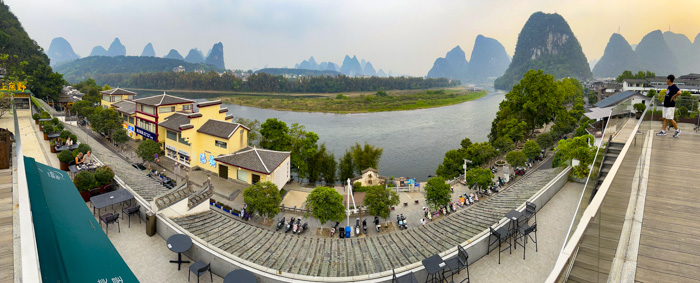
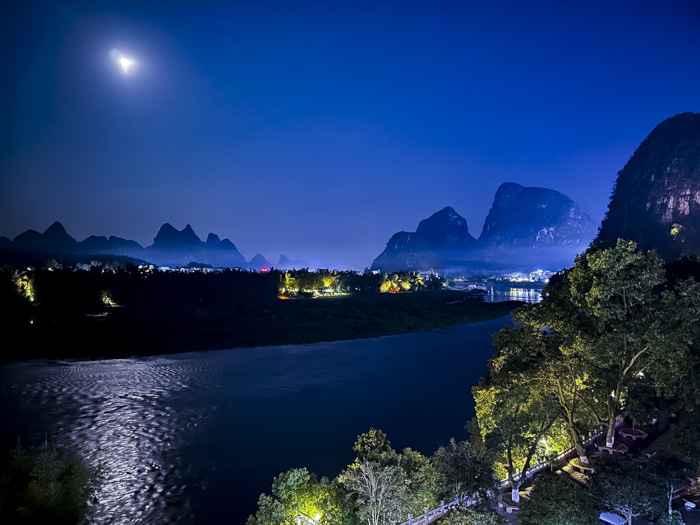
Yangshuo is famous for its karst landscape — those dramatic limestone peaks that rise almost vertically from the ground, scattered across rice fields and rivers like something out of a painting.
The best way to experience it is simply to get out into it.
So that’s what we did.
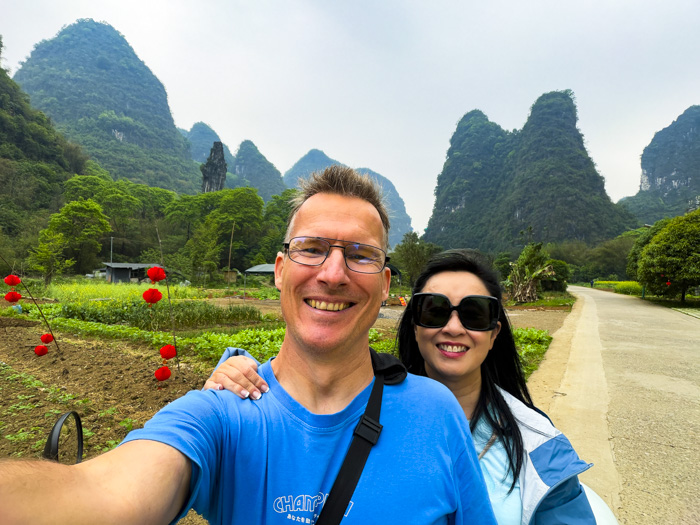
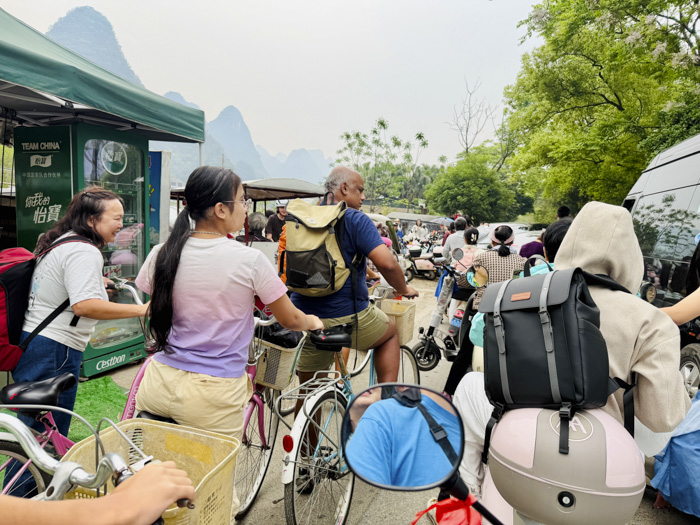
Everyone grabbed bikes — except for Kim and me, who opted for an electric scooter (a wise decision, given the distances and the terrain). With Kim on the back, we set off, following winding roads out of town and into the countryside.
It didn’t take long before we got lost. But in Yangshuo, that’s kind of the point.
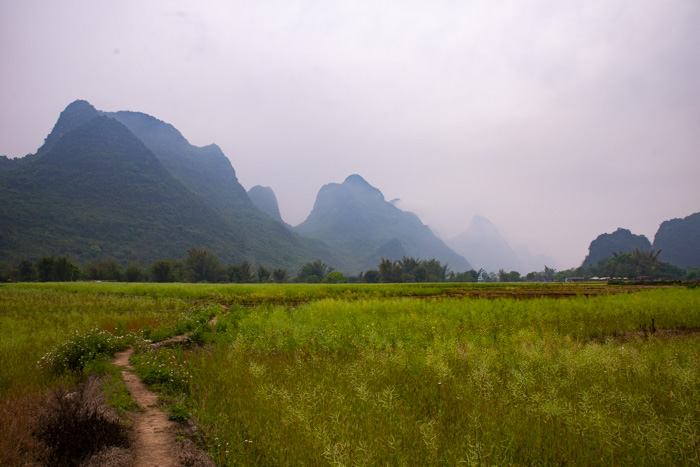
We drifted through small villages, along narrow paths, and eventually found ourselves surrounded by rice paddies and towering limestone stacks in every direction. The scenery didn’t feel real — it felt too perfectly composed, like a traditional Chinese landscape painting brought to life.
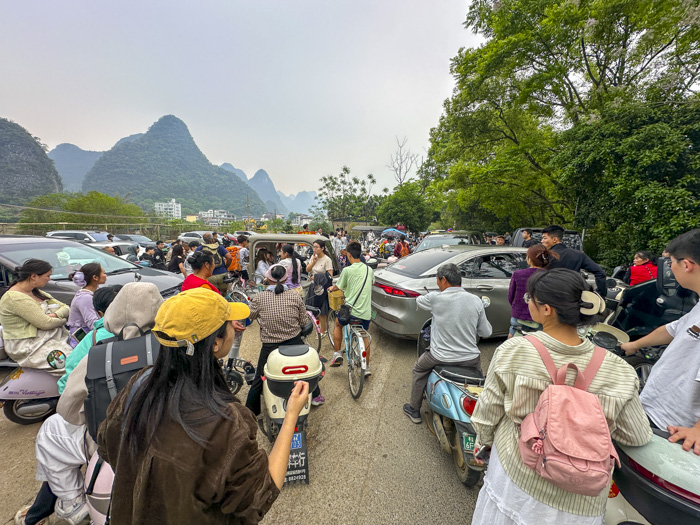
At one point, we hit complete gridlock in a village — cars, scooters, pedestrians, all tangled together in a standstill. What should have taken minutes stretched out endlessly as we tried to push through.
Thankfully, being on bikes worked in our favour. Slowly, carefully, we squeezed through gaps that cars simply couldn’t.
The kids handled it brilliantly. It was a long day, and at times the traffic got chaotic, but they rode with confidence — listening, adapting, and just getting on with it.
There was one moment of tension when Mavis was nudged over by a car in the congestion, but thankfully she came away shaken more than anything else.
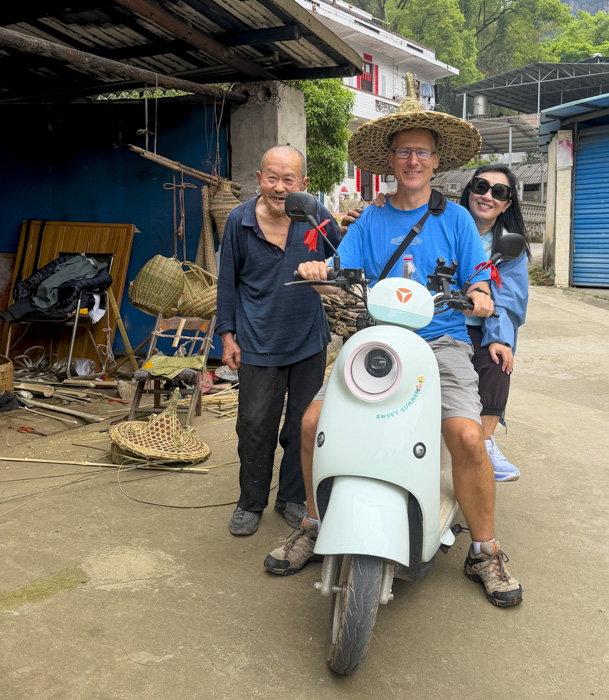
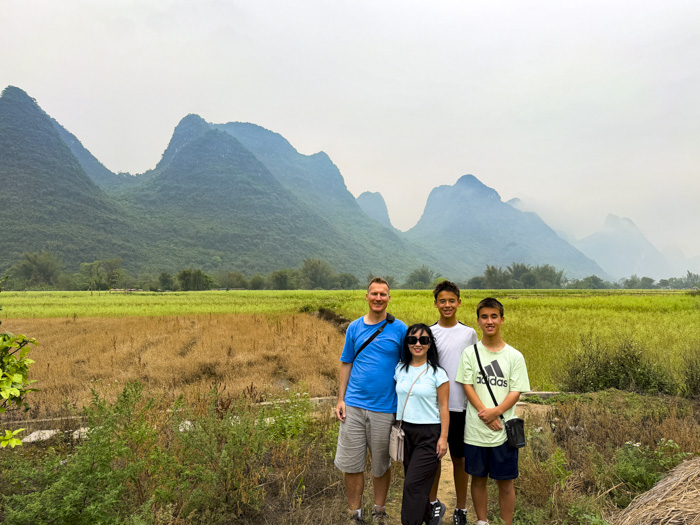
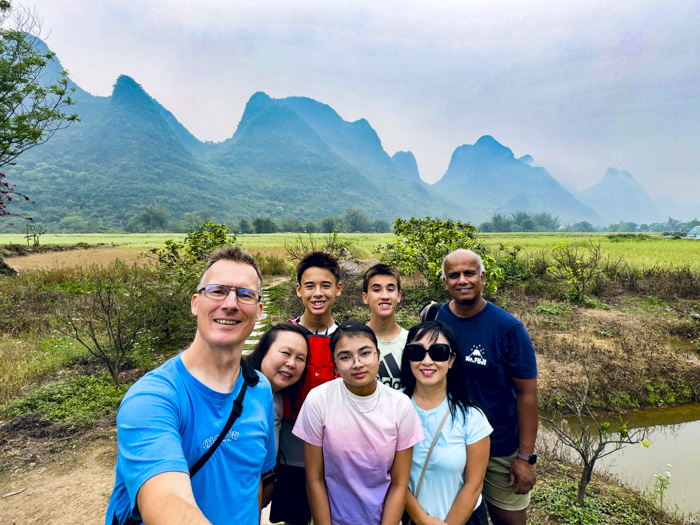
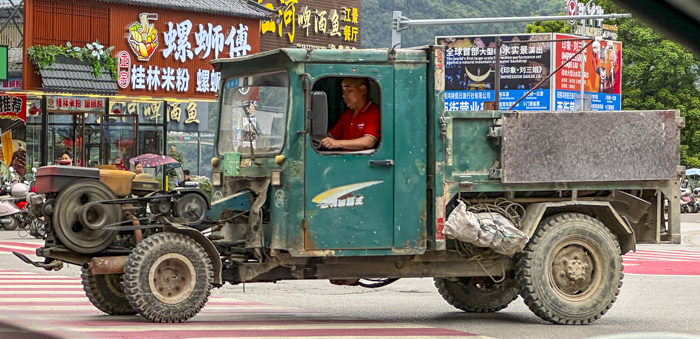
Somewhere along the ride, as we moved between villages and open countryside, we passed something that made us slow down.
An elderly man — well into his eighties — sitting quietly outside his home, weaving hats by hand.
There was nothing staged about it. No performance, no attempt to attract attention. Just a simple, repetitive motion, practiced over decades. His hands moved with a rhythm that didn’t need thinking — strip by strip, shaping something both practical and beautiful.
We stopped for a while, watching.
In a place where so much is changing so quickly — high-speed trains, digital payments, modern cities rising almost overnight — this felt like a direct connection to something much older. A way of life that hasn’t entirely disappeared, but is slowly becoming harder to find.
There was a calmness to it.
No rush, no urgency — just time, skill, and patience. The kind of work that carries quiet pride, even if it goes largely unnoticed.
For us, it was a reminder that not everything moves at the same pace.
And in that brief stop, somewhere between getting lost and finding our way again, we found one of the most genuine moments of the journey.
Next day it was a short trip out to Xingping that brought one of the most recognisable scenes of the trip.
Just outside the town lies a bend in the Li River that’s instantly familiar — even if you don’t realise it at first. It’s the exact landscape printed on the back of the Chinese 20 Yuan note.
And once you see it, it clicks.
The same karst peaks, the same river curve — a view that’s been quie>