Home

4. May 2026 22:05
by Rene Pallesen
0 Comments

China 2026 Xizhou

4. May 2026 22:05 by Rene Pallesen | 0 Comments

Xizhou – The Bai Way of Living A short drive north of Dali brought us to Xizhou — and once again, it

A short drive north of Dali brought me to Xizhou — and once again, it felt like stepping into a different world.

This is the heartland of the Bai people, one of China’s recognised ethnic minorities, with a culture, architecture, and identity distinct from the Han majority.

And you see that difference immediately as the architecture here is deeply rooted in tradition.

Many of the homes are constructed using a mixture of earth, straw, and other local materials — a form of rammed earth or adobe — designed to regulate temperature and withstand the elements. 

In one wall, you could clearly see fragments of old pottery embedded within it — broken pieces reused as part of the structure. Whether for reinforcement, drainage, or simply practicality, it gives the sense that nothing was wasted. Materials were recycled long before it became a modern concept.

Over the top of these walls sits the defining finish: a white lime or chalk wash. This isn’t just for appearance — it acts as a protective layer, helping to seal the surface and reflect heat, preserving the structure beneath.

The result is the signature look of Bai villages — clean white walls, often contrasted with darker timber frames and intricate decorative details.


The Bai are also known for their indigo-dyed textiles — a tradition that goes back centuries.

Historically, natural indigo dye was extracted from local plants and used to colour fabrics in deep, rich blues. Traditional techniques often included resist-dyeing methods — where parts of the fabric were bound, stitched, or pressed before dyeing to create patterns.

What we commonly see today as “tie-dye” is actually a continuation and evolution of these traditional resist-dyeing techniques. While modern versions may be adapted for tourism and contemporary tastes, the roots are very much authentic.

So yes — while the patterns you see today might feel stylised, the underlying method and cultural significance go back generations.


What made Xizhou stand out most was the atmosphere.

Compared to Dali’s ancient city, it was noticeably quieter. Fewer crowds, fewer distractions — just narrow laneways lined with whitewashed walls, leading past doorways and into glimpses of everyday life.

Looking into the courtyards, you could see the care people put into their homes. Plants, decorations, well-maintained spaces — a sense of pride that’s hard to fake.

Some of the houses were genuinely beautiful — not in a polished, tourist-ready way, but in a lived-in, authentic sense.


Woven through the village are small lakes and waterways, softened by lotus flowers and crossed by elegantly constructed stone bridges.

These aren’t grand landmarks — they’re subtle, almost quiet features that add to the overall feel of the place. Reflections in the water, soft movement, the contrast between stone, wood, and greenery — it all contributes to a sense of calm.

It’s the kind of place where you naturally slow your pace.


On the outskirts of the village, the picture becomes more complex.

Some homes have been restored — carefully maintained, structurally sound, and still in use. Others are in various stages of decay or renovation.

And in those buildings, you can see the layers.

Older construction methods exposed beneath newer repairs. Different materials from different periods. Evidence of change, adaptation, and survival.


Xizhou doesn’t overwhelm you with scale or spectacle.

It draws you in with detail.

With texture. With quiet moments. With the feeling that culture here isn’t something being displayed — it’s something still being lived.

And after the busier stops along the journey, that made it stand out all the more.


4. May 2026 13:05
by Rene Pallesen
0 Comments

China 2026 Dali

4. May 2026 13:05 by Rene Pallesen | 0 Comments

After Yangshuo we made our way to Dali in Yunnan. This was an early start getting to Guilin and afte

After Yangshuo, the pace picked up again.

It was an early start getting back to Guilin, but once on the high-speed train, everything settled into that now-familiar rhythm — smooth, fast, and effortless. Hours passed as we cut across vast stretches of countryside, through mountains and valleys, a reminder of just how much China has invested in connecting even its more remote regions.

Rail lines, motorways, tunnels carved through mountains — it’s impossible not to be impressed by the scale of it all.


And then, we arrived in Dali — a place that immediately felt different again.

Dali isn’t just another stop — it carries a history that sets it apart from much of China.

For several centuries, this region was the centre of the Kingdom of Dali, an independent state that ruled much of Yunnan. While much of China was governed by powerful dynasties like the Song, Dali remained culturally and politically distinct, influenced heavily by the Bai people and with strong Buddhist traditions.

Its relative isolation, surrounded by mountains and far from the imperial centres of power, allowed it to maintain that independence — at least until it was eventually absorbed into the Mongol Empire under Kublai Khan in the 13th century.

Even today, that sense of being slightly separate still lingers.


The Dali Ancient City is vast — far larger than expected — and remarkably intact.

The old city walls still stand, complete with imposing gates and watchtowers that once guarded the kingdom. Walking through them, you get a real sense of scale — this wasn’t just a town, it was a significant regional centre with both strategic and cultural importance.

Inside, the streets stretch out in a grid, lined with traditional Bai-style buildings, various shops, and a steady flow of visitors.

It’s busy — very much on the domestic tourist trail — but it doesn’t take much to step away from the main streets and find something quieter.

Turn a corner, wander down a side alley, and suddenly the noise fades. You’re back to slower moments — locals going about their day, small courtyards, glimpses of everyday life tucked just behind the busier facades.


Near the centre of the old town stands the Wuhua Tower.

At first glance, it feels like it should be part of the city’s defensive system — but it wasn’t.

Historically, Wuhua Tower dates back to the Nanzhao Kingdom (which preceded the Kingdom of Dali) and served more as a ceremonial and cultural structure than a military one. It was used as a place for gatherings, receptions, and entertainment — a symbol of prestige rather than protection.

What stands today is a reconstruction, but it still reflects that original purpose — positioned prominently, not for defence, but to be seen.

It’s a small detail, but it says a lot about the city: not everything here was built for war. Some of it was built simply for life, culture, and display.


Dali is full of contrasts.

Modern shops sit beside traditional homes. Tourist-heavy streets give way to quiet, almost untouched corners. Old stonework meets neon signs.

At times, it feels curated. At others, completely genuine.

But that blend is part of what makes it interesting.

It’s not frozen in time — it’s evolving — yet still holding onto enough of its past to remind you where it came from.

And like much of this journey, the more you wander, the more those layers begin to reveal themselves.


4. May 2026 11:05
by Rene Pallesen
0 Comments

China 2026 Yangshuo Impression Sanjie Liu

4. May 2026 11:05 by Rene Pallesen | 0 Comments

In the evening at Yangshuo we went to a show called "Impression Sanjie Liu". We had heard a lot abou
In the evening at Yangshuo we went to a show called "Impression Sanjie Liu". We had heard a lot about this show, so the expectations were high.

This is an open air show where they have converted a section of the river and limestone towers into a stage with hundreds of actors. This includes lots of bamboo rafts, boats and fabric strung across the entirety of the river.

It started out beautifully and very impressive.

I do wish that the end of the show had matched the beginning of the show in wow factor. I don't know how, but I do think they could have put more lights on the river and the limestone cliffs as this would have added to the finale.


Also, during the show there is a scene with a girl dancing on a crescent moon along with other dancers along the river. From a distance it looks like they are not wearing much at all (if anything). In town we did see a poster for the show and this seemed to confirm this...but you tell me.


2. May 2026 12:05
by Rene Pallesen
0 Comments

China 2026 Yangshuo

2. May 2026 12:05 by Rene Pallesen | 0 Comments


Leaving the intensity of Guangzhou behind, we boarded a high-speed train bound for Yangshuo — and in just a couple of hours, everything changed.

At times the train was pushing close to 300 km/h, yet inside it felt effortless. Smooth, quiet, almost disconnected from the speed. It was a fitting transition — from megacity to countryside in what felt like no time at all.

And the first thing we noticed stepping off the train? The air.

It was like perfume. The surrounding trees were in full bloom, and after the density of Guangzhou, it felt fresh, almost surreal — like we’d stepped into a completely different world.


Waiting for us in Yangshuo were familiar faces — Sacha, Mavis, and their daughter Sammi. From here on, the trip shifted. It wasn’t just the four of us navigating something new anymore.


Yangshuo is famous for its karst landscape — those dramatic limestone peaks that rise almost vertically from the ground, scattered across rice fields and rivers like something out of a painting.

The best way to experience it is simply to get out into it.

So that’s what we did.

Everyone grabbed bikes — except for Kim and me, who opted for an electric scooter (a wise decision, given the distances and the terrain). With Kim on the back, we set off, following winding roads out of town and into the countryside.

It didn’t take long before we got lost. But in Yangshuo, that’s kind of the point.

We drifted through small villages, along narrow paths, and eventually found ourselves surrounded by rice paddies and towering limestone stacks in every direction. The scenery didn’t feel real — it felt too perfectly composed, like a traditional Chinese landscape painting brought to life.

At one point, we hit complete gridlock in a village — cars, scooters, pedestrians, all tangled together in a standstill. What should have taken minutes stretched out endlessly as we tried to push through.

Thankfully, being on bikes worked in our favour. Slowly, carefully, we squeezed through gaps that cars simply couldn’t.

The kids handled it brilliantly. It was a long day, and at times the traffic got chaotic, but they rode with confidence — listening, adapting, and just getting on with it.

There was one moment of tension when Mavis was nudged over by a car in the congestion, but thankfully she came away shaken more than anything else.


Somewhere along the ride, as we moved between villages and open countryside, we passed something that made us slow down.

An elderly man — well into his eighties — sitting quietly outside his home, weaving hats by hand.

There was nothing staged about it. No performance, no attempt to attract attention. Just a simple, repetitive motion, practiced over decades. His hands moved with a rhythm that didn’t need thinking — strip by strip, shaping something both practical and beautiful.

We stopped for a while, watching.

In a place where so much is changing so quickly — high-speed trains, digital payments, modern cities rising almost overnight — this felt like a direct connection to something much older. A way of life that hasn’t entirely disappeared, but is slowly becoming harder to find.

There was a calmness to it.

No rush, no urgency — just time, skill, and patience. The kind of work that carries quiet pride, even if it goes largely unnoticed.

For us, it was a reminder that not everything moves at the same pace.

And in that brief stop, somewhere between getting lost and finding our way again, we found one of the most genuine moments of the journey.


Next day it was a short trip out to Xingping that brought one of the most recognisable scenes of the trip.

Just outside the town lies a bend in the Li River that’s instantly familiar — even if you don’t realise it at first. It’s the exact landscape printed on the back of the Chinese 20 Yuan note.

And once you see it, it clicks.

The same karst peaks, the same river curve — a view that’s been quietly circulating in millions of wallets for years.

What followed was a surprisingly fun challenge: trying to line up the real view with the image on the note.

There were people everywhere doing the same thing — holding up old 20 Yuan notes, adjusting angles, laughing as they tried to get the perfect match.

The irony wasn’t lost on us.

China today is almost entirely cashless. Paying with a phone is the norm, and physical money feels like a relic. We didn’t even have a note ourselves — we had to borrow one just to take part.

Also lined up along the river were rafts, cormorant birds and people dressed up with hired photographers to have their photo taken.


Down by the river, near one of the many low bridges crossing the water, we climbed onto a bamboo raft and set off along the Yulong River.

Although this would have been Yangshuo at its most peaceful, it was packed with other rafts, hot air balloons and motorised paragliders.

Once we got going the raft glided quietly upstream, the only sounds being the water and the occasional call from the riverbanks. Limestone peaks rose on either side, softened by mist and distance, while reflections shimmered gently below.

On the way back down, everything felt even more relaxed. No rush, no noise — just drifting through one of the most iconic landscapes in China.


As the sun dropped behind the karst peaks, we made our way back into town and joined the evening flow along West Street.

If the countryside had been calm and open, this was the opposite.

West Street comes alive at night. Lights spill out from shops and restaurants, music drifts through the air, and the narrow street fills with a mix of locals, travellers, and everything in between. It’s lively, a little chaotic, and full of energy.

We wandered without much of a plan — stopping to look at small food stalls, peeking into restaurants, watching musical performers, and just taking it all in. There’s a blend here that feels uniquely Yangshuo: traditional elements sitting right alongside modern tourism, local life mixing with visitors from all over.

For the kids, it was sensory overload in the best way — noise, lights, movement everywhere. For us, it was a chance to just observe. The rhythm of the place, the interactions, the small moments happening all around.

After a day of riding through villages and open landscapes, being back in the middle of it all felt almost surreal.

Yangshuo has that balance — peaceful by day, vibrant by night.

And West Street is where those two worlds meet.


angshuo will be remembered for its landscapes — the limestone peaks, the rivers, the countryside that feels almost unreal.

But for me, that’s not what lingers.

As much as the scenery impresses, it’s the people who stay with you.

The old man weaving hats outside his home. The quiet glances in the alleyways. The locals going about their day, completely untouched by the fact that, for us, this was something extraordinary. Even along the busy stretch of West Street, behind the lights and movement, there were still those moments — brief, unspoken connections with strangers.

As a photographer, that’s what draws me in. Not just the image, but the story behind it. The history carried in a face, the traces of a life lived in a place that’s changing faster than most.

Landscapes can be breathtaking, but they don’t look back at you.

People do.

And in those fleeting moments — a glance, a smile, a moment of curiosity — there’s something real. Something that cuts through language and culture.

That’s what I’ll remember most about Yangshuo.

Not just where we went… but who we encountered along the way.


24. April 2026 16:04
by Rene Pallesen
0 Comments

China 2026 Guangzhou

24. April 2026 16:04 by Rene Pallesen | 0 Comments

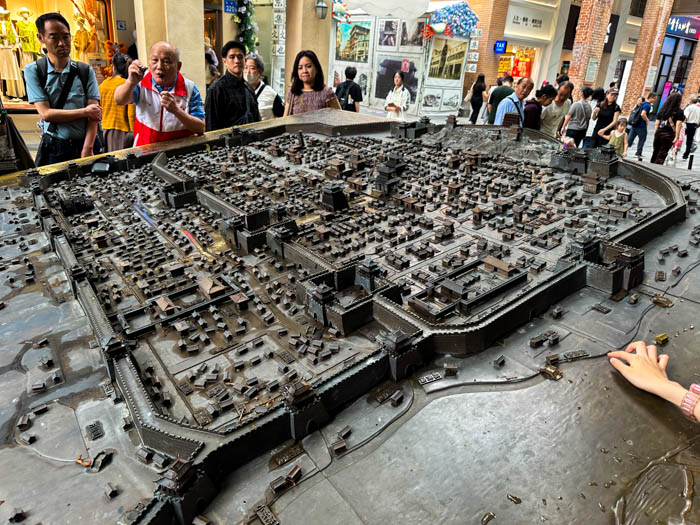
First Shamian Island in GuangzhouThen sight seeingDinner with one of Kims friends at exclusive priva
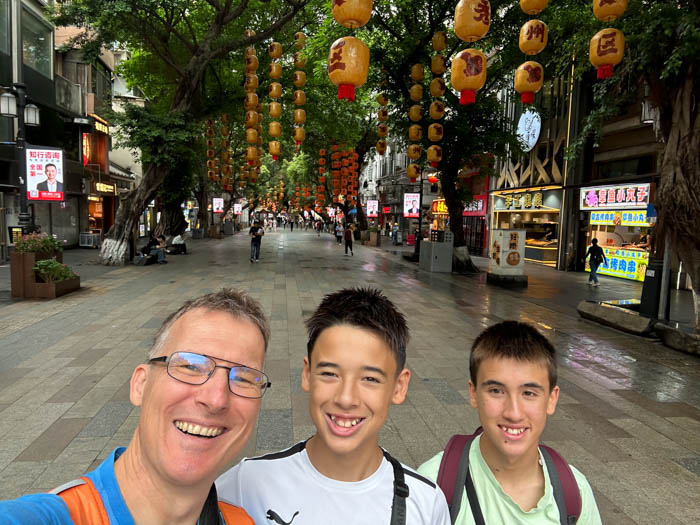
Guangzhou was our gateway into China — just the four of us: Rene, Kim, Aiden and Lucas.

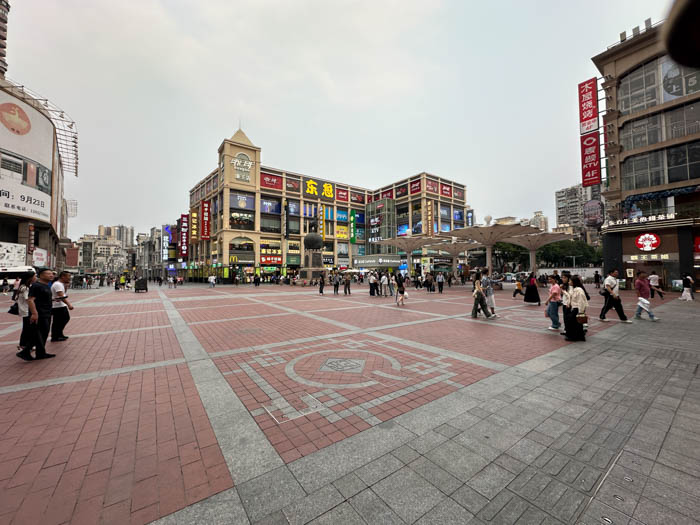
Arriving into Guangzhou, the sheer size hits you first. This isn’t just a big city — it’s a sprawling megacity built on more than 2,000 years of history, now layered with relentless modern growth. Yet it is super clean everywhere and despite all the traffic it is super quiet due to everyone driving electric bikes and cars.

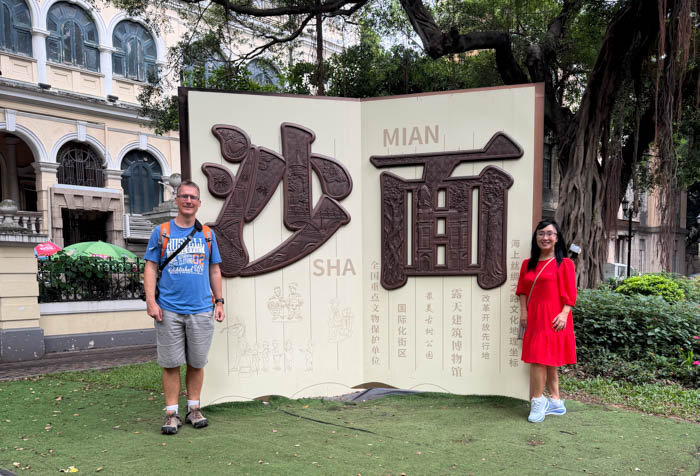
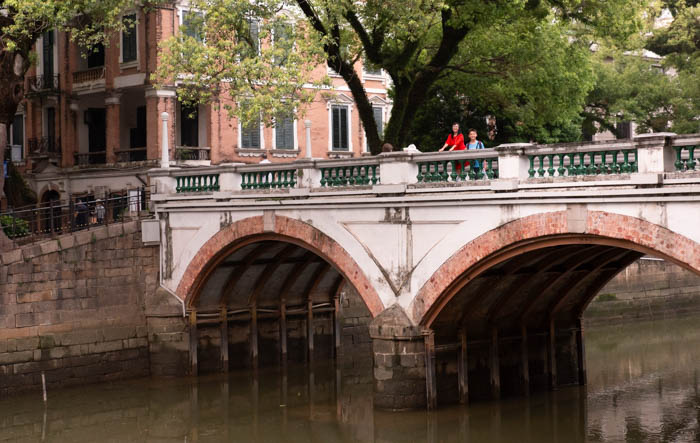
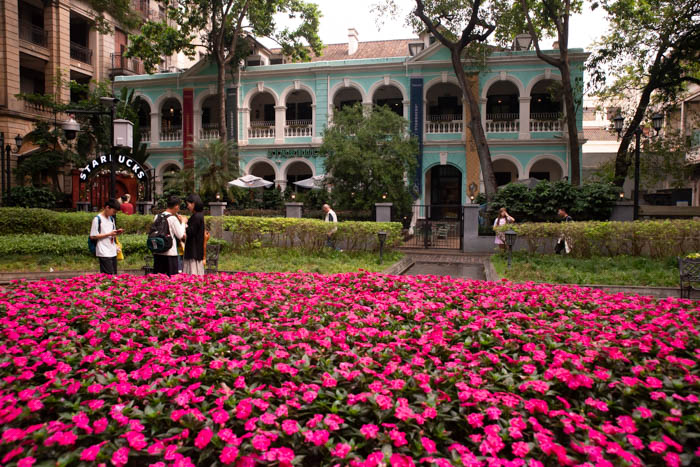
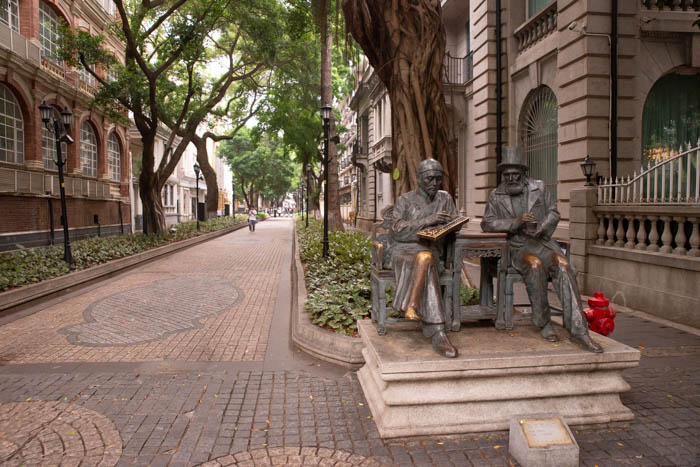
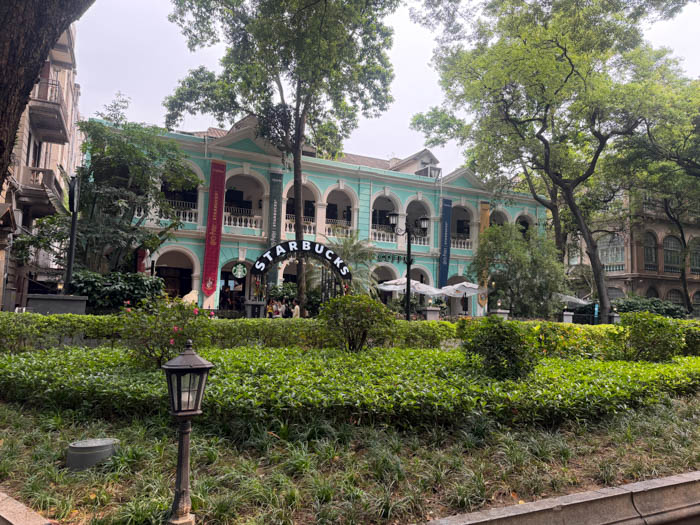
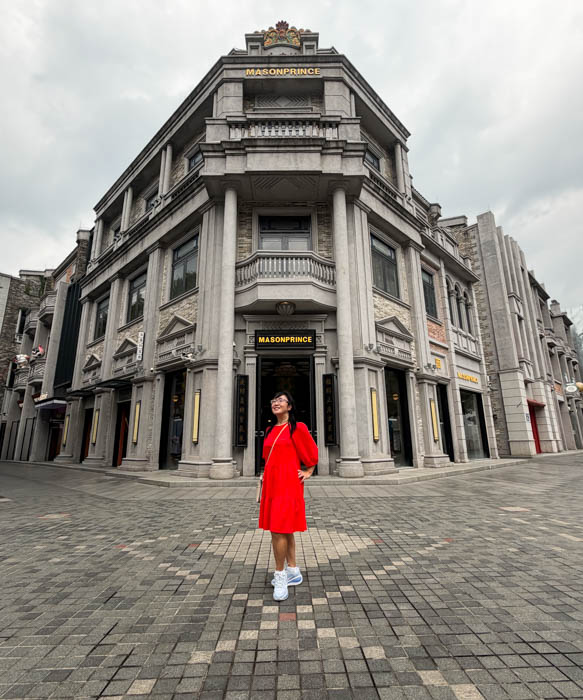
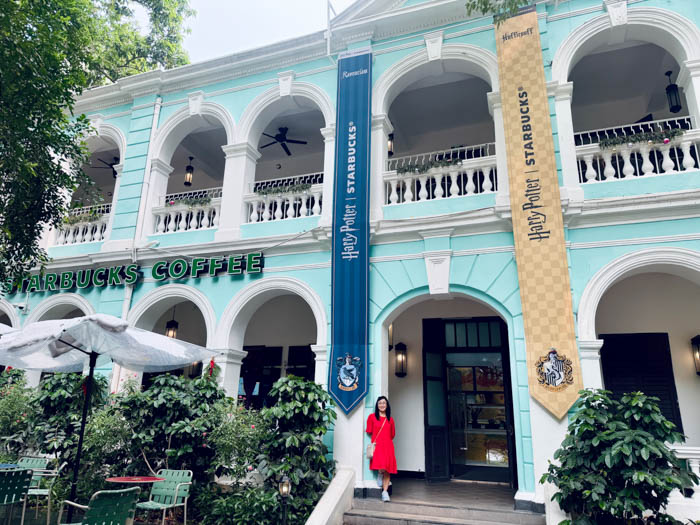
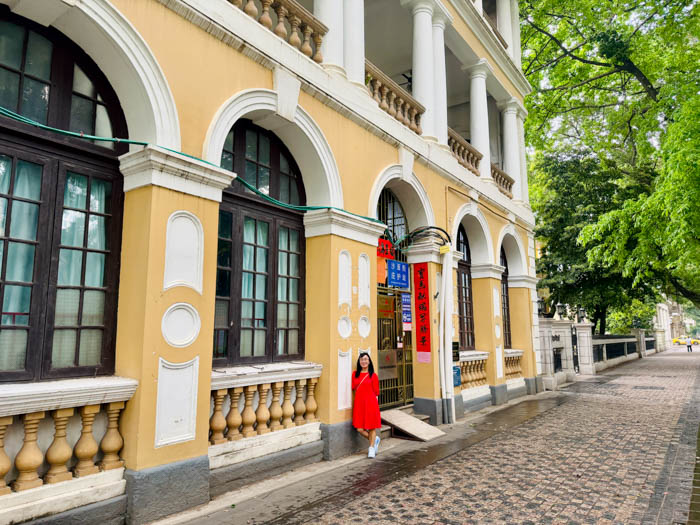
First stop in the morning was Shamian Island. Walking onto Shamian Island feels like stepping into Europe. Tree-lined streets, colonial mansions, quiet cafés — it couldn’t be more different from the rest of the city.

But this place carries a complicated history. After the Opium Wars in the 19th century, this small island was carved out and divided between British and French control, becoming a foreign enclave in China.

What remains today is a fascinating blend of cultures — European architecture, Chinese life, and a sense of calm that feels almost surreal in a city like this.

For us, it was one of those rare travel moments where everything slows down. The boys could wander, Kim could soak in the atmosphere, and I found myself drawn to the history that I have read about in numerous books.


It’s easy to be distracted by Guangzhou’s scale — the towers, the traffic, the constant movement — but the real character of the city reveals itself when you step off the main roads and into the narrow alleyways.

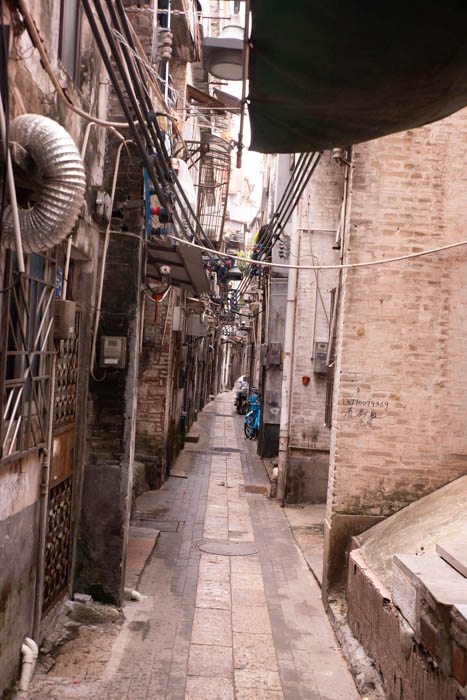
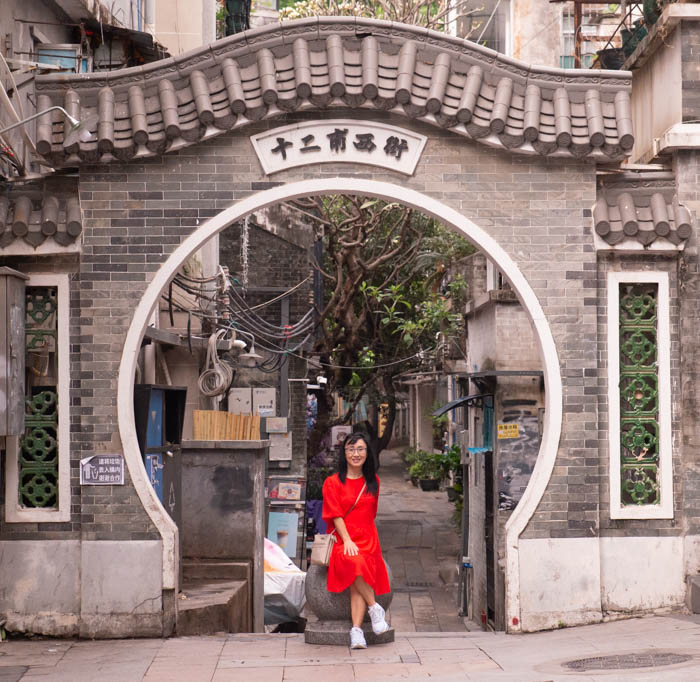
These laneways are where life compresses.

The streets tighten, the noise softens into something more human, and suddenly you’re walking through someone’s everyday world. Open doorways reveal small kitchens in full swing, laundry hangs overhead like a patchwork sky, and scooters squeeze past with barely enough room to spare.

This is where Guangzhou slows down.

We wandered without much of a plan, turning corners simply because they looked interesting. The boys quickly realised this was a different kind of exploring — not landmarks, but observation. Small moments. A nod from a local, a curious glance, someone going about their day completely unfazed by four outsiders passing through.

For me, this was where the camera came alive. Not because of anything grand, but because of the texture — worn walls, layered history, faces that told stories without words.


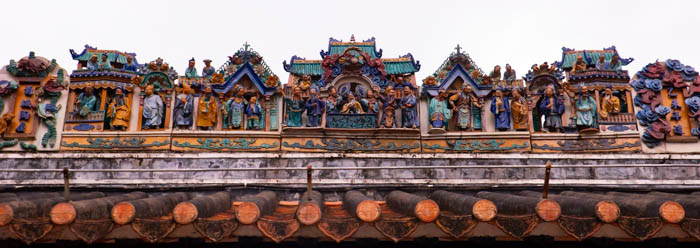
Not far from the bustle of the city, we found ourselves wandering into the area around the Guangdong Cantonese Opera Museum — and it turned out to be one of the most unexpectedly fascinating parts of Guangzhou.

The museum itself is beautifully designed, built in the style of traditional Lingnan architecture, with ornate roofs, carved woodwork, and peaceful courtyards. But what really drew us in wasn’t just the building — it was what was happening around it.

Locals were gathering, dressed in elaborate Cantonese opera costumes — vibrant silks, intricate embroidery, and dramatic makeup. Some were performers, others simply enthusiasts, but all of them carried a quiet pride in what they were part of.

What made it so compelling was how natural it all felt.

People were chatting, adjusting costumes, helping each other prepare, and taking photos — not for tourists, but for themselves. It wasn’t staged or curated. It was a living tradition, still very much part of everyday culture.

Cantonese opera has deep roots in southern China, blending music, storytelling, martial arts, and symbolism into a highly stylised art form that dates back hundreds of years. And here, in this small pocket of Guangzhou, it wasn’t something preserved behind glass — it was still alive.
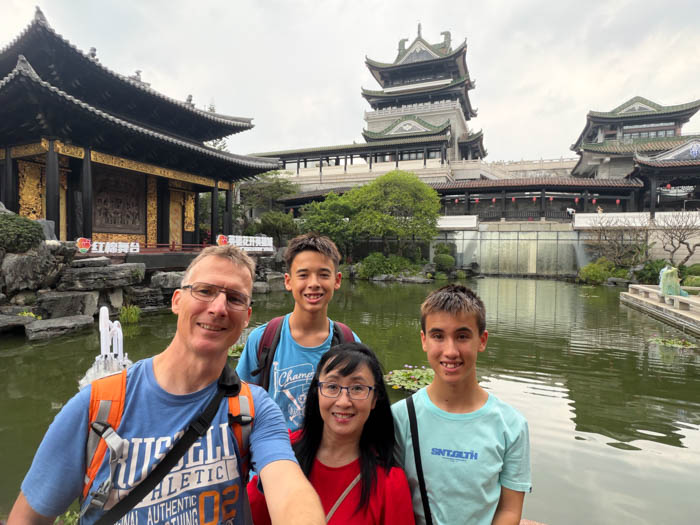
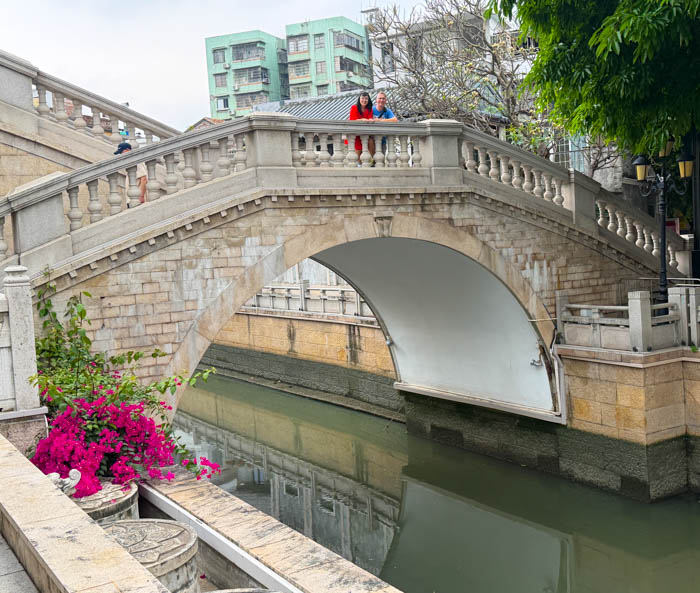


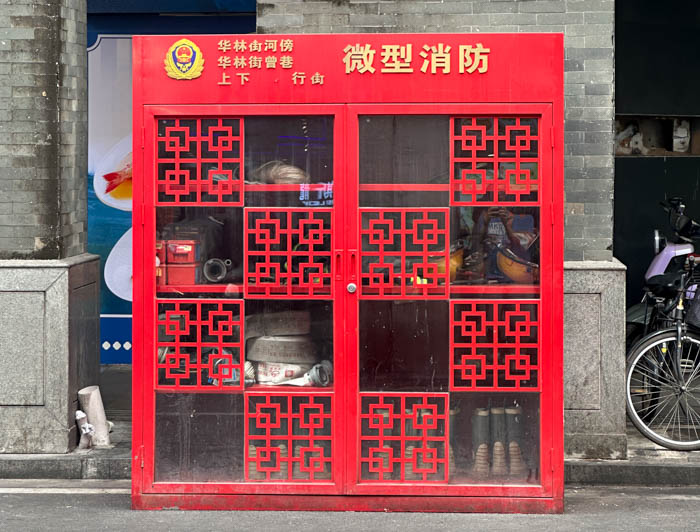
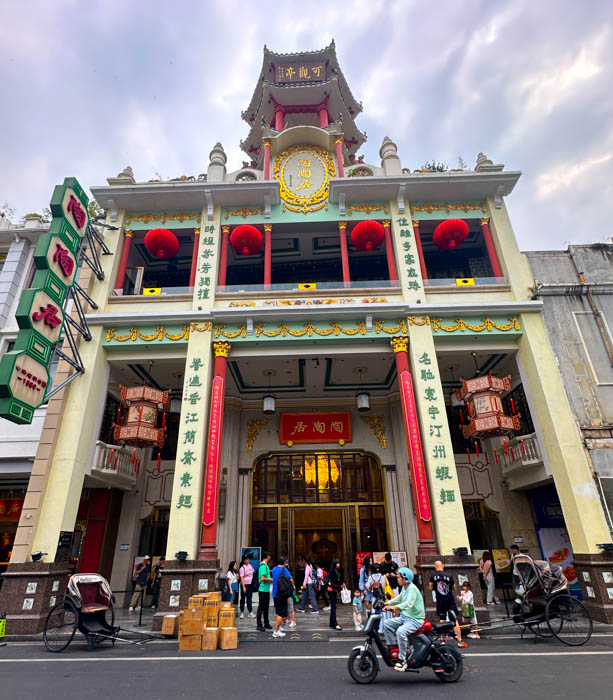
Beyond the main roads, the city unfolds through a rhythm of small shops and daily rituals. Narrow storefronts spill out onto the pavement — fruit stacked in careful pyramids, hardware stores packed floor to ceiling, tiny eateries with a handful of stools and a constant flow of regulars. There’s no clear boundary between business and street; everything blends together into one continuous, living space.
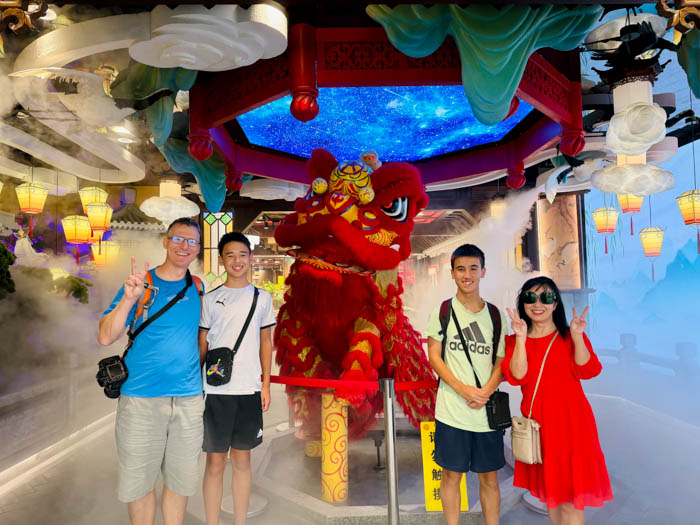


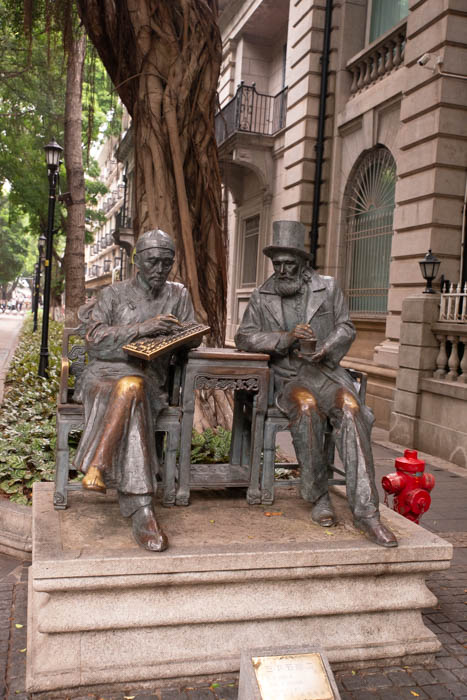
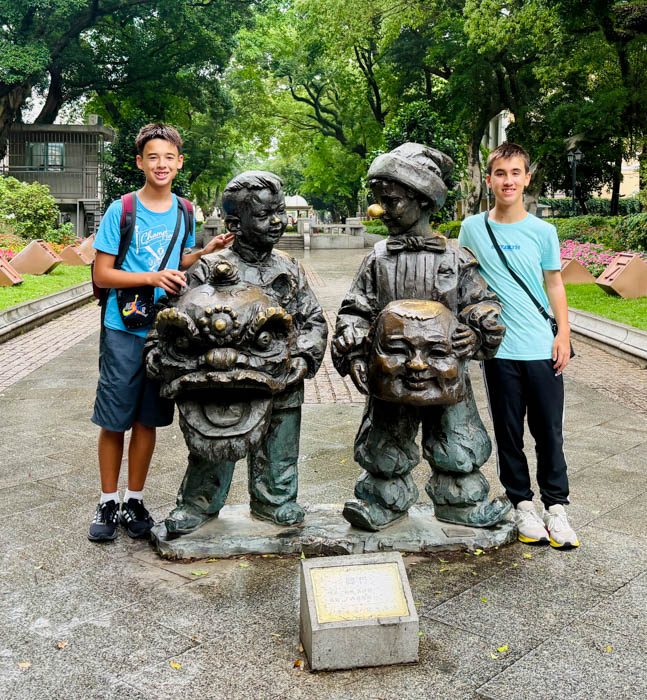
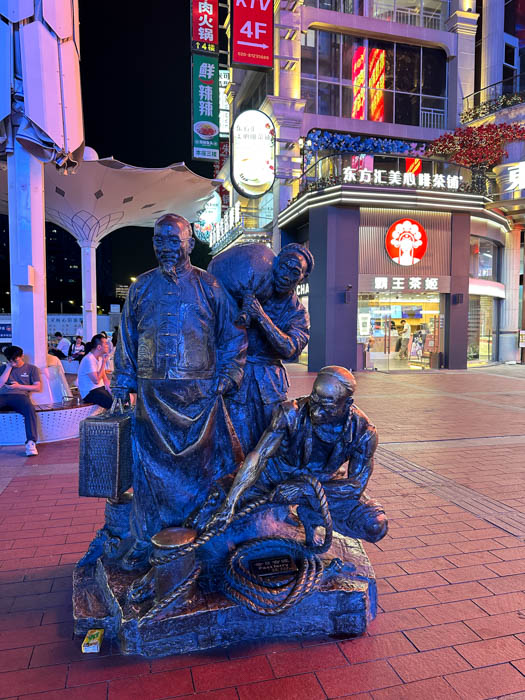
And then, almost quietly, you start to notice them — the bronze statues.

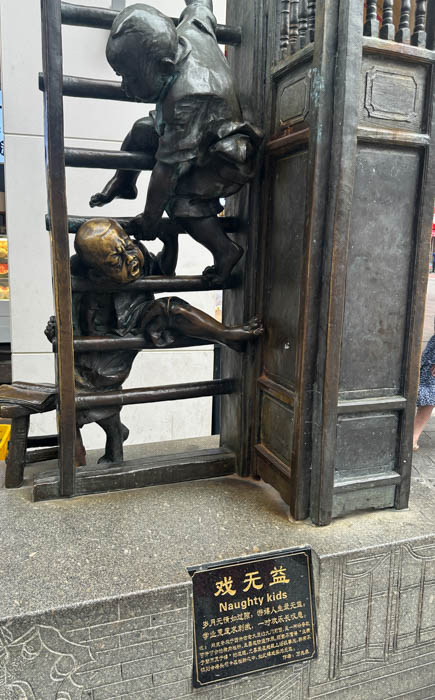
They’re scattered throughout the city, often without fanfare. A fisherman hauling in a net. A street vendor mid-sale. Children playing. Scenes from another time, frozen in metal but placed right in the middle of modern Guangzhou.

They’re easy to walk past if you’re not paying attention.

But once you notice them, they change the way you see the city.

These aren’t grand monuments to emperors or victories — they’re tributes to everyday life. They reflect the trading roots of Guangzhou, once one of China’s most important ports and the starting point of the Maritime Silk Road. For centuries, this was a city defined by commerce, movement, and connection to the outside world.

And those stories are still here — just told in quieter ways.


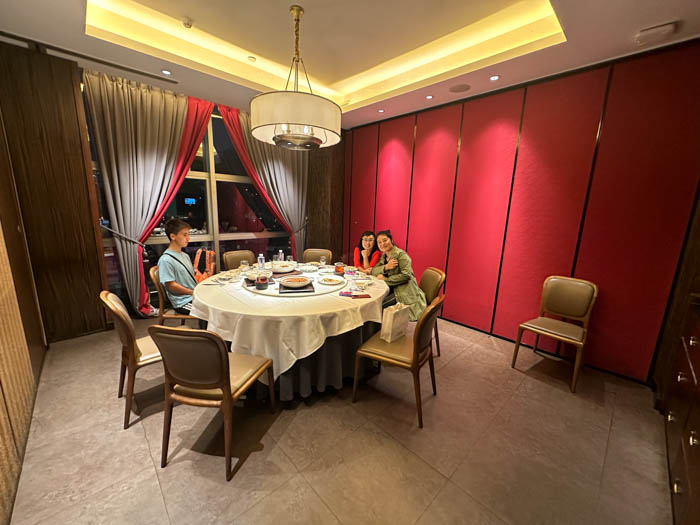
One evening in Guangzhou took a different turn.

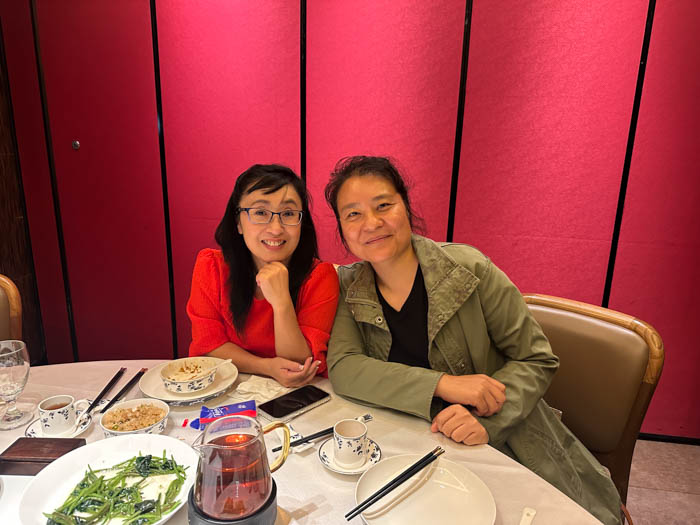
Kim had arranged to meet an old colleague, and instead of the street-side eateries and small local restaurants we’d been exploring, we were taken somewhere altogether more elaborate.

From the outside, it didn’t immediately give much away. But once inside, the scale revealed itself.

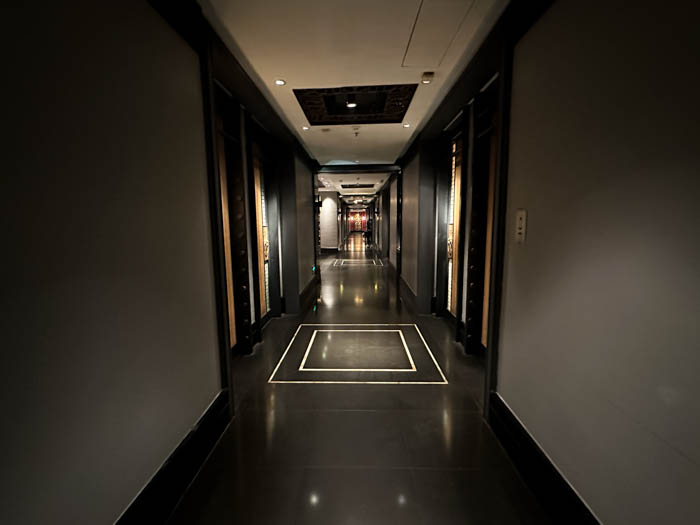
The restaurant unfolded like a maze — long corridors branching into more corridors, each lined with private dining rooms hidden behind heavy doors. It felt less like a restaurant and more like a series of discreet, self-contained worlds. Every group tucked away in their own space, out of sight, out of earshot.

You couldn’t help but wonder what kinds of conversations these rooms had hosted over time. Business deals, family negotiations, celebrations, quiet discussions — the kind of interactions that are never meant to spill into the public space.

There’s a long tradition of private dining in China, especially in cities like Guangzhou where relationships — guanxi — are central to both business and social life. Meals aren’t just about food; they’re about trust, hierarchy, and connection. And spaces like this are designed for exactly that.

For us, it felt like stepping briefly into that world.

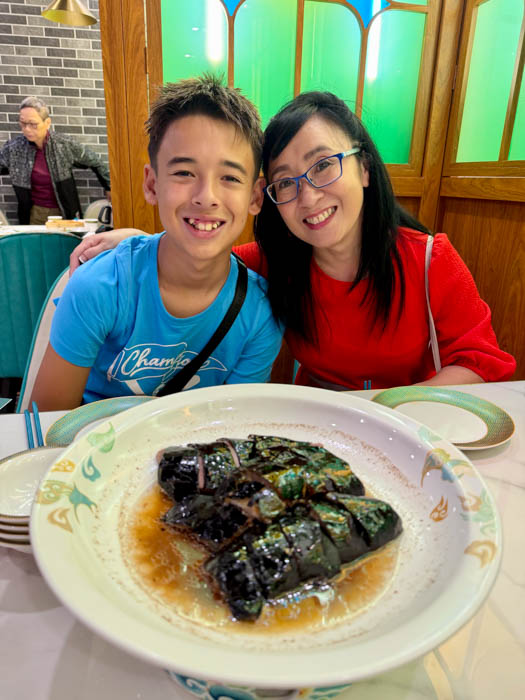
The food itself was exceptional — beautifully presented, carefully paced, and clearly designed to impress. But interestingly, it wasn’t the local Cantonese street-style cuisine we’d been expecting. This was something more refined, more international in influence, almost curated to suit a different kind of audience.

For the boys, the novelty was in the setting — their own private room, the formality of it all. For Kim, it was a chance to reconnect. And for me, it was the atmosphere that lingered — the sense that behind every closed door, a different story was unfolding.

It was a completely different side of Guangzhou.

Not the chaotic, open, street-level city we’d come to know — but something quieter, more controlled, and in its own way, just as revealing.


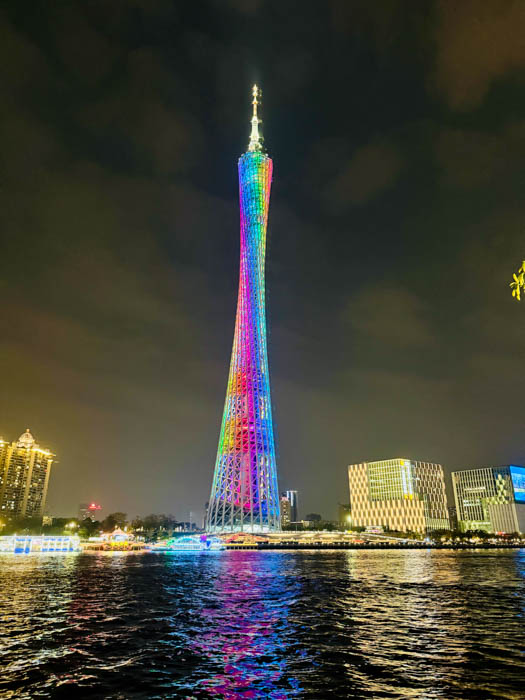
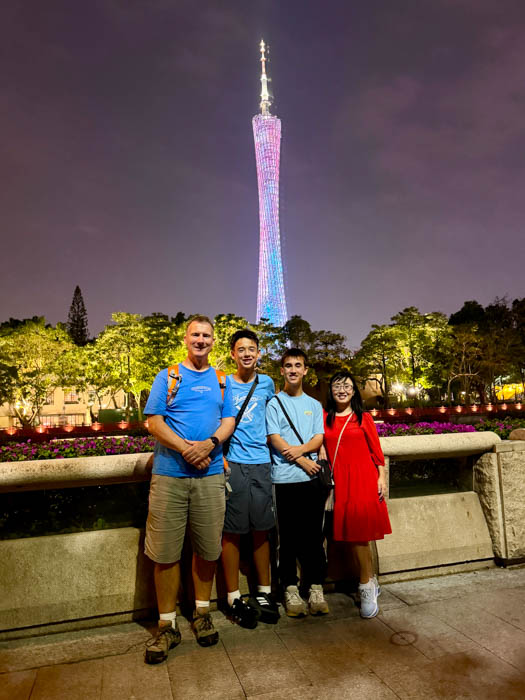
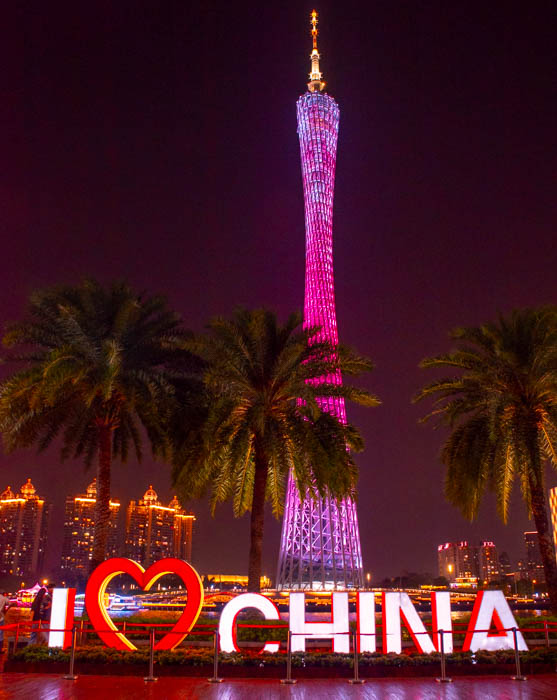
After dinner, we stepped back out into the night and made our way down to the river, drawn by the glow of the Canton Tower rising in the distance.

If the restaurant had felt enclosed and hidden, this was the complete opposite.

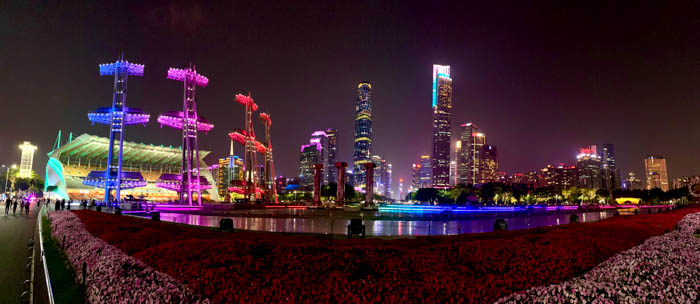
The Pearl River opens everything up. Wide promenades, open air, and a steady flow of people out enjoying the evening — families, couples, groups of friends, all moving at a slower, more relaxed pace than the daytime rush.

And then there’s the tower.

Up close, the Canton Tower doesn’t just dominate the skyline — it feels almost unreal. Its twisting structure is lit in shifting colours, constantly changing, reflecting off the river below. Boats drift past, their own lights adding to the scene, and the whole area takes on a slightly surreal, almost cinematic feel.

The boys were immediately drawn to the energy of it — the lights, the movement, the scale. For them, this was Guangzhou at its most exciting.

The Pearl River has been the lifeblood of Guangzhou for centuries — the reason the city became one of China’s most important trading ports, connecting it to the outside world long before the skyscrapers arrived.

Now, instead of trading ships, it’s light shows and river cruises.


Somewhere in the middle of Guangzhou’s busy streets, we stumbled across something completely unexpected — and for Lucas, it may well have been the highlight of the entire city.

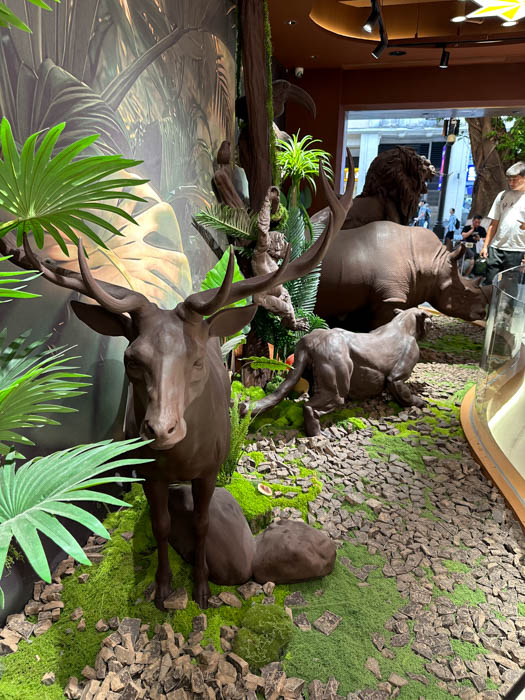
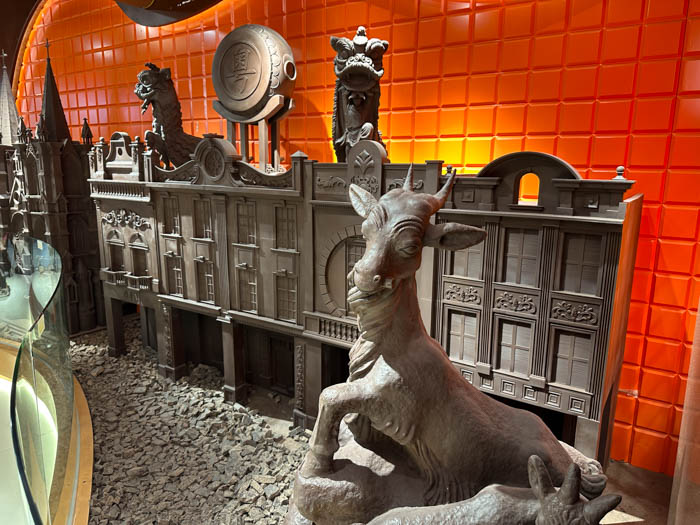
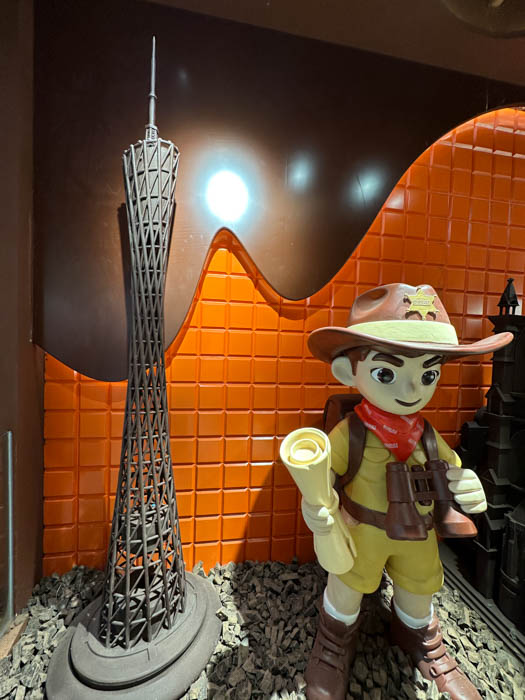
A shop where everything looked like it belonged in a museum… but was made entirely of chocolate.

Not just small displays or decorative pieces, but full-scale creations. Life-sized animals stood frozen mid-step — elephants, giraffes, creatures you’d expect to find on the African savannah, not in a shop in southern China. Alongside them were intricate replicas of local architecture, temples and buildings recreated in astonishing detail, all in chocolate.

At first, it didn’t quite register. The level of craftsmanship made it hard to believe it wasn’t carved wood or painted resin. But the closer you looked, the more surreal it became — every surface, every texture, every tiny detail… chocolate.

Lucas was completely in his element.

You could see the internal conflict playing out — admiration versus appetite. Was this something to photograph, or something to eat? (The answer, unfortunately, was mostly the former.)


5. February 2026 16:02
by Rene Pallesen
0 Comments

Cook Islands - Long Boat

5. February 2026 16:02 by Rene Pallesen | 0 Comments

On a rainy afternoon we went in a longboat. The idiot at the back almost got all of us killed by hav
On a rainy afternoon we went in a longboat. The idiot at the back almost got all of us killed by having no idea how to steer (that was his one job) and landed us on the outer reef.


5. February 2026 16:02
by Rene Pallesen
0 Comments

Cook Islands - Snorkeling

5. February 2026 16:02 by Rene Pallesen | 0 Comments

We went snorkeling in the lagoon


5. February 2026 16:02
by Rene Pallesen
0 Comments

Cook Islands - Boys at Black Rock Beach

5. February 2026 16:02 by Rene Pallesen | 0 Comments

I also took some photos of the boys at Black Rock Beach.


5. February 2026 16:02
by Rene Pallesen
0 Comments

Cook Island - Turtles

5. February 2026 16:02 by Rene Pallesen | 0 Comments

One day we went snorkeling with the turtles in the lagoon.


Perfect Moments Photography | A Rene Pallesen Journal

Home

14. November 2004 01:49
by Rene Pallesen
0 Comments

Karnak - "the Most Perfect of Places" - Part 4

14. November 2004 01:49 by Rene Pallesen | 0 Comments

karnak the most perfect of places part 4

14. November 2004 01:47
by Rene Pallesen
0 Comments

Karnak - "the Most Perfect of Places" - Part 2

14. November 2004 01:47 by Rene Pallesen | 0 Comments

karnak the most perfect of places part 2

14. November 2004 01:45
by Rene Pallesen
0 Comments

Temple of Horus - the Most Complete of Its Kind Part 4

14. November 2004 01:45 by Rene Pallesen | 0 Comments

temple of horus the most complete of its kind part 4


14. November 2004 01:45
by Rene Pallesen
0 Comments

Karnak - "the Most Perfect of Places" - Part 1

14. November 2004 01:45 by Rene Pallesen | 0 Comments

karnak the most perfect of places part 1

14. November 2004 01:44
by Rene Pallesen
0 Comments

Temple of Horus - the Most Complete of Its Kind Part 3

14. November 2004 01:44 by Rene Pallesen | 0 Comments

temple of horus the most complete of its kind part 3


14. November 2004 01:40
by Rene Pallesen
0 Comments

Temple of Horus - the Most Complete of Its Kind Part 2

14. November 2004 01:40 by Rene Pallesen | 0 Comments

temple of horus the most complete of its kind part 2


14. November 2004 01:39
by Rene Pallesen
0 Comments

Temple of Horus - the Most Complete of Its Kind Part 1

14. November 2004 01:39 by Rene Pallesen | 0 Comments

temple of horus the most complete of its kind part 1

14. November 2004 01:38
by Rene Pallesen
0 Comments

Horses

14. November 2004 01:38 by Rene Pallesen | 0 Comments

horses

14. November 2004 01:37
by Rene Pallesen
0 Comments

Temple of Hatshepsut - Egypt's Only Female Pharaoh Part 2

14. November 2004 01:37 by Rene Pallesen | 0 Comments

temple of hatshepsut egypt s only female pharaoh part 2

14. November 2004 01:36
by Rene Pallesen
0 Comments

Temple of Hatshepsut - Egypt's Only Female Pharaoh

14. November 2004 01:36 by Rene Pallesen | 0 Comments

temple of hatshepsut egypt s only female pharaoh
Perfect Moments Photography | A Rene Pallesen Journal

Home

5. February 2026 15:02
by Rene Pallesen
0 Comments

Cook Islands - Games

5. February 2026 15:02 by Rene Pallesen | 0 Comments

Other times were spent playing games - Dark, Snooker Fuzball, building cairns and chasing crabs.


5. February 2026 15:02
by Rene Pallesen
0 Comments

Cook Islands 2026

5. February 2026 15:02 by Rene Pallesen | 0 Comments

This year we decided to travel to Rarotonga in Cook Islands. Some of the immediate family booked at

This year we decided to travel to Rarotonga in Cook Islands. Some of the immediate family booked at the same time so that we 
had some days together.


5. February 2026 15:02
by Rene Pallesen
0 Comments

Cook Islands - Eating out

5. February 2026 15:02 by Rene Pallesen | 0 Comments

In the evenings we were eating out. Every restaurant was facing the lagoon.Also cocktails were cheap
In the evenings we were eating out. Every restaurant was facing the lagoon.

Also cocktails were cheap, strong and flowing...


5. February 2026 15:02
by Rene Pallesen
0 Comments

Cook Island - Lagoon

5. February 2026 15:02 by Rene Pallesen | 0 Comments

The beautiful lagoon surrounds the island, so much of the time was spent in the water.


5. February 2026 15:02
by Rene Pallesen
0 Comments

Cook Islands - dogs and other animals

5. February 2026 15:02 by Rene Pallesen | 0 Comments

The islands have a lot of very friendly dogs. A lot of them are unique that they are large dogs with
The islands have a lot of very friendly dogs. A lot of them are unique that they are large dogs with very short legs.

They are also able to feed themselves by catching and eating fish in the lagoon. There are also a lot of chicken (especially roosters) on the island.


5. February 2026 11:02
by Rene Pallesen
0 Comments

Cook Islands - Cultural Night

5. February 2026 11:02 by Rene Pallesen | 0 Comments

One evening we went to a restaurant with a cultural show.


5. February 2026 11:02
by Rene Pallesen
0 Comments

Cook Islands Boat Ride

5. February 2026 11:02 by Rene Pallesen | 0 Comments

One day we went on a boat ride. They also showed us how to open coconuts, climb palms, tie sarongs a
One day we went on a boat ride. They also showed us how to open coconuts, climb palms, tie sarongs and we did some snorkeling.


5. February 2026 11:02
by Rene Pallesen
0 Comments

Bowral 2026

5. February 2026 11:02 by Rene Pallesen | 0 Comments


5. February 2026 09:02
by Rene Pallesen
0 Comments

Christmas Photo 2023

5. February 2026 09:02 by Rene Pallesen | 0 Comments

This years Christmas Photo is inspired by Barbie and Ken.


Perfect Moments Photography | A Rene Pallesen Journal

Home

28. July 2001 10:50
by Rene Pallesen
0 Comments

Mt Popa . . .

28. July 2001 10:50 by Rene Pallesen | 0 Comments

mt popa
Mt Popa


There is a monastry on Mt Popa - a hill located 50km away from Bagan.

When I was there, it was a cloudy day.

Woman selling petrified wood at Mt Popa

I ran into a woman selling petrified wood - quite silly really, considering the place was covered with it.


Road sign

They must think tourists are stupid! *laugh* I managed to pick up a couple of small pieces to take back with me.


As you can see, there are stacks of them around.

And no... this is not a tombstone.
This is actually a road sign.


Example of petrified wood

You would be surprised how big some of these pieces are - this piece below was actually about a metre long and 40cm wide.

Toilet in Burma

Actually what I found interesting were the toilets in Burma.


My girlfriend tells me that squatting over a toilet is quite common in Asia.

In many of the city areas, they would have toilets as we know them, and they would also have a carved hole in the ground, on which either side, one places their feet on.

Toilets in the rural area are more crude than that - a hole leading into a gaping pit.

However, what I found interesting about these toilets were that recycled running water was used to wash away any excrement. The water is first used for washing one self and then used in the toilets.

As there were a few toilet cubicles a row, sometimes you would see the excrement from a toilet uphill go beneath you! *laugh*

Very clever and environmental system, I think!

Me at Mt Popa


Trying to grab a snooze... *smile*


Like Schweddagon, most of this is real gold as well.

And yes, there is a monkey sitting near my head.

If you click to the next page, you will see that I have taken a series of photos of the monkeys.

28. July 2001 10:49
by Rene Pallesen
0 Comments

Puppet Show . . .

28. July 2001 10:49 by Rene Pallesen | 0 Comments

puppet show
Puppet Show


I saw the most interesting puppet show, known as the “Mandalay Marionettes”

There were 2 or 3 puppeteers out the front, with a live band of musicians.

Unfortunately, it was more of a show for the tourists, rather than the locals.

It cost 1,000 chats or US$2 per show.


4 men manipulating the marionettes A child posing as a 'puppet'
The Marionettes


Lots of bright lights

28. July 2001 10:49
by Rene Pallesen
0 Comments

Burma Up North . . .

28. July 2001 10:49 by Rene Pallesen | 0 Comments

burma up north
Map of Northern Burma


View from train


I decided take a 20-hour train-ride to Myitkyinã *laugh* it took 20-hours to get there by train because there was only one track.


It was definitely faster to run next to the train than to travel in it!

We had to wait for the oncoming train to return before we could travel north.

At one point, we crossed a bridge that was so rickety that I thought it would collapse any moment!

Working in the rice fields


Locals working in the rice fields.

Working in the rice fields


Locals using water-buffaloes to plough rice fields.

Jrrawaddy River


The train travelled along the Jrrawaddy River.


It would have been nice if I was able to travel to Mandalay via a riverboat down the Jrrawaddy River.

People living on lake


It was amazing to find out that people live “on” these lakes, by building houses on stilts.


This sort of housing is quite common in many parts of Asia, especially areas where monsoons quite frequently flood an area.

It is also very environmentally-sound, I think, and hurts the land less.

Most of the houses are made of wood.

Myitkyina in rain


Myitkyinã is pretty dismal in rain!


There is a huge drug problem in Burma, especially through the crossings into China.


I have scanned a copy of a recent newspaper article about this problem in Burma.

28. July 2001 10:48
by Rene Pallesen
0 Comments

Mandalay . . .

28. July 2001 10:48 by Rene Pallesen | 0 Comments

mandalay


Map of Burma


When I initially arrived in Yangon / Rangoon, I wanted to fly up Bhamo - one of the bigger towns north of Burma. I also considered exploring Myitkyinã - a town further north of Bhamo.

My Lonely Planet guide indicated that the only border crossing into China was to the east of Bhamo. My initial plans to Burma also included exploration of western China. However, I was disappointed by the military turning me back, despite the fact that my Lonely Planet guide said I could cross into China at Ruili.

I decided instead to fly to Mandalay, not only because it was cheap to do so, but it saved me a 20-hour bus ride there from Yangon.

City of Mandalay


I heard about a song for sailors.
“To be a real sailor, the sailor would have to have been to Mandalay way upriver”


I quite liked Mandalay.


The photo below, is of Mandalay Hill.
During World War II (20 March 1945), the British and the Japanese fought one another to gain control of the position on this hill.

Important Position in Mandalay Mandalay Hill facing east


The photo to the left is taken from the hill itself facing east - as you can see, it has an aerial view of the whole city, and puts any oncoming enemies at a disadvantage. Control of Mandalay was important during the war, as the soldiers were able to set up artillery and attack anyone approaching the fortress.

This hill was of big strategic importance.

The building you see near the shrine is a monument to the British regiment who managed to take control of this hill from the Japanese.

At the eastern part of the delta, a lot of logging takes place. There was a train line built that used to cart all the trees/wood for export to Thailand.

View of the FortressView of the Fortress


The moat around the fortress is man-made.
Although man-made, comes from the local river.


The original fortress was burnt to the ground.
The whole fortress covered an area of 2.5 x 2.5 km


Fortress at Mandalay

Fortress at Mandalay

Clocktower in Mandalay


The design of Mandalay was quite colonial, and surprisingly, most of the streets were at 90º to one another.


Overall, I found Mandalay the most expensive city to travel to in Burma.

No matter what one does in Mandalay, be it explore Mandalay Hill or the city itself, the locals always had “special” foreigner prices. It really annoyed me.

I tried to use local currency as much as possible. However, FEC (Foreign Exchange Currency) was more valuable and worth more to the locals. FEC is also used in China, and one tries to use local currency as much as possible. Any item you buy has 2 prices - and obviously it is cheaper to use local currency than to use FEC.

I must admit, even Mandalay Hill was not that nice for the price I paid to explore it. It was also expensive just to go into the fortress.

Surprisingly, I could not find maps of the area that was not more that 40 years old.

28. July 2001 10:47
by Rene Pallesen
0 Comments

Burma Religion & Politics . . .

28. July 2001 10:47 by Rene Pallesen | 0 Comments

politics

Politics . . .

Queue for Rations
There is a lot of politics going on in Burma that an outsider should not get involved in - Burma is one of those countries where political opinions are best kept to oneself.

In Burma, use of the Internet and mobile phones is illegal. This is the government's way of controlling the information entering the country. Even access to equipment such as laptops is illegal - the country is so poor that many could not afford such a piece of equipment.

I saw many young women queueing for their rations. They were standing so close together that I thought they were lesbians! *laugh* The girls stand close together so another person cannot jump the queue by pushing in.


Girls Standing Close

Girls Standing Close
Young Girls Working on Roads


The girls here are very young, some have barely reached puberty and are doing some very hard work.


Young Girls Working on Roads


There is a lot of critique by Amnesty International, of Burma's use of young girls to provide maintenance for the roads.

28. July 2001 10:47
by Rene Pallesen
0 Comments

Medicine . . .

28. July 2001 10:47 by Rene Pallesen | 0 Comments

medicine


The Wares of a 'Medicine Man'
Medicine . . .

My girlfriend, Arumi, tells me one sees the wares of a 'Medicine Man' quite often throughout Asia.

Whether they sit by the roadside, or whether they own a shop in a building, one will see very similar items being sold around Asia.

The “pellets” you see here are in fact different types of roots such as ginger or some unknown vegetable, that have been sun or air dried.

The Medicine Man 1The Medicine Man 1The Medicine Man 1

You will see the antlers of various animals such as deer or even rhino. There are also skulls from different animals - some of these animals may be endangered species, but somehow you will see them being sold in these markets.

The Medicine Man 2


These skulls are definitely not being used as “trophies” around the house!

The Burmese, like many Asians, believe in using very 'natural' remedies to cure common ailments.

Tiger Skull


A Medicine Man may not necessarily be a “doctor” according to western standards - that means he may not have a university degree.

However, a Medicine Man, may be what we know as “witch-doctors”. Some of the remedies they know are very natural and useful.

Unfortunately, not all of these remedies work. Around Asia, you will see shops or Medicine Man selling items like tigers' paws and skulls, or ground ivory tusks. Many of these are sold as cures or enhancements for the sex life.

In Burma, there is virtually no wildlife left.


Selling Tobacco


You will even find that even tobacco is sold naturally.

Not in cigarette form, but in leaf form! The laws in Burma are not quite the same as they are here. Marijuana is also sold very freely.


Fruit of the Lotus Plant
Lotus Fruit . . .


Quite often in Asia, you may see lily pads floating on the water. In fairy-tales, you hear about frogs sitting on a lily pad.

You will be amazed to associate that this fruit here, comes from the flowers/plant growing out of the water near the lily pads.

The yellow seeds come from the flower itself. The seeds are used often in many Asian desserts, and said to promote better blood circulation.

While, the root of the lotus plant is also a delicacy. It is white when cooked, and has a crunchy texture, similar to that of the water chestnut. Mainly used in savoury meals, although used as a dessert as well.

Personally, I think it is too much hassle retrieving the fruit! *smile*

Created: 31 Oct 2001

28. July 2001 10:46
by Rene Pallesen
0 Comments

Schwedagon . . .

28. July 2001 10:46 by Rene Pallesen | 0 Comments

schwedagon
Escalator leading up to Schwedagon


Schwedagon was a holy place with extremely large and beautiful temples.

To get to Schwedagon, you had to travel up very long escalators. I took this photo because these escalators were the only escalators I had seen during my whole trip in Burma. As Schwedagon is a very religious place for the locals, I guess to travel up these escalators give the sense of travelling to a higher and holier place.

Temples at Schwedagon Photo 1

The temples at Schwedagon were really impressive.

Temples at Schwedagon Photo 2
Another Temple


I was told that collectively, these temples were built with 39 tonnes of pure gold.

Cleaning Up


At the end of the day, the locals all contributed in cleaning the place. They clean all the tiles and are very organised.

Big StubaBig Stuba at Night

Buddhas at base of Big Stuba


Here is the 'Big Stuba'. All that gold...


Up close, the temples are a glorious sight. Especially at night!

Can you see those lights at the base of the Big Stuba? Each is a 'mini temple', illuminating a Buddha.


Lots of Gold


You can really see the magnificence of these temples!

Praying to BuddhaPraying to BuddhaIntricate Carvings


There are lots of rules or procedures about the way one prays to the Buddhas - very complicated to an outsider!

I saw a couple of the buddhists pour water onto the statue of the Buddha. Depending on the day of the week a buddhist is born, the individual would pour the respective number of bowls for the day of the week. A buddhist believes that by doing this, it would bring them luck.

At Schwedagon, I noticed there were hardly any tourists, mostly locals paying homage.

Can you see how intricate the carvings are in the foreground?

Praying Monk 1Praying Monk 2

Large Bell


The monks rung this bell to announce prayer times.


It brought luck to ring the bell.
For example, if you were born on the 1st day of the week, you rung it once to bring good luck. If you were born on the 6th day of the week, you rung it 6 times etc.


28. July 2001 10:45
by Rene Pallesen
0 Comments

Myanmar ( Burma ) 23 July ~ 5 Aug 2001 . . .

28. July 2001 10:45 by Rene Pallesen | 0 Comments

myanmar burma 23 july 5 aug 2001
Click here for full size Map of Burma


Burma/Myanmar surprised me in many ways. I would have liked to see more of Burma than I did, but due to military restrictions, I only had access to certain parts of Burma and was not able to see any of the indigenous people along the border as I had initially planned.Burma is a very poor country. It was difficult to travel... travelling 100 kilometres could sometimes take up to 6 hours.

One of the most beautiful places in Burma, I thought, was Bagan.

I took many photos in Burma, and tried to order them in the following pages:
  • I spent some days in Yangon, which had a heavy colonial influence.
  • Schwedagon was another place full of temples, a place laden with pure gold.
  • Whilst travelling, I could not help notice how influenced the people were by religion, and Burma's politics is one thing an outsider should not get involved in.
  • I was fascinated by what the Burmese used for medicine. They also had some rather interesting local fruit.
  • Mandalay also had an interesting colonial battle history. Whilst there, I watched the “Mandalay Marionettes”.
  • With the restrictions up north, I did not get to see much. But you would not believe how the Burmese play volleyball!
  • Finally, at Mt Popa, I went there to see a local monastry, and saw a lot of wild monkeys there.


Yangon ( Rangoon ) . . .

One of the main streets in Burma


This is the city-centre of Rangoon. Rangoon is the capital city of Burma.


It is actually a pretty big city if you compare it with other parts of Burma on a map.

Most of the buildings are from the old colonial period when the British occupied Burma. Unfortunately they have not been very well-maintained.

Can you see the green bits on the clocktower?

Clocktower with vegetation growing on it


If you are thinking it is vegetation growing on it, you are right! There is quite a bit growing on most of the buildings in the city.


Colonial Building 1Colonial Building 2The Strand HotelColonial Building 3

Man feeding pigeons


There were so many pigeons!


I managed to catch a pictures of a pigeon flying mid-air - can you see the blurred grey thing near the tree in the middle of the photo?


NextNext Page


Return to SE Asia menu

Return to Top


Created: 22 Sept 2001

15. June 2001 10:27
by Rene Pallesen
0 Comments

3rd Place in Photo Competition!

15. June 2001 10:27 by Rene Pallesen | 0 Comments

competition photo 2001


I took part in a photo competition in November 2001, using one of the photos I had taken during my trip to Mt Cook in January 2001. This photo was of Kevin, the alpine guide from my group in the technical climbing course.

The following photo and comments appeared on the Planet Fear website, in the Front Line Photography Competition - not long after I was notified that I was one of 20 winners, and I was even more surprised to find out that I had come third!

The comments above the photo were my comments that I had emailed to them when I sent the photo. The comments below the photo were (one of the judges) comments about my photo.
3. Rene Pallesen

The attached photo was taken in New Zealand on the main range near Mount Cook. The valleys to the west are filled with clouds formed by the moisture from the forests underneath. The snowcovered mountains in the north are visible through the clouds. The photo was taking using a Nikon FM10 using a Fuji Sensia 100 film.

Kevin in the Clouds

Literally bathed in atmosphere. It would be easy to muff this high key exposure but Rene is spot on. The vertical format adds to a shot capturing all the euphoria of life on the tops. Reminds me of the legendary Mountain mag front covers.
~ Comment by Ian Parnell, Planet Fear
Feel free to see my photo on their website.

Also, you could go to the Planet Fear website to view the other winning photos.
Perfect Moments Photography | A Rene Pallesen Journal

Home

4. May 2026 22:05
by Rene Pallesen
0 Comments

China 2026 Xizhou

4. May 2026 22:05 by Rene Pallesen | 0 Comments

Xizhou – The Bai Way of Living A short drive north of Dali brought us to Xizhou — and once again, it

A short drive north of Dali brought me to Xizhou — and once again, it felt like stepping into a different world.

This is the heartland of the Bai people, one of China’s recognised ethnic minorities, with a culture, architecture, and identity distinct from the Han majority.

And you see that difference immediately as the architecture here is deeply rooted in tradition.

Many of the homes are constructed using a mixture of earth, straw, and other local materials — a form of rammed earth or adobe — designed to regulate temperature and withstand the elements. 

In one wall, you could clearly see fragments of old pottery embedded within it — broken pieces reused as part of the structure. Whether for reinforcement, drainage, or simply practicality, it gives the sense that nothing was wasted. Materials were recycled long before it became a modern concept.

Over the top of these walls sits the defining finish: a white lime or chalk wash. This isn’t just for appearance — it acts as a protective layer, helping to seal the surface and reflect heat, preserving the structure beneath.

The result is the signature look of Bai villages — clean white walls, often contrasted with darker timber frames and intricate decorative details.


The Bai are also known for their indigo-dyed textiles — a tradition that goes back centuries.

Historically, natural indigo dye was extracted from local plants and used to colour fabrics in deep, rich blues. Traditional techniques often included resist-dyeing methods — where parts of the fabric were bound, stitched, or pressed before dyeing to create patterns.

What we commonly see today as “tie-dye” is actually a continuation and evolution of these traditional resist-dyeing techniques. While modern versions may be adapted for tourism and contemporary tastes, the roots are very much authentic.

So yes — while the patterns you see today might feel stylised, the underlying method and cultural significance go back generations.


What made Xizhou stand out most was the atmosphere.

Compared to Dali’s ancient city, it was noticeably quieter. Fewer crowds, fewer distractions — just narrow laneways lined with whitewashed walls, leading past doorways and into glimpses of everyday life.

Looking into the courtyards, you could see the care people put into their homes. Plants, decorations, well-maintained spaces — a sense of pride that’s hard to fake.

Some of the houses were genuinely beautiful — not in a polished, tourist-ready way, but in a lived-in, authentic sense.


Woven through the village are small lakes and waterways, softened by lotus flowers and crossed by elegantly constructed stone bridges.

These aren’t grand landmarks — they’re subtle, almost quiet features that add to the overall feel of the place. Reflections in the water, soft movement, the contrast between stone, wood, and greenery — it all contributes to a sense of calm.

It’s the kind of place where you naturally slow your pace.


On the outskirts of the village, the picture becomes more complex.

Some homes have been restored — carefully maintained, structurally sound, and still in use. Others are in various stages of decay or renovation.

And in those buildings, you can see the layers.

Older construction methods exposed beneath newer repairs. Different materials from different periods. Evidence of change, adaptation, and survival.


Xizhou doesn’t overwhelm you with scale or spectacle.

It draws you in with detail.

With texture. With quiet moments. With the feeling that culture here isn’t something being displayed — it’s something still being lived.

And after the busier stops along the journey, that made it stand out all the more.


4. May 2026 13:05
by Rene Pallesen
0 Comments

China 2026 Dali

4. May 2026 13:05 by Rene Pallesen | 0 Comments

After Yangshuo we made our way to Dali in Yunnan. This was an early start getting to Guilin and afte

After Yangshuo, the pace picked up again.

It was an early start getting back to Guilin, but once on the high-speed train, everything settled into that now-familiar rhythm — smooth, fast, and effortless. Hours passed as we cut across vast stretches of countryside, through mountains and valleys, a reminder of just how much China has invested in connecting even its more remote regions.

Rail lines, motorways, tunnels carved through mountains — it’s impossible not to be impressed by the scale of it all.


And then, we arrived in Dali — a place that immediately felt different again.

Dali isn’t just another stop — it carries a history that sets it apart from much of China.

For several centuries, this region was the centre of the Kingdom of Dali, an independent state that ruled much of Yunnan. While much of China was governed by powerful dynasties like the Song, Dali remained culturally and politically distinct, influenced heavily by the Bai people and with strong Buddhist traditions.

Its relative isolation, surrounded by mountains and far from the imperial centres of power, allowed it to maintain that independence — at least until it was eventually absorbed into the Mongol Empire under Kublai Khan in the 13th century.

Even today, that sense of being slightly separate still lingers.


The Dali Ancient City is vast — far larger than expected — and remarkably intact.

The old city walls still stand, complete with imposing gates and watchtowers that once guarded the kingdom. Walking through them, you get a real sense of scale — this wasn’t just a town, it was a significant regional centre with both strategic and cultural importance.

Inside, the streets stretch out in a grid, lined with traditional Bai-style buildings, various shops, and a steady flow of visitors.

It’s busy — very much on the domestic tourist trail — but it doesn’t take much to step away from the main streets and find something quieter.

Turn a corner, wander down a side alley, and suddenly the noise fades. You’re back to slower moments — locals going about their day, small courtyards, glimpses of everyday life tucked just behind the busier facades.


Near the centre of the old town stands the Wuhua Tower.

At first glance, it feels like it should be part of the city’s defensive system — but it wasn’t.

Historically, Wuhua Tower dates back to the Nanzhao Kingdom (which preceded the Kingdom of Dali) and served more as a ceremonial and cultural structure than a military one. It was used as a place for gatherings, receptions, and entertainment — a symbol of prestige rather than protection.

What stands today is a reconstruction, but it still reflects that original purpose — positioned prominently, not for defence, but to be seen.

It’s a small detail, but it says a lot about the city: not everything here was built for war. Some of it was built simply for life, culture, and display.


Dali is full of contrasts.

Modern shops sit beside traditional homes. Tourist-heavy streets give way to quiet, almost untouched corners. Old stonework meets neon signs.

At times, it feels curated. At others, completely genuine.

But that blend is part of what makes it interesting.

It’s not frozen in time — it’s evolving — yet still holding onto enough of its past to remind you where it came from.

And like much of this journey, the more you wander, the more those layers begin to reveal themselves.


4. May 2026 11:05
by Rene Pallesen
0 Comments

China 2026 Yangshuo Impression Sanjie Liu

4. May 2026 11:05 by Rene Pallesen | 0 Comments

In the evening at Yangshuo we went to a show called "Impression Sanjie Liu". We had heard a lot abou
In the evening at Yangshuo we went to a show called "Impression Sanjie Liu". We had heard a lot about this show, so the expectations were high.

This is an open air show where they have converted a section of the river and limestone towers into a stage with hundreds of actors. This includes lots of bamboo rafts, boats and fabric strung across the entirety of the river.

It started out beautifully and very impressive.

I do wish that the end of the show had matched the beginning of the show in wow factor. I don't know how, but I do think they could have put more lights on the river and the limestone cliffs as this would have added to the finale.


Also, during the show there is a scene with a girl dancing on a crescent moon along with other dancers along the river. From a distance it looks like they are not wearing much at all (if anything). In town we did see a poster for the show and this seemed to confirm this...but you tell me.


2. May 2026 12:05
by Rene Pallesen
0 Comments

China 2026 Yangshuo

2. May 2026 12:05 by Rene Pallesen | 0 Comments


Leaving the intensity of Guangzhou behind, we boarded a high-speed train bound for Yangshuo — and in just a couple of hours, everything changed.

At times the train was pushing close to 300 km/h, yet inside it felt effortless. Smooth, quiet, almost disconnected from the speed. It was a fitting transition — from megacity to countryside in what felt like no time at all.

And the first thing we noticed stepping off the train? The air.

It was like perfume. The surrounding trees were in full bloom, and after the density of Guangzhou, it felt fresh, almost surreal — like we’d stepped into a completely different world.


Waiting for us in Yangshuo were familiar faces — Sacha, Mavis, and their daughter Sammi. From here on, the trip shifted. It wasn’t just the four of us navigating something new anymore.


Yangshuo is famous for its karst landscape — those dramatic limestone peaks that rise almost vertically from the ground, scattered across rice fields and rivers like something out of a painting.

The best way to experience it is simply to get out into it.

So that’s what we did.

Everyone grabbed bikes — except for Kim and me, who opted for an electric scooter (a wise decision, given the distances and the terrain). With Kim on the back, we set off, following winding roads out of town and into the countryside.

It didn’t take long before we got lost. But in Yangshuo, that’s kind of the point.

We drifted through small villages, along narrow paths, and eventually found ourselves surrounded by rice paddies and towering limestone stacks in every direction. The scenery didn’t feel real — it felt too perfectly composed, like a traditional Chinese landscape painting brought to life.

At one point, we hit complete gridlock in a village — cars, scooters, pedestrians, all tangled together in a standstill. What should have taken minutes stretched out endlessly as we tried to push through.

Thankfully, being on bikes worked in our favour. Slowly, carefully, we squeezed through gaps that cars simply couldn’t.

The kids handled it brilliantly. It was a long day, and at times the traffic got chaotic, but they rode with confidence — listening, adapting, and just getting on with it.

There was one moment of tension when Mavis was nudged over by a car in the congestion, but thankfully she came away shaken more than anything else.


Somewhere along the ride, as we moved between villages and open countryside, we passed something that made us slow down.

An elderly man — well into his eighties — sitting quietly outside his home, weaving hats by hand.

There was nothing staged about it. No performance, no attempt to attract attention. Just a simple, repetitive motion, practiced over decades. His hands moved with a rhythm that didn’t need thinking — strip by strip, shaping something both practical and beautiful.

We stopped for a while, watching.

In a place where so much is changing so quickly — high-speed trains, digital payments, modern cities rising almost overnight — this felt like a direct connection to something much older. A way of life that hasn’t entirely disappeared, but is slowly becoming harder to find.

There was a calmness to it.

No rush, no urgency — just time, skill, and patience. The kind of work that carries quiet pride, even if it goes largely unnoticed.

For us, it was a reminder that not everything moves at the same pace.

And in that brief stop, somewhere between getting lost and finding our way again, we found one of the most genuine moments of the journey.


Next day it was a short trip out to Xingping that brought one of the most recognisable scenes of the trip.

Just outside the town lies a bend in the Li River that’s instantly familiar — even if you don’t realise it at first. It’s the exact landscape printed on the back of the Chinese 20 Yuan note.

And once you see it, it clicks.

The same karst peaks, the same river curve — a view that’s been quietly circulating in millions of wallets for years.

What followed was a surprisingly fun challenge: trying to line up the real view with the image on the note.

There were people everywhere doing the same thing — holding up old 20 Yuan notes, adjusting angles, laughing as they tried to get the perfect match.

The irony wasn’t lost on us.

China today is almost entirely cashless. Paying with a phone is the norm, and physical money feels like a relic. We didn’t even have a note ourselves — we had to borrow one just to take part.

Also lined up along the river were rafts, cormorant birds and people dressed up with hired photographers to have their photo taken.


Down by the river, near one of the many low bridges crossing the water, we climbed onto a bamboo raft and set off along the Yulong River.

Although this would have been Yangshuo at its most peaceful, it was packed with other rafts, hot air balloons and motorised paragliders.

Once we got going the raft glided quietly upstream, the only sounds being the water and the occasional call from the riverbanks. Limestone peaks rose on either side, softened by mist and distance, while reflections shimmered gently below.

On the way back down, everything felt even more relaxed. No rush, no noise — just drifting through one of the most iconic landscapes in China.


As the sun dropped behind the karst peaks, we made our way back into town and joined the evening flow along West Street.

If the countryside had been calm and open, this was the opposite.

West Street comes alive at night. Lights spill out from shops and restaurants, music drifts through the air, and the narrow street fills with a mix of locals, travellers, and everything in between. It’s lively, a little chaotic, and full of energy.

We wandered without much of a plan — stopping to look at small food stalls, peeking into restaurants, watching musical performers, and just taking it all in. There’s a blend here that feels uniquely Yangshuo: traditional elements sitting right alongside modern tourism, local life mixing with visitors from all over.

For the kids, it was sensory overload in the best way — noise, lights, movement everywhere. For us, it was a chance to just observe. The rhythm of the place, the interactions, the small moments happening all around.

After a day of riding through villages and open landscapes, being back in the middle of it all felt almost surreal.

Yangshuo has that balance — peaceful by day, vibrant by night.

And West Street is where those two worlds meet.


angshuo will be remembered for its landscapes — the limestone peaks, the rivers, the countryside that feels almost unreal.

But for me, that’s not what lingers.

As much as the scenery impresses, it’s the people who stay with you.

The old man weaving hats outside his home. The quiet glances in the alleyways. The locals going about their day, completely untouched by the fact that, for us, this was something extraordinary. Even along the busy stretch of West Street, behind the lights and movement, there were still those moments — brief, unspoken connections with strangers.

As a photographer, that’s what draws me in. Not just the image, but the story behind it. The history carried in a face, the traces of a life lived in a place that’s changing faster than most.

Landscapes can be breathtaking, but they don’t look back at you.

People do.

And in those fleeting moments — a glance, a smile, a moment of curiosity — there’s something real. Something that cuts through language and culture.

That’s what I’ll remember most about Yangshuo.

Not just where we went… but who we encountered along the way.


24. April 2026 16:04
by Rene Pallesen
0 Comments

China 2026 Guangzhou

24. April 2026 16:04 by Rene Pallesen | 0 Comments

First Shamian Island in GuangzhouThen sight seeingDinner with one of Kims friends at exclusive priva
Guangzhou was our gateway into China — just the four of us: Rene, Kim, Aiden and Lucas.

Arriving into Guangzhou, the sheer size hits you first. This isn’t just a big city — it’s a sprawling megacity built on more than 2,000 years of history, now layered with relentless modern growth. Yet it is super clean everywhere and despite all the traffic it is super quiet due to everyone driving electric bikes and cars.

First stop in the morning was Shamian Island. Walking onto Shamian Island feels like stepping into Europe. Tree-lined streets, colonial mansions, quiet cafés — it couldn’t be more different from the rest of the city.

But this place carries a complicated history. After the Opium Wars in the 19th century, this small island was carved out and divided between British and French control, becoming a foreign enclave in China.

What remains today is a fascinating blend of cultures — European architecture, Chinese life, and a sense of calm that feels almost surreal in a city like this.

For us, it was one of those rare travel moments where everything slows down. The boys could wander, Kim could soak in the atmosphere, and I found myself drawn to the history that I have read about in numerous books.


It’s easy to be distracted by Guangzhou’s scale — the towers, the traffic, the constant movement — but the real character of the city reveals itself when you step off the main roads and into the narrow alleyways.

These laneways are where life compresses.

The streets tighten, the noise softens into something more human, and suddenly you’re walking through someone’s everyday world. Open doorways reveal small kitchens in full swing, laundry hangs overhead like a patchwork sky, and scooters squeeze past with barely enough room to spare.

This is where Guangzhou slows down.

We wandered without much of a plan, turning corners simply because they looked interesting. The boys quickly realised this was a different kind of exploring — not landmarks, but observation. Small moments. A nod from a local, a curious glance, someone going about their day completely unfazed by four outsiders passing through.

For me, this was where the camera came alive. Not because of anything grand, but because of the texture — worn walls, layered history, faces that told stories without words.


Not far from the bustle of the city, we found ourselves wandering into the area around the Guangdong Cantonese Opera Museum — and it turned out to be one of the most unexpectedly fascinating parts of Guangzhou.

The museum itself is beautifully designed, built in the style of traditional Lingnan architecture, with ornate roofs, carved woodwork, and peaceful courtyards. But what really drew us in wasn’t just the building — it was what was happening around it.

Locals were gathering, dressed in elaborate Cantonese opera costumes — vibrant silks, intricate embroidery, and dramatic makeup. Some were performers, others simply enthusiasts, but all of them carried a quiet pride in what they were part of.

What made it so compelling was how natural it all felt.

People were chatting, adjusting costumes, helping each other prepare, and taking photos — not for tourists, but for themselves. It wasn’t staged or curated. It was a living tradition, still very much part of everyday culture.

Cantonese opera has deep roots in southern China, blending music, storytelling, martial arts, and symbolism into a highly stylised art form that dates back hundreds of years. And here, in this small pocket of Guangzhou, it wasn’t something preserved behind glass — it was still alive.


Beyond the main roads, the city unfolds through a rhythm of small shops and daily rituals. Narrow storefronts spill out onto the pavement — fruit stacked in careful pyramids, hardware stores packed floor to ceiling, tiny eateries with a handful of stools and a constant flow of regulars. There’s no clear boundary between business and street; everything blends together into one continuous, living space.


And then, almost quietly, you start to notice them — the bronze statues.

They’re scattered throughout the city, often without fanfare. A fisherman hauling in a net. A street vendor mid-sale. Children playing. Scenes from another time, frozen in metal but placed right in the middle of modern Guangzhou.

They’re easy to walk past if you’re not paying attention.

But once you notice them, they change the way you see the city.

These aren’t grand monuments to emperors or victories — they’re tributes to everyday life. They reflect the trading roots of Guangzhou, once one of China’s most important ports and the starting point of the Maritime Silk Road. For centuries, this was a city defined by commerce, movement, and connection to the outside world.

And those stories are still here — just told in quieter ways.


One evening in Guangzhou took a different turn.

Kim had arranged to meet an old colleague, and instead of the street-side eateries and small local restaurants we’d been exploring, we were taken somewhere altogether more elaborate.

From the outside, it didn’t immediately give much away. But once inside, the scale revealed itself.

The restaurant unfolded like a maze — long corridors branching into more corridors, each lined with private dining rooms hidden behind heavy doors. It felt less like a restaurant and more like a series of discreet, self-contained worlds. Every group tucked away in their own space, out of sight, out of earshot.

You couldn’t help but wonder what kinds of conversations these rooms had hosted over time. Business deals, family negotiations, celebrations, quiet discussions — the kind of interactions that are never meant to spill into the public space.

There’s a long tradition of private dining in China, especially in cities like Guangzhou where relationships — guanxi — are central to both business and social life. Meals aren’t just about food; they’re about trust, hierarchy, and connection. And spaces like this are designed for exactly that.

For us, it felt like stepping briefly into that world.

The food itself was exceptional — beautifully presented, carefully paced, and clearly designed to impress. But interestingly, it wasn’t the local Cantonese street-style cuisine we’d been expecting. This was something more refined, more international in influence, almost curated to suit a different kind of audience.

For the boys, the novelty was in the setting — their own private room, the formality of it all. For Kim, it was a chance to reconnect. And for me, it was the atmosphere that lingered — the sense that behind every closed door, a different story was unfolding.

It was a completely different side of Guangzhou.

Not the chaotic, open, street-level city we’d come to know — but something quieter, more controlled, and in its own way, just as revealing.


After dinner, we stepped back out into the night and made our way down to the river, drawn by the glow of the Canton Tower rising in the distance.

If the restaurant had felt enclosed and hidden, this was the complete opposite.

The Pearl River opens everything up. Wide promenades, open air, and a steady flow of people out enjoying the evening — families, couples, groups of friends, all moving at a slower, more relaxed pace than the daytime rush.

And then there’s the tower.

Up close, the Canton Tower doesn’t just dominate the skyline — it feels almost unreal. Its twisting structure is lit in shifting colours, constantly changing, reflecting off the river below. Boats drift past, their own lights adding to the scene, and the whole area takes on a slightly surreal, almost cinematic feel.

The boys were immediately drawn to the energy of it — the lights, the movement, the scale. For them, this was Guangzhou at its most exciting.

The Pearl River has been the lifeblood of Guangzhou for centuries — the reason the city became one of China’s most important trading ports, connecting it to the outside world long before the skyscrapers arrived.

Now, instead of trading ships, it’s light shows and river cruises.


Somewhere in the middle of Guangzhou’s busy streets, we stumbled across something completely unexpected — and for Lucas, it may well have been the highlight of the entire city.

A shop where everything looked like it belonged in a museum… but was made entirely of chocolate.

Not just small displays or decorative pieces, but full-scale creations. Life-sized animals stood frozen mid-step — elephants, giraffes, creatures you’d expect to find on the African savannah, not in a shop in southern China. Alongside them were intricate replicas of local architecture, temples and buildings recreated in astonishing detail, all in chocolate.

At first, it didn’t quite register. The level of craftsmanship made it hard to believe it wasn’t carved wood or painted resin. But the closer you looked, the more surreal it became — every surface, every texture, every tiny detail… chocolate.

Lucas was completely in his element.

You could see the internal conflict playing out — admiration versus appetite. Was this something to photograph, or something to eat? (The answer, unfortunately, was mostly the former.)



5. February 2026 16:02
by Rene Pallesen
0 Comments

Cook Islands - Long Boat

5. February 2026 16:02 by Rene Pallesen | 0 Comments

On a rainy afternoon we went in a longboat. The idiot at the back almost got all of us killed by hav
On a rainy afternoon we went in a longboat. The idiot at the back almost got all of us killed by having no idea how to steer (that was his one job) and landed us on the outer reef.


5. February 2026 16:02
by Rene Pallesen
0 Comments

Cook Islands - Snorkeling

5. February 2026 16:02 by Rene Pallesen | 0 Comments

We went snorkeling in the lagoon


5. February 2026 16:02
by Rene Pallesen
0 Comments

Cook Islands - Boys at Black Rock Beach

5. February 2026 16:02 by Rene Pallesen | 0 Comments

I also took some photos of the boys at Black Rock Beach.


5. February 2026 16:02
by Rene Pallesen
0 Comments

Cook Island - Turtles

5. February 2026 16:02 by Rene Pallesen | 0 Comments

One day we went snorkeling with the turtles in the lagoon.