Home

4. May 2026 22:05
by Rene Pallesen
0 Comments

China 2026 Xizhou

4. May 2026 22:05 by Rene Pallesen | 0 Comments

Xizhou – The Bai Way of Living A short drive north of Dali brought us to Xizhou — and once again, it

A short drive north of Dali brought me to Xizhou — and once again, it felt like stepping into a different world.

This is the heartland of the Bai people, one of China’s recognised ethnic minorities, with a culture, architecture, and identity distinct from the Han majority.

And you see that difference immediately as the architecture here is deeply rooted in tradition.

Many of the homes are constructed using a mixture of earth, straw, and other local materials — a form of rammed earth or adobe — designed to regulate temperature and withstand the elements. 

In one wall, you could clearly see fragments of old pottery embedded within it — broken pieces reused as part of the structure. Whether for reinforcement, drainage, or simply practicality, it gives the sense that nothing was wasted. Materials were recycled long before it became a modern concept.

Over the top of these walls sits the defining finish: a white lime or chalk wash. This isn’t just for appearance — it acts as a protective layer, helping to seal the surface and reflect heat, preserving the structure beneath.

The result is the signature look of Bai villages — clean white walls, often contrasted with darker timber frames and intricate decorative details.


The Bai are also known for their indigo-dyed textiles — a tradition that goes back centuries.

Historically, natural indigo dye was extracted from local plants and used to colour fabrics in deep, rich blues. Traditional techniques often included resist-dyeing methods — where parts of the fabric were bound, stitched, or pressed before dyeing to create patterns.

What we commonly see today as “tie-dye” is actually a continuation and evolution of these traditional resist-dyeing techniques. While modern versions may be adapted for tourism and contemporary tastes, the roots are very much authentic.

So yes — while the patterns you see today might feel stylised, the underlying method and cultural significance go back generations.


What made Xizhou stand out most was the atmosphere.

Compared to Dali’s ancient city, it was noticeably quieter. Fewer crowds, fewer distractions — just narrow laneways lined with whitewashed walls, leading past doorways and into glimpses of everyday life.

Looking into the courtyards, you could see the care people put into their homes. Plants, decorations, well-maintained spaces — a sense of pride that’s hard to fake.

Some of the houses were genuinely beautiful — not in a polished, tourist-ready way, but in a lived-in, authentic sense.


Woven through the village are small lakes and waterways, softened by lotus flowers and crossed by elegantly constructed stone bridges.

These aren’t grand landmarks — they’re subtle, almost quiet features that add to the overall feel of the place. Reflections in the water, soft movement, the contrast between stone, wood, and greenery — it all contributes to a sense of calm.

It’s the kind of place where you naturally slow your pace.


On the outskirts of the village, the picture becomes more complex.

Some homes have been restored — carefully maintained, structurally sound, and still in use. Others are in various stages of decay or renovation.

And in those buildings, you can see the layers.

Older construction methods exposed beneath newer repairs. Different materials from different periods. Evidence of change, adaptation, and survival.


Xizhou doesn’t overwhelm you with scale or spectacle.

It draws you in with detail.

With texture. With quiet moments. With the feeling that culture here isn’t something being displayed — it’s something still being lived.

And after the busier stops along the journey, that made it stand out all the more.


4. May 2026 13:05
by Rene Pallesen
0 Comments

China 2026 Dali

4. May 2026 13:05 by Rene Pallesen | 0 Comments

After Yangshuo we made our way to Dali in Yunnan. This was an early start getting to Guilin and afte

After Yangshuo, the pace picked up again.

It was an early start getting back to Guilin, but once on the high-speed train, everything settled into that now-familiar rhythm — smooth, fast, and effortless. Hours passed as we cut across vast stretches of countryside, through mountains and valleys, a reminder of just how much China has invested in connecting even its more remote regions.

Rail lines, motorways, tunnels carved through mountains — it’s impossible not to be impressed by the scale of it all.


And then, we arrived in Dali — a place that immediately felt different again.

Dali isn’t just another stop — it carries a history that sets it apart from much of China.

For several centuries, this region was the centre of the Kingdom of Dali, an independent state that ruled much of Yunnan. While much of China was governed by powerful dynasties like the Song, Dali remained culturally and politically distinct, influenced heavily by the Bai people and with strong Buddhist traditions.

Its relative isolation, surrounded by mountains and far from the imperial centres of power, allowed it to maintain that independence — at least until it was eventually absorbed into the Mongol Empire under Kublai Khan in the 13th century.

Even today, that sense of being slightly separate still lingers.


The Dali Ancient City is vast — far larger than expected — and remarkably intact.

The old city walls still stand, complete with imposing gates and watchtowers that once guarded the kingdom. Walking through them, you get a real sense of scale — this wasn’t just a town, it was a significant regional centre with both strategic and cultural importance.

Inside, the streets stretch out in a grid, lined with traditional Bai-style buildings, various shops, and a steady flow of visitors.

It’s busy — very much on the domestic tourist trail — but it doesn’t take much to step away from the main streets and find something quieter.

Turn a corner, wander down a side alley, and suddenly the noise fades. You’re back to slower moments — locals going about their day, small courtyards, glimpses of everyday life tucked just behind the busier facades.


Near the centre of the old town stands the Wuhua Tower.

At first glance, it feels like it should be part of the city’s defensive system — but it wasn’t.

Historically, Wuhua Tower dates back to the Nanzhao Kingdom (which preceded the Kingdom of Dali) and served more as a ceremonial and cultural structure than a military one. It was used as a place for gatherings, receptions, and entertainment — a symbol of prestige rather than protection.

What stands today is a reconstruction, but it still reflects that original purpose — positioned prominently, not for defence, but to be seen.

It’s a small detail, but it says a lot about the city: not everything here was built for war. Some of it was built simply for life, culture, and display.


Dali is full of contrasts.

Modern shops sit beside traditional homes. Tourist-heavy streets give way to quiet, almost untouched corners. Old stonework meets neon signs.

At times, it feels curated. At others, completely genuine.

But that blend is part of what makes it interesting.

It’s not frozen in time — it’s evolving — yet still holding onto enough of its past to remind you where it came from.

And like much of this journey, the more you wander, the more those layers begin to reveal themselves.


4. May 2026 11:05
by Rene Pallesen
0 Comments

China 2026 Yangshuo Impression Sanjie Liu

4. May 2026 11:05 by Rene Pallesen | 0 Comments

In the evening at Yangshuo we went to a show called "Impression Sanjie Liu". We had heard a lot abou
In the evening at Yangshuo we went to a show called "Impression Sanjie Liu". We had heard a lot about this show, so the expectations were high.

This is an open air show where they have converted a section of the river and limestone towers into a stage with hundreds of actors. This includes lots of bamboo rafts, boats and fabric strung across the entirety of the river.

It started out beautifully and very impressive.

I do wish that the end of the show had matched the beginning of the show in wow factor. I don't know how, but I do think they could have put more lights on the river and the limestone cliffs as this would have added to the finale.


Also, during the show there is a scene with a girl dancing on a crescent moon along with other dancers along the river. From a distance it looks like they are not wearing much at all (if anything). In town we did see a poster for the show and this seemed to confirm this...but you tell me.


2. May 2026 12:05
by Rene Pallesen
0 Comments

China 2026 Yangshuo

2. May 2026 12:05 by Rene Pallesen | 0 Comments


Leaving the intensity of Guangzhou behind, we boarded a high-speed train bound for Yangshuo — and in just a couple of hours, everything changed.

At times the train was pushing close to 300 km/h, yet inside it felt effortless. Smooth, quiet, almost disconnected from the speed. It was a fitting transition — from megacity to countryside in what felt like no time at all.

And the first thing we noticed stepping off the train? The air.

It was like perfume. The surrounding trees were in full bloom, and after the density of Guangzhou, it felt fresh, almost surreal — like we’d stepped into a completely different world.


Waiting for us in Yangshuo were familiar faces — Sacha, Mavis, and their daughter Sammi. From here on, the trip shifted. It wasn’t just the four of us navigating something new anymore.


Yangshuo is famous for its karst landscape — those dramatic limestone peaks that rise almost vertically from the ground, scattered across rice fields and rivers like something out of a painting.

The best way to experience it is simply to get out into it.

So that’s what we did.

Everyone grabbed bikes — except for Kim and me, who opted for an electric scooter (a wise decision, given the distances and the terrain). With Kim on the back, we set off, following winding roads out of town and into the countryside.

It didn’t take long before we got lost. But in Yangshuo, that’s kind of the point.

We drifted through small villages, along narrow paths, and eventually found ourselves surrounded by rice paddies and towering limestone stacks in every direction. The scenery didn’t feel real — it felt too perfectly composed, like a traditional Chinese landscape painting brought to life.

At one point, we hit complete gridlock in a village — cars, scooters, pedestrians, all tangled together in a standstill. What should have taken minutes stretched out endlessly as we tried to push through.

Thankfully, being on bikes worked in our favour. Slowly, carefully, we squeezed through gaps that cars simply couldn’t.

The kids handled it brilliantly. It was a long day, and at times the traffic got chaotic, but they rode with confidence — listening, adapting, and just getting on with it.

There was one moment of tension when Mavis was nudged over by a car in the congestion, but thankfully she came away shaken more than anything else.


Somewhere along the ride, as we moved between villages and open countryside, we passed something that made us slow down.

An elderly man — well into his eighties — sitting quietly outside his home, weaving hats by hand.

There was nothing staged about it. No performance, no attempt to attract attention. Just a simple, repetitive motion, practiced over decades. His hands moved with a rhythm that didn’t need thinking — strip by strip, shaping something both practical and beautiful.

We stopped for a while, watching.

In a place where so much is changing so quickly — high-speed trains, digital payments, modern cities rising almost overnight — this felt like a direct connection to something much older. A way of life that hasn’t entirely disappeared, but is slowly becoming harder to find.

There was a calmness to it.

No rush, no urgency — just time, skill, and patience. The kind of work that carries quiet pride, even if it goes largely unnoticed.

For us, it was a reminder that not everything moves at the same pace.

And in that brief stop, somewhere between getting lost and finding our way again, we found one of the most genuine moments of the journey.


Next day it was a short trip out to Xingping that brought one of the most recognisable scenes of the trip.

Just outside the town lies a bend in the Li River that’s instantly familiar — even if you don’t realise it at first. It’s the exact landscape printed on the back of the Chinese 20 Yuan note.

And once you see it, it clicks.

The same karst peaks, the same river curve — a view that’s been quietly circulating in millions of wallets for years.

What followed was a surprisingly fun challenge: trying to line up the real view with the image on the note.

There were people everywhere doing the same thing — holding up old 20 Yuan notes, adjusting angles, laughing as they tried to get the perfect match.

The irony wasn’t lost on us.

China today is almost entirely cashless. Paying with a phone is the norm, and physical money feels like a relic. We didn’t even have a note ourselves — we had to borrow one just to take part.

Also lined up along the river were rafts, cormorant birds and people dressed up with hired photographers to have their photo taken.


Down by the river, near one of the many low bridges crossing the water, we climbed onto a bamboo raft and set off along the Yulong River.

Although this would have been Yangshuo at its most peaceful, it was packed with other rafts, hot air balloons and motorised paragliders.

Once we got going the raft glided quietly upstream, the only sounds being the water and the occasional call from the riverbanks. Limestone peaks rose on either side, softened by mist and distance, while reflections shimmered gently below.

On the way back down, everything felt even more relaxed. No rush, no noise — just drifting through one of the most iconic landscapes in China.


As the sun dropped behind the karst peaks, we made our way back into town and joined the evening flow along West Street.

If the countryside had been calm and open, this was the opposite.

West Street comes alive at night. Lights spill out from shops and restaurants, music drifts through the air, and the narrow street fills with a mix of locals, travellers, and everything in between. It’s lively, a little chaotic, and full of energy.

We wandered without much of a plan — stopping to look at small food stalls, peeking into restaurants, watching musical performers, and just taking it all in. There’s a blend here that feels uniquely Yangshuo: traditional elements sitting right alongside modern tourism, local life mixing with visitors from all over.

For the kids, it was sensory overload in the best way — noise, lights, movement everywhere. For us, it was a chance to just observe. The rhythm of the place, the interactions, the small moments happening all around.

After a day of riding through villages and open landscapes, being back in the middle of it all felt almost surreal.

Yangshuo has that balance — peaceful by day, vibrant by night.

And West Street is where those two worlds meet.


angshuo will be remembered for its landscapes — the limestone peaks, the rivers, the countryside that feels almost unreal.

But for me, that’s not what lingers.

As much as the scenery impresses, it’s the people who stay with you.

The old man weaving hats outside his home. The quiet glances in the alleyways. The locals going about their day, completely untouched by the fact that, for us, this was something extraordinary. Even along the busy stretch of West Street, behind the lights and movement, there were still those moments — brief, unspoken connections with strangers.

As a photographer, that’s what draws me in. Not just the image, but the story behind it. The history carried in a face, the traces of a life lived in a place that’s changing faster than most.

Landscapes can be breathtaking, but they don’t look back at you.

People do.

And in those fleeting moments — a glance, a smile, a moment of curiosity — there’s something real. Something that cuts through language and culture.

That’s what I’ll remember most about Yangshuo.

Not just where we went… but who we encountered along the way.


24. April 2026 16:04
by Rene Pallesen
0 Comments

China 2026 Guangzhou

24. April 2026 16:04 by Rene Pallesen | 0 Comments

First Shamian Island in GuangzhouThen sight seeingDinner with one of Kims friends at exclusive priva
Guangzhou was our gateway into China — just the four of us: Rene, Kim, Aiden and Lucas.

Arriving into Guangzhou, the sheer size hits you first. This isn’t just a big city — it’s a sprawling megacity built on more than 2,000 years of history, now layered with relentless modern growth. Yet it is super clean everywhere and despite all the traffic it is super quiet due to everyone driving electric bikes and cars.

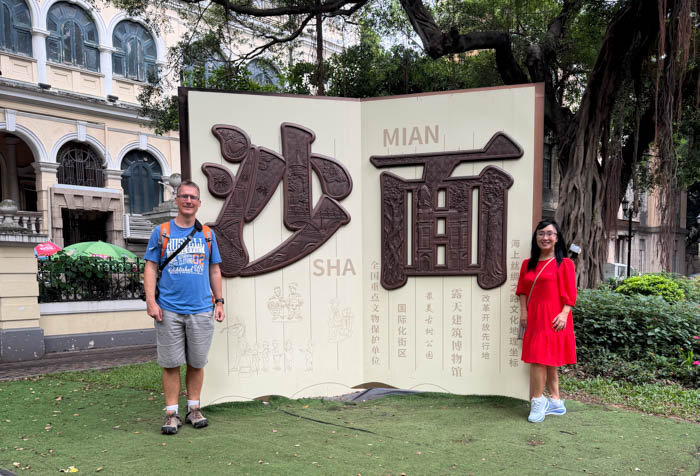
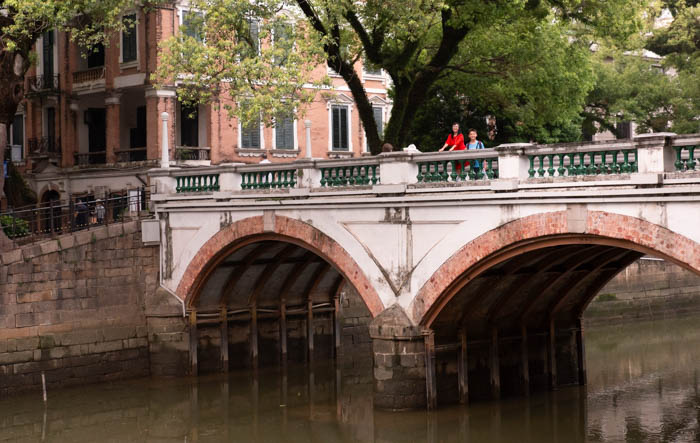
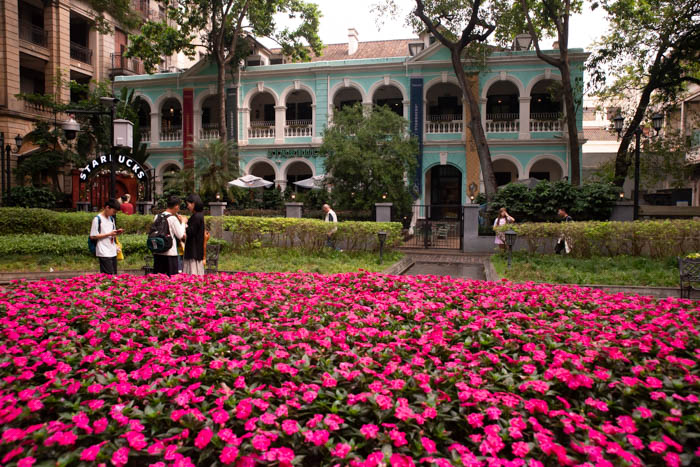
First stop in the morning was Shamian Island. Walking onto Shamian Island feels like stepping into Europe. Tree-lined streets, colonial mansions, quiet cafés — it couldn’t be more different from the rest of the city.

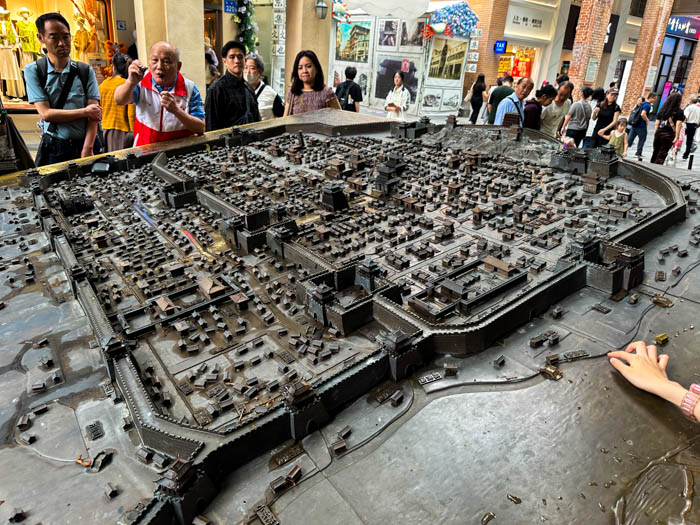
But this place carries a complicated history. After the Opium Wars in the 19th century, this small island was carved out and divided between British and French control, becoming a foreign enclave in China.

What remains today is a fascinating blend of cultures — European architecture, Chinese life, and a sense of calm that feels almost surreal in a city like this.

For us, it was one of those rare travel moments where everything slows down. The boys could wander, Kim could soak in the atmosphere, and I found myself drawn to the history that I have read about in numerous books.
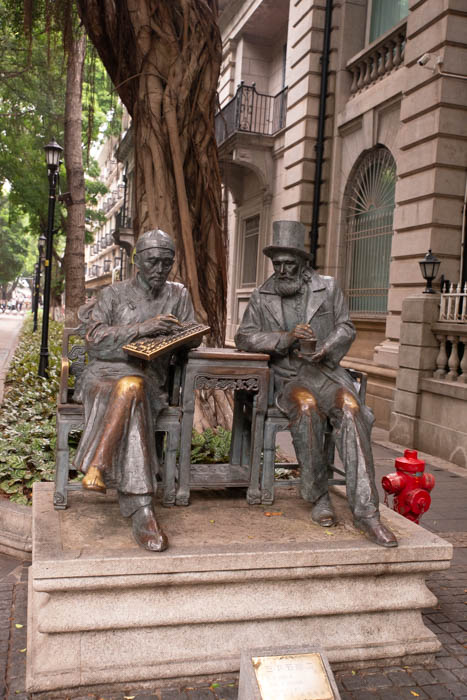
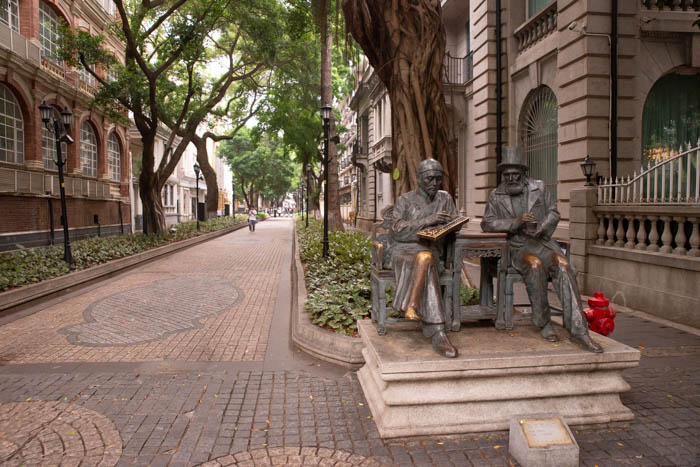
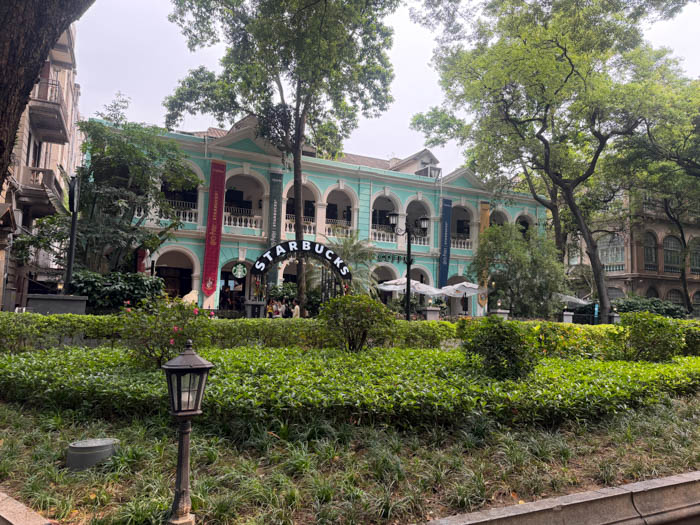
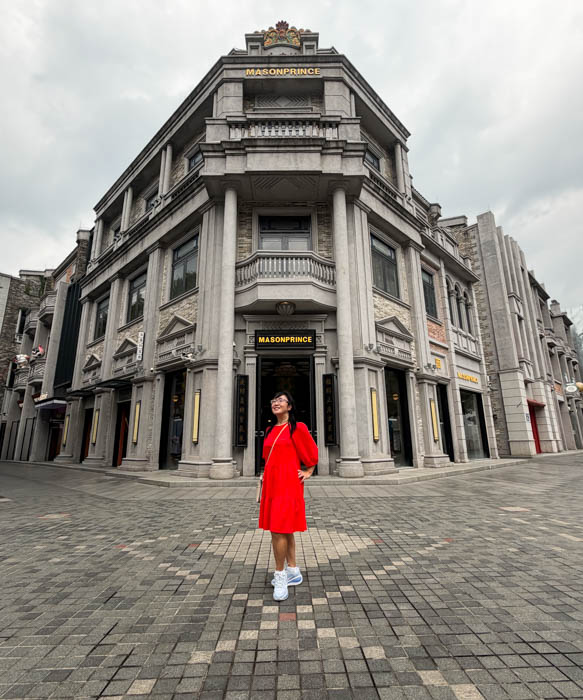
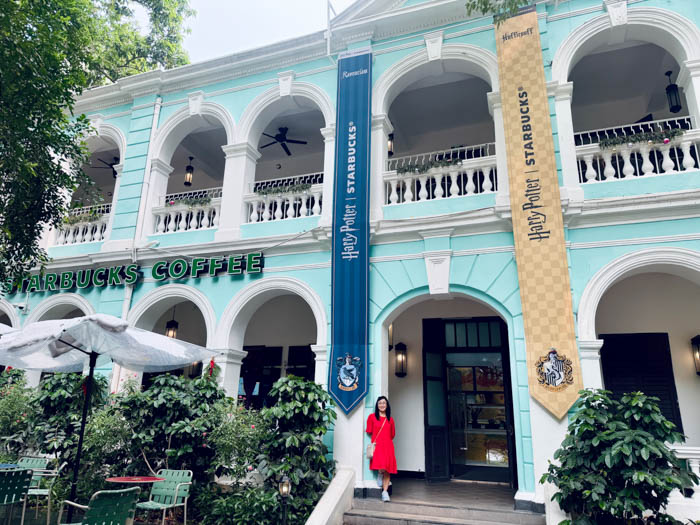
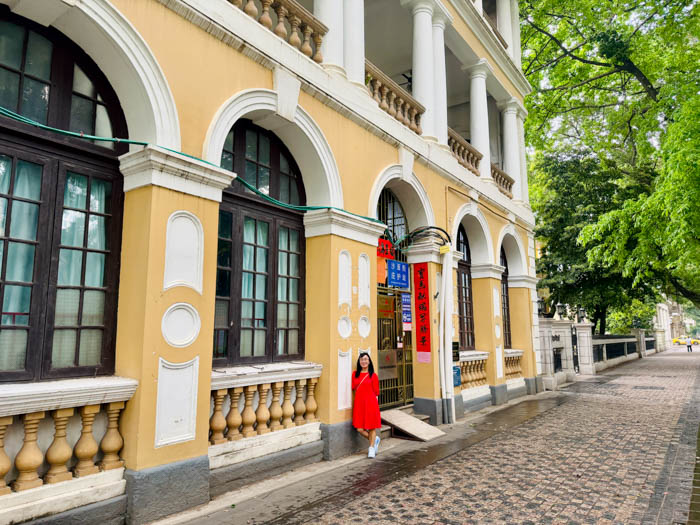


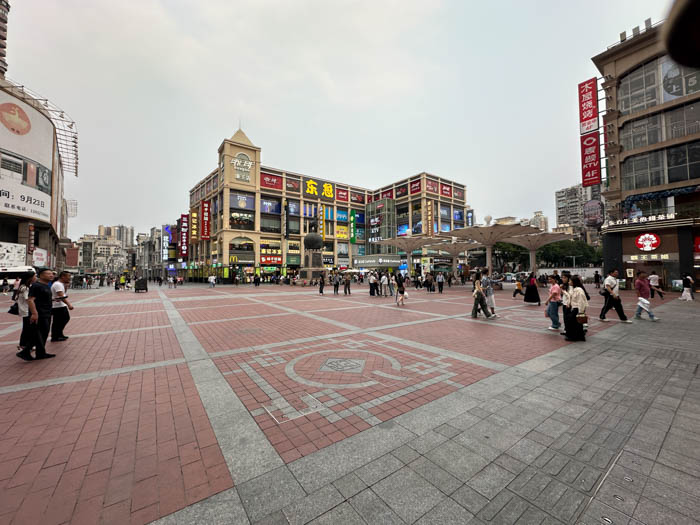
It’s easy to be distracted by Guangzhou’s scale — the towers, the traffic, the constant movement — but the real character of the city reveals itself when you step off the main roads and into the narrow alleyways.

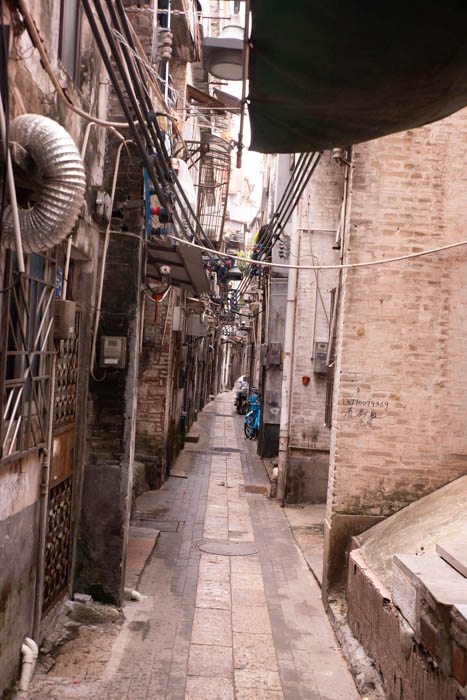
These laneways are where life compresses.

The streets tighten, the noise softens into something more human, and suddenly you’re walking through someone’s everyday world. Open doorways reveal small kitchens in full swing, laundry hangs overhead like a patchwork sky, and scooters squeeze past with barely enough room to spare.

This is where Guangzhou slows down.

We wandered without much of a plan, turning corners simply because they looked interesting. The boys quickly realised this was a different kind of exploring — not landmarks, but observation. Small moments. A nod from a local, a curious glance, someone going about their day completely unfazed by four outsiders passing through.

For me, this was where the camera came alive. Not because of anything grand, but because of the texture — worn walls, layered history, faces that told stories without words.
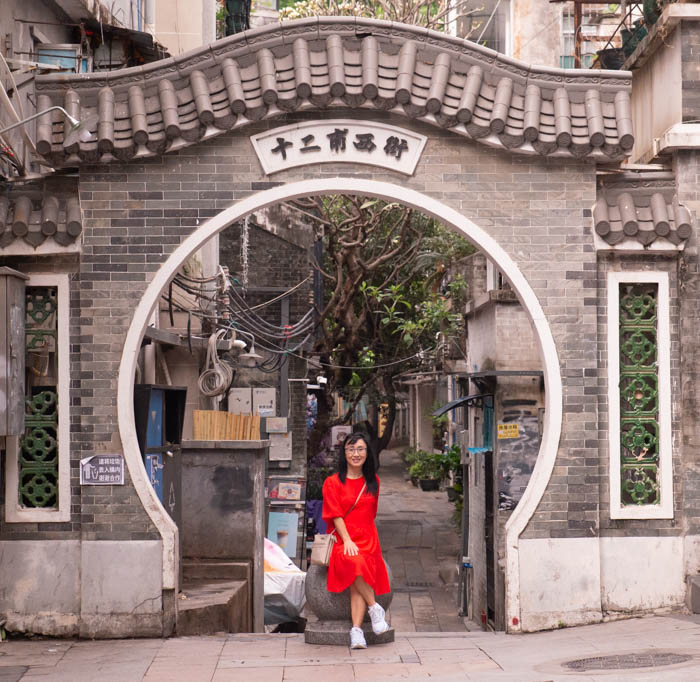


Not far from the bustle of the city, we found ourselves wandering into the area around the Guangdong Cantonese Opera Museum — and it turned out to be one of the most unexpectedly fascinating parts of Guangzhou.

The museum itself is beautifully designed, built in the style of traditional Lingnan architecture, with ornate roofs, carved woodwork, and peaceful courtyards. But what really drew us in wasn’t just the building — it was what was happening around it.

Locals were gathering, dressed in elaborate Cantonese opera costumes — vibrant silks, intricate embroidery, and dramatic makeup. Some were performers, others simply enthusiasts, but all of them carried a quiet pride in what they were part of.

What made it so compelling was how natural it all felt.

People were chatting, adjusting costumes, helping each other prepare, and taking photos — not for tourists, but for themselves. It wasn’t staged or curated. It was a living tradition, still very much part of everyday culture.

Cantonese opera has deep roots in southern China, blending music, storytelling, martial arts, and symbolism into a highly stylised art form that dates back hundreds of years. And here, in this small pocket of Guangzhou, it wasn’t something preserved behind glass — it was still alive.
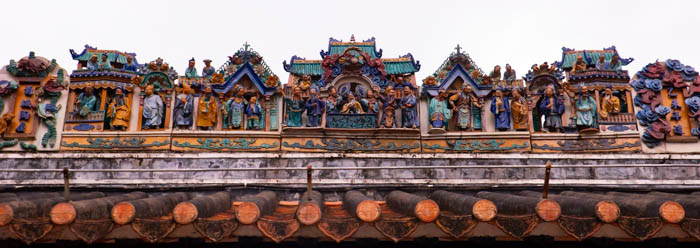
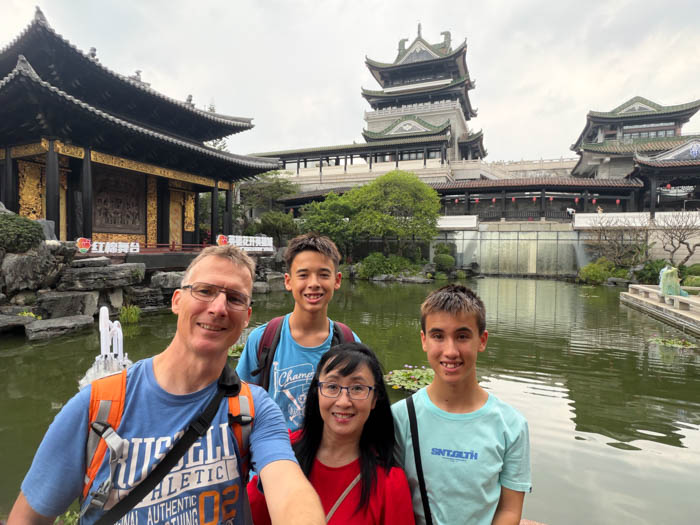
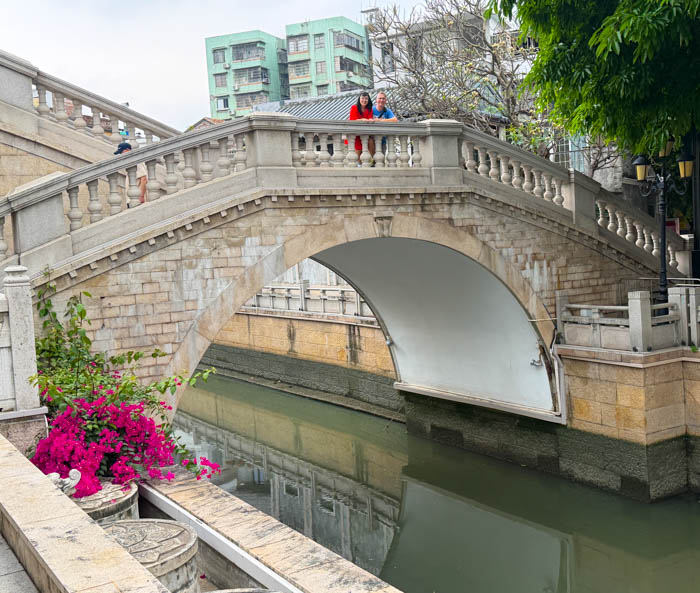


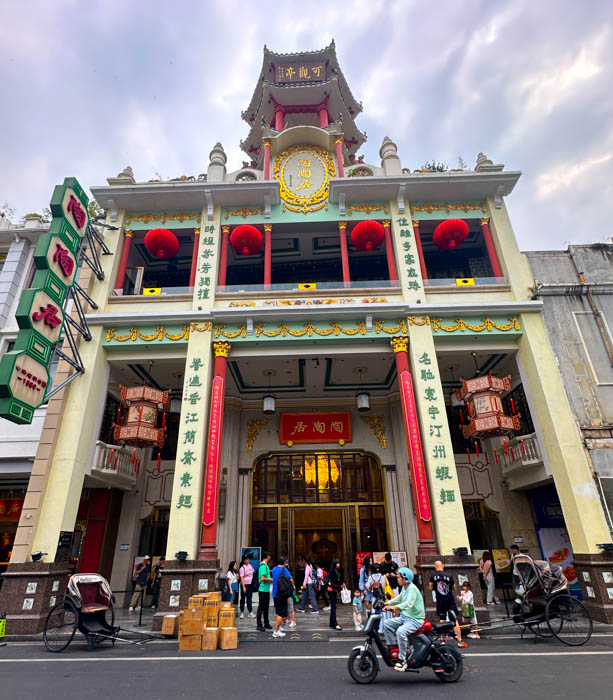
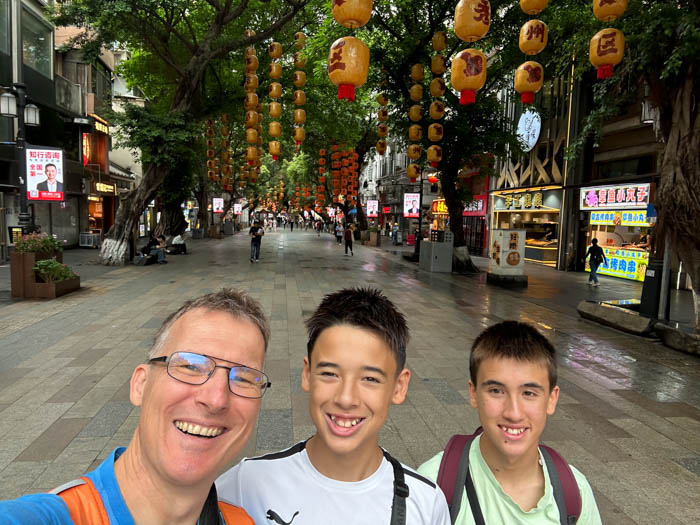
Beyond the main roads, the city unfolds through a rhythm of small shops and daily rituals. Narrow storefronts spill out onto the pavement — fruit stacked in careful pyramids, hardware stores packed floor to ceiling, tiny eateries with a handful of stools and a constant flow of regulars. There’s no clear boundary between business and street; everything blends together into one continuous, living space.


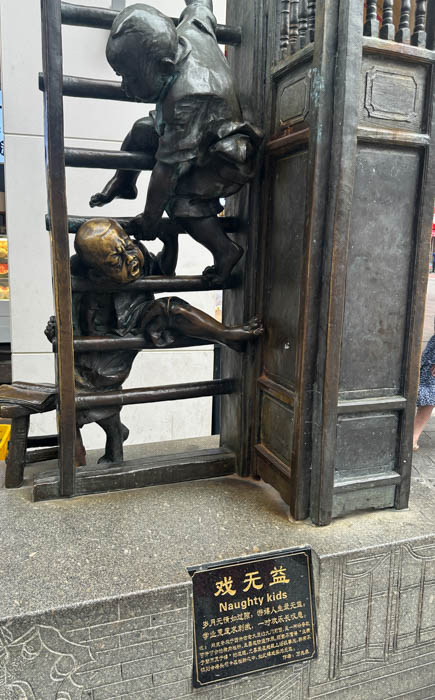
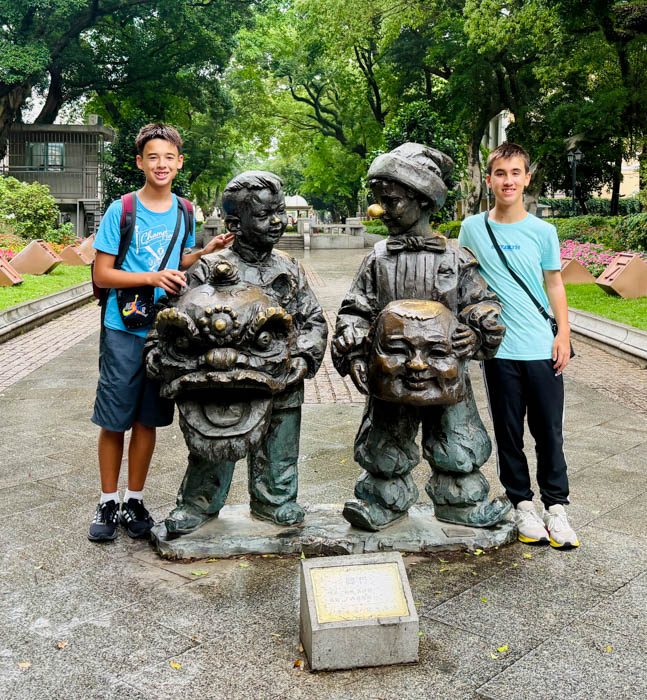
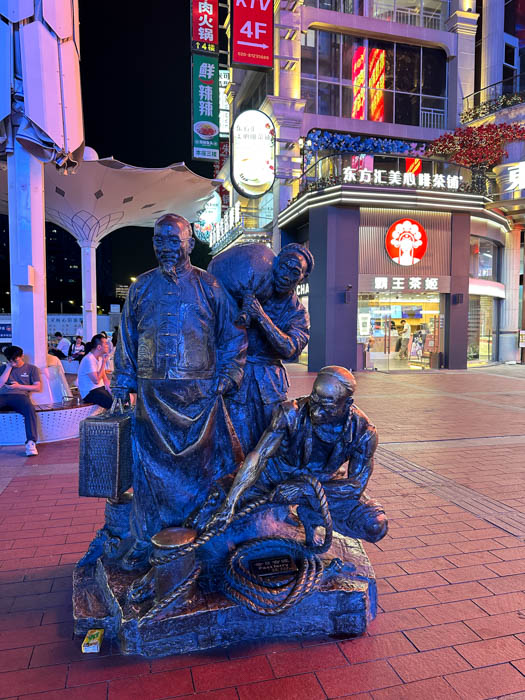
And then, almost quietly, you start to notice them — the bronze statues.

They’re scattered throughout the city, often without fanfare. A fisherman hauling in a net. A street vendor mid-sale. Children playing. Scenes from another time, frozen in metal but placed right in the middle of modern Guangzhou.

They’re easy to walk past if you’re not paying attention.

But once you notice them, they change the way you see the city.

These aren’t grand monuments to emperors or victories — they’re tributes to everyday life. They reflect the trading roots of Guangzhou, once one of China’s most important ports and the starting point of the Maritime Silk Road. For centuries, this was a city defined by commerce, movement, and connection to the outside world.

And those stories are still here — just told in quieter ways.


One evening in Guangzhou took a different turn.

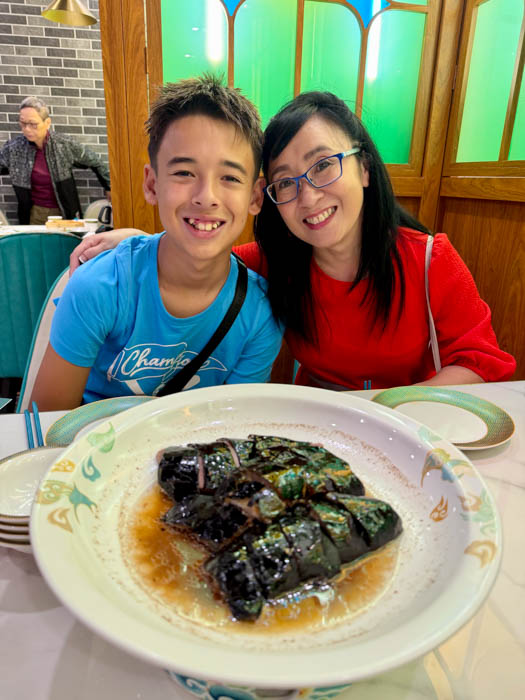
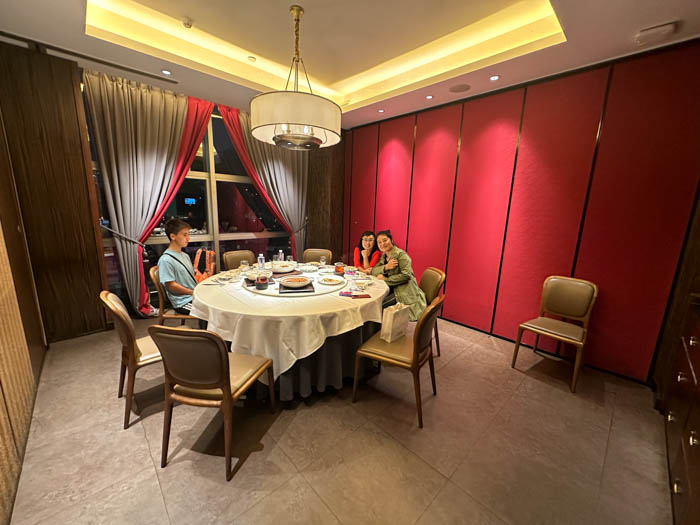
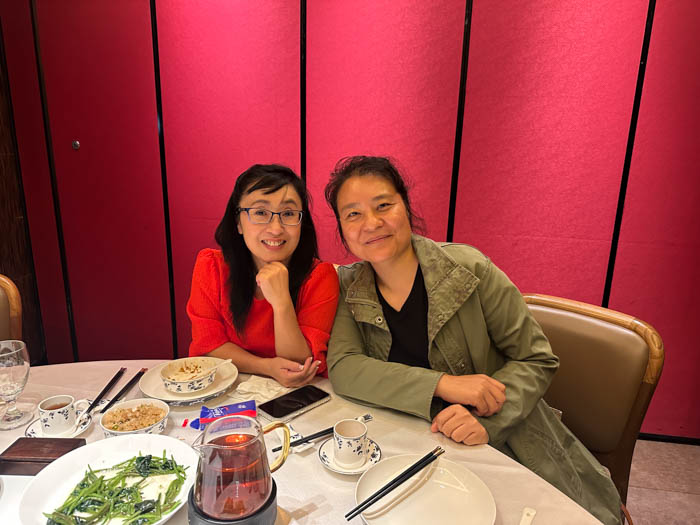
Kim had arranged to meet an old colleague, and instead of the street-side eateries and small local restaurants we’d been exploring, we were taken somewhere altogether more elaborate.

From the outside, it didn’t immediately give much away. But once inside, the scale revealed itself.

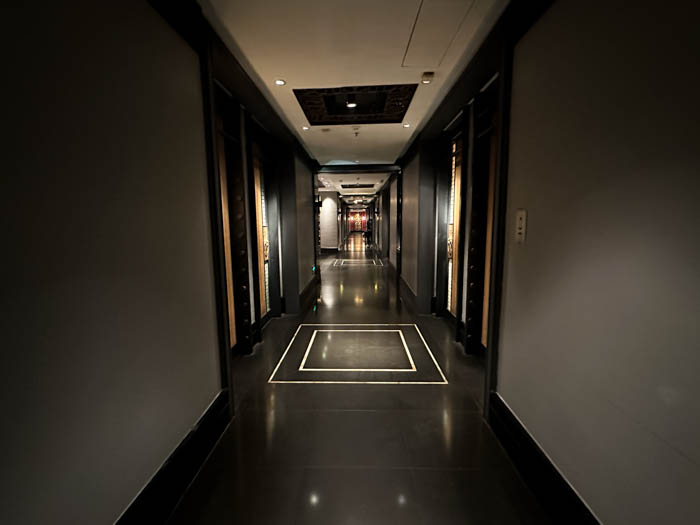
The restaurant unfolded like a maze — long corridors branching into more corridors, each lined with private dining rooms hidden behind heavy doors. It felt less like a restaurant and more like a series of discreet, self-contained worlds. Every group tucked away in their own space, out of sight, out of earshot.

You couldn’t help but wonder what kinds of conversations these rooms had hosted over time. Business deals, family negotiations, celebrations, quiet discussions — the kind of interactions that are never meant to spill into the public space.

There’s a long tradition of private dining in China, especially in cities like Guangzhou where relationships — guanxi — are central to both business and social life. Meals aren’t just about food; they’re about trust, hierarchy, and connection. And spaces like this are designed for exactly that.

For us, it felt like stepping briefly into that world.

The food itself was exceptional — beautifully presented, carefully paced, and clearly designed to impress. But interestingly, it wasn’t the local Cantonese street-style cuisine we’d been expecting. This was something more refined, more international in influence, almost curated to suit a different kind of audience.

For the boys, the novelty was in the setting — their own private room, the formality of it all. For Kim, it was a chance to reconnect. And for me, it was the atmosphere that lingered — the sense that behind every closed door, a different story was unfolding.

It was a completely different side of Guangzhou.

Not the chaotic, open, street-level city we’d come to know — but something quieter, more controlled, and in its own way, just as revealing.


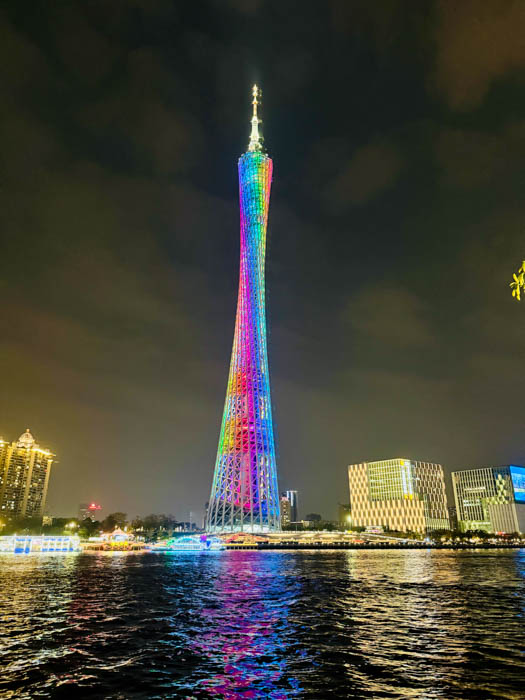
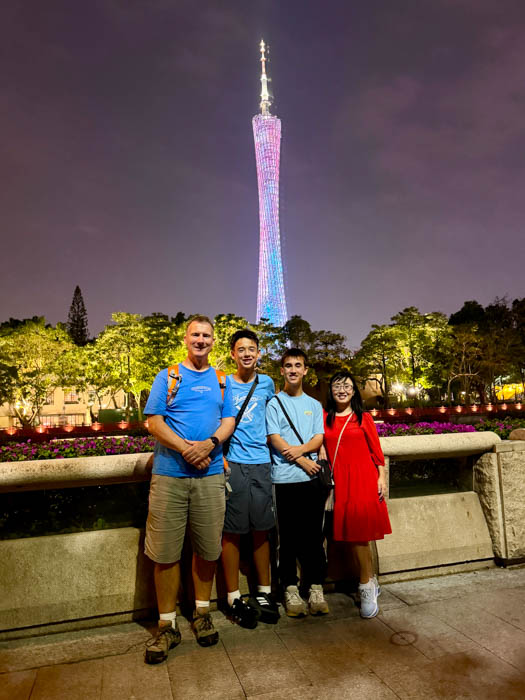
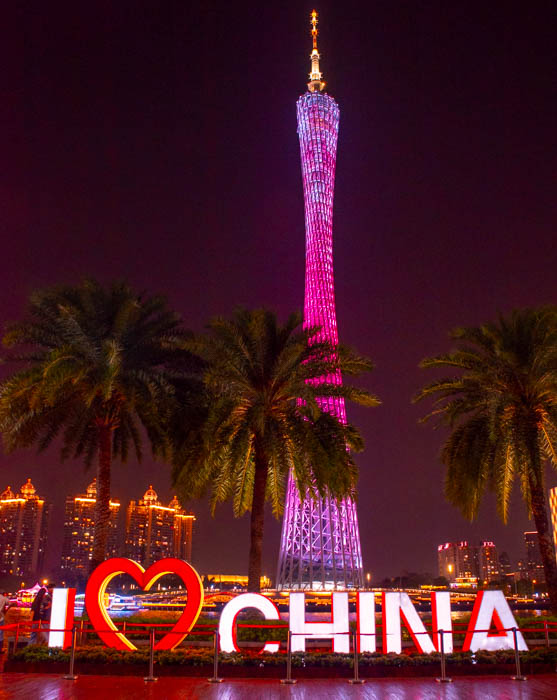
After dinner, we stepped back out into the night and made our way down to the river, drawn by the glow of the Canton Tower rising in the distance.

If the restaurant had felt enclosed and hidden, this was the complete opposite.

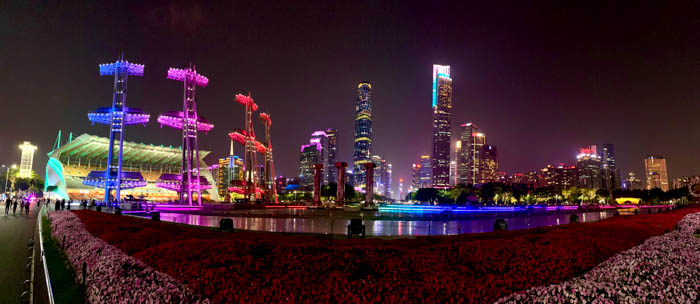
The Pearl River opens everything up. Wide promenades, open air, and a steady flow of people out enjoying the evening — families, couples, groups of friends, all moving at a slower, more relaxed pace than the daytime rush.

And then there’s the tower.

Up close, the Canton Tower doesn’t just dominate the skyline — it feels almost unreal. Its twisting structure is lit in shifting colours, constantly changing, reflecting off the river below. Boats drift past, their own lights adding to the scene, and the whole area takes on a slightly surreal, almost cinematic feel.

The boys were immediately drawn to the energy of it — the lights, the movement, the scale. For them, this was Guangzhou at its most exciting.

The Pearl River has been the lifeblood of Guangzhou for centuries — the reason the city became one of China’s most important trading ports, connecting it to the outside world long before the skyscrapers arrived.

Now, instead of trading ships, it’s light shows and river cruises.


Somewhere in the middle of Guangzhou’s busy streets, we stumbled across something completely unexpected — and for Lucas, it may well have been the highlight of the entire city.

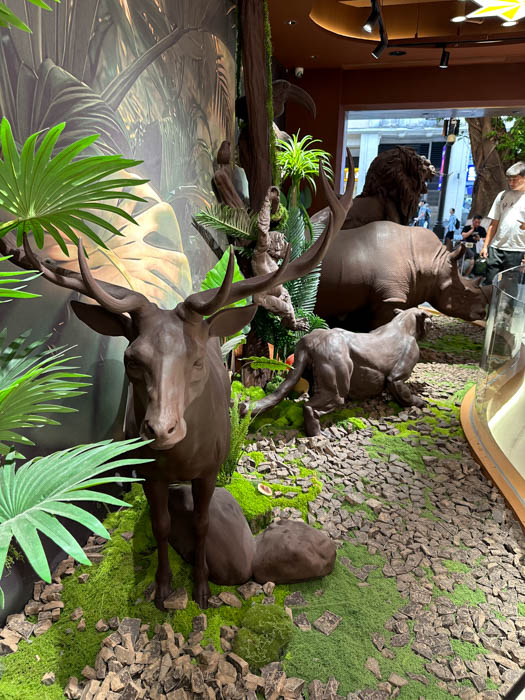
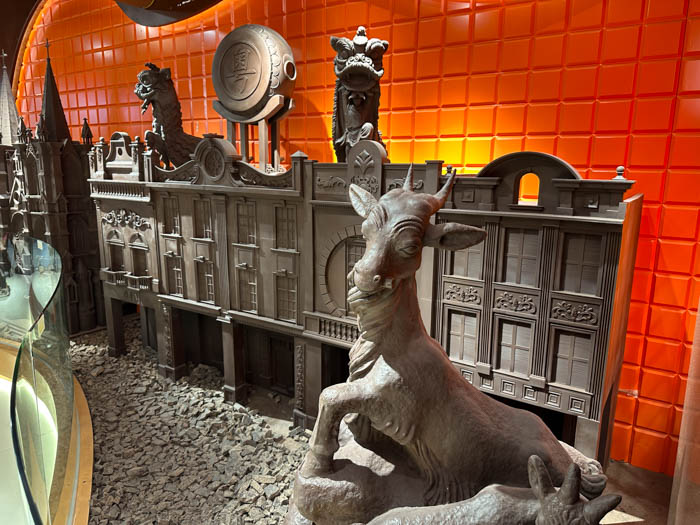
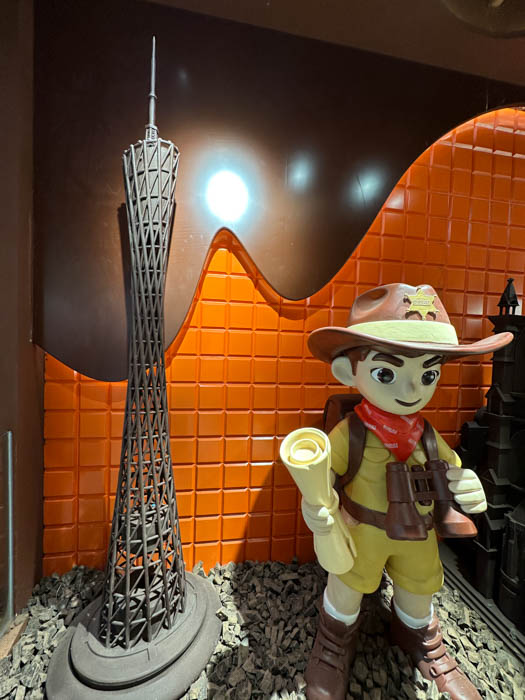
A shop where everything looked like it belonged in a museum… but was made entirely of chocolate.

Not just small displays or decorative pieces, but full-scale creations. Life-sized animals stood frozen mid-step — elephants, giraffes, creatures you’d expect to find on the African savannah, not in a shop in southern China. Alongside them were intricate replicas of local architecture, temples and buildings recreated in astonishing detail, all in chocolate.

At first, it didn’t quite register. The level of craftsmanship made it hard to believe it wasn’t carved wood or painted resin. But the closer you looked, the more surreal it became — every surface, every texture, every tiny detail… chocolate.

Lucas was completely in his element.

You could see the internal conflict playing out — admiration versus appetite. Was this something to photograph, or something to eat? (The answer, unfortunately, was mostly the former.)



5. February 2026 16:02
by Rene Pallesen
0 Comments

Cook Islands - Long Boat

5. February 2026 16:02 by Rene Pallesen | 0 Comments

On a rainy afternoon we went in a longboat. The idiot at the back almost got all of us killed by hav
On a rainy afternoon we went in a longboat. The idiot at the back almost got all of us killed by having no idea how to steer (that was his one job) and landed us on the outer reef.


5. February 2026 16:02
by Rene Pallesen
0 Comments

Cook Islands - Snorkeling

5. February 2026 16:02 by Rene Pallesen | 0 Comments

We went snorkeling in the lagoon


5. February 2026 16:02
by Rene Pallesen
0 Comments

Cook Islands - Boys at Black Rock Beach

5. February 2026 16:02 by Rene Pallesen | 0 Comments

I also took some photos of the boys at Black Rock Beach.


5. February 2026 16:02
by Rene Pallesen
0 Comments

Cook Island - Turtles

5. February 2026 16:02 by Rene Pallesen | 0 Comments

One day we went snorkeling with the turtles in the lagoon.


Perfect Moments Photography | A Rene Pallesen Journal

Home

16. January 2018 21:03
by Rene Pallesen
0 Comments

People - Laos

16. January 2018 21:03 by Rene Pallesen | 0 Comments

One thing that I love taking photos of on my travels are People.A lot of the photos of the people of
One thing that I love taking photos of on my travels are People.


A lot of the photos of the people of my travels are in the other posts, but here is a selection that didn't really fit into the other stories.

This is an old woman sitting doing preparing food or doing her handicraft outside her house while observing the street life.


Someone was shooting a wedding, I used the opportunity to snap a photo of my own.


A woman bathing in the Mekong


A girl posing for her boyfriend on top of the hill at Luang Prabang


A woman walking down the street


Another woman doing handicraft outside her shop

12. January 2018 00:02
by Rene Pallesen
0 Comments

Fishing - Laos

12. January 2018 00:02 by Rene Pallesen | 0 Comments

The fishing along the rivers in Laos are still very traditional.It is the circular throw out nets, f
The fishing along the rivers in Laos are still very traditional.

It is the circular throw out nets, fish traps and people foraging along the river banks to collect river seaweed and snails for eating.


In most places they still use dugout canoes for the fishing.


In the various town you see people sitting repairing their fishing nets.


Kim told us that when she was a little girl she used to help the family repair the fishing nets, but that she's forgotten how to do it.


One of the delicacies in Loang Prabang is the local riverweed. We saw multiple people collecting it and also sitting cleaning it.


11. January 2018 19:01
by Rene Pallesen
0 Comments

Vang Vieng - Kids highlights

11. January 2018 19:01 by Rene Pallesen | 0 Comments

Some of the other highlights for the kids in Vang Vieng was the gym at our hotel. The local guys use
Some of the other highlights for the kids in Vang Vieng was the gym at our hotel. The local guys used it to train for kick boxing and the kids felt inspired.


Also, one evening we spotted someone launching wishing lanterns. We asked where they came from and through a lot of pointing we found a local shop keeper selling them.

We bought one and launched it an the kids loved the experience.


Also, one of the trees at the hotel had two little monkeys staying there most of the day. The kids loved standing there shouting profanities at them.


10. January 2018 19:01
by Rene Pallesen
0 Comments

Vang Vieng - Watersports

10. January 2018 19:01 by Rene Pallesen | 0 Comments

At Vang Vieng we did do some water sports. Again we were extremely lucky kayaking a section of the r
At Vang Vieng we did do some water sports.

Again we were extremely lucky kayaking a section of the river back to Vang Vieng and having the entire river to ourselves.


The three kids were all in a kayak with our guide sitting on top of their life jackets - fortunately they can all swim.


Kim and I was in one Kayak and Sacha and Mavis in another.


Just where we started out there was a rapid with water flowing over a large boulder but with plenty of flat water on the sides. Kim was little impressed when I headed straight into the rapids and with perfect skills paddled us through them...her being soaked and the kayak being full of water may have had something to do with it.


She's later said that the kayaking trip was one of her favourite and most fun activities on the trip, so maybe she was somewhat impressed with my brilliant paddling skills!!


Along the river are still some of the remains of the bars and zip lines - but all very quiet now.


Approaching Vang Vieng we went past some really scenic locations with bungalows etc.


The experience at the end got and all thumbs up!


Another water activity that Mavis and I did was tubing through one of the caves. You essentially sit in an inflated car tyre and then pull yourself along a rope inside a cave. It was fun for the kids, however this place was packed with Koreans trying to do the same thing.

Aiden initially didn't want to go, but I am proud that he eventually managed to get the courage to do so.


We also went to one of the lagoons. There are a number of them and some of them are very popular. We organised with a driver to drive us to one of the less popular ones. It was still scenic and it had platforms of the trees to jump from and you could see why some travelers would have killed themselves jumping off them.


There were also a couple of rafts which reminded me of the first time I went to Laos and paddles across a local river on a raft. It got on one of them in the lagoon and the whole thing literally sunk under me - I only just managed to get off in time before getting soaked.

The second one was able to hold my weight and I took the boys for a little paddle.

9. January 2018 19:01
by Rene Pallesen
0 Comments

A silent prayer - Laos

9. January 2018 19:01 by Rene Pallesen | 0 Comments

At one of the caves in Laos there is this amazing Buddha statue inside the cave.I couldn't help but
At one of the caves in Laos there is this amazing Buddha statue inside the cave.

I couldn't help but notice how beautiful the diffused light was falling onto the statue itself and through the entrance to the cave. We were there all by ourselves and I asked Kim to sit and offer a little prayer in the ray of light coming in through the cave.

I didn't bring a tripod with me to Laos, so everything had to be shot handheld which was tricky as there wasn't much light there.

8. January 2018 18:01
by Rene Pallesen
0 Comments

Vang Vieng - Caves

8. January 2018 18:01 by Rene Pallesen | 0 Comments

In Vang Vieng we also went to some caves. Again we were the only ones there - I don't know if this w
In Vang Vieng we also went to some caves. Again we were the only ones there - I don't know if this was just because no one else were interested or because we went there at a time when everyone else were doing other activities.

The caves are in fairly pristine condition, they are dark, moist and other than descending a makeshift ladder walking through them gives a feeling of exploring the caves for the very first time.


Some passages were really narrow


And other parts of the caves were massive.


Overall the caves are beautiful and again it was amazing having them to ourselves.


7. January 2018 21:01
by Rene Pallesen
0 Comments

Tribes - Laos

7. January 2018 21:01 by Rene Pallesen | 0 Comments

The tribes of Laos still exist although it is no longer as noticeable. They no longer wear their tra
The tribes of Laos still exist although it is no longer as noticeable.

They no longer wear their traditional costumes but it is possible to glimpse the occasional traditional head wear or dress in one of the shops.


It is especially sad to see the Hmong tribal wear gone as worn below by Mavis and Kim. The Hmong traditionally lived in the mountains. The government has forced them down into the lowlands where they can be controlled and 'integrated' into the the rest of Laos.


6. January 2018 20:01
by Rene Pallesen
0 Comments

Vang Vieng Countryside - Laos

6. January 2018 20:01 by Rene Pallesen | 0 Comments

On the first day in Vang Vieng we hired a local guide to take us through the country side and some o
On the first day in Vang Vieng we hired a local guide to take us through the country side and some of the villages around Vang Vieng.


Hiking through the countryside in Laos is partly magical and at the same time an eye opener. It is not until you get into the country side that you get a glimse of the real Laos and its people, the way of living and their beliefs.

Walking into the first village a group of boys came walking towards us. One of the kids was holding his head with blood dripping down his face. The other boys were taking him home to his parents. I couldn't help but notice that there was a green substance smeared across the wound and asked our guide is he knew what it was. He went over to some bushes and plucked a couple of leaves and said that if you crush them then they will help stop the bleeding. This is when you realise that a lot of the plants in the villages serve a purpose as natural herbal medicine or for eating.

The village was a HMong village and at one of the houses we spotted the little girl above standing in a door opening with her grand mother. There are very few of the traditional bamboo shacks still standing and instead being replaced with brick buildings.


A bit further up the road we heard a sound. Someone was hitting a gong and chanting. Thinking it might be a monk we went to investigate. The sound was coming from one of the local houses. At the back of the house the family was in the process of preparing food, but we couldn't see where the sound was coming from. Our guide asked them and was told that they had a newborn (possibly sick) child and that the Shaman was in the house talking to the 'other world to' attract the good spirits and chase the evil spirits away.


As we walked on we could see him through the opening of the door and I snapped the above photo which is one of my favourite photos of the trip.

In the village people go about their normal life such as this woman removing lice from her daughters hair.


As we walked on we had to walk through the local school. It happened to be recess and the kids in the smaller classes were outside playing.


There was a small stand selling them lunches who also sold lollies, so Kim got the idea to spoil the kids with lollies - but also turned out to be a great opportunity for our kids to interact and see what a classroom in Laos looks like.


The area is still very un-developed. Although there seems to be electricity, this is mainly used for lighting. Cooking is still done by collecting wood and done on wood fired stoves and people still wash their clothes in the rivers and streams.


Although there are still a number of water buffaloes these are mainly used for eating along with any other non-human living animal - such as pigs, dogs, birds etc.


It was very healthy for the boys to see where their food 'potentially' comes from and understand that this is part of life.

The area is full of rice paddies, but these are now worked with mechanical tools rather than buffaloes.


The government has built bridges across the large river to allow access to the villages.


But the smaller streams have bamboo bridges - in this case wide enough to drive a motorbike across, others just a single bamboo to allow a person walk across.


At the far village (Lao and not Hmong) there was a limestone cliff with a small cave in it. This was called elephant cave and inside there was a small shrine along with some bizarre images.


The whole area is spectacular - I can only imagine what it would be like during rice planting season - yes it would be muddy but also stunningly beautiful.


During this whole hike we saw no other travelers. Other than at the cave we didn't get a sense that there frequently came any groups through and I think the feedback from all of us was that this was one of the highlights of the trip - no adrenaline required.

5. January 2018 16:01
by Rene Pallesen
0 Comments

Vang Vieng - Laos

5. January 2018 16:01 by Rene Pallesen | 0 Comments

Vang Vieng is an interesting tourism destination in Laos that has undergone several iterations of re
Vang Vieng is an interesting tourism destination in Laos that has undergone several iterations of re-inventing itself.


When I first visited for an overnight stopover it was a sleepy little town with maybe a handful of backpackers going tubing (more on that later).
I also remember the deserted airport runway from the 'secret war' going through the sleepy little village (Lima site 6) and the stunning mountain scenery in the background. Other than that there wasn't much there.


Ten years later my mum and dad visited the place and told me stories how the place had transformed. It had grown and was full of drunk backpackers with loud rave music and parties throughout the night. During the day they were floating down the river in car tubes again with beers and drinks in their hands.


Then again about 5 years ago, Laos appeared in the Australian news media with stories of young backpackers breaking their necks doing somersaults off the tree branches on the river and lagoons and hitting the rocks. Stories of high highly available drugs were also emerged.

The Lao government stepped in and closed the majority of the bars along the river, stopped the parties and the drugs and implemented a number of other safety restrictions.
It worked, the parties stopped and the young party seeking backpackers fled.

A new crowd has now moved in - this is bus loads of adrenaline seeking Koreans. They go there to go kayaking, zip lining, tubing, buggy riding etc. They eat at the Korean restaurants and stay at the same hotels, but otherwise mostly keep to themselves. This also means that some of the same old sleepy feeling has returned to this town. It also meant that is was easy (or just plain luck from our side) to avoid the tourists.

The airstrip is still there, but I recon most visitors would walk across it and not notice and definitely wouldn't know the history behind the secret war in Laos, let alone the American involvement and the little airstrips around the place. It is a fascinating story and has very much shaped Laos into what it is today.


The area is just absolutely stunning with steep limestone cliffs and rice paddies. I could easily have spent more time there taking photos in the surrounding area.


3. January 2018 21:01
by Rene Pallesen
0 Comments

Pha That Luang - Laos

3. January 2018 21:01 by Rene Pallesen | 0 Comments

A must see in Vientiane is Pha That Luang - It is on every bank note in Laos and they are very proud
A must see in Vientiane is Pha That Luang - It is on every bank note in Laos and they are very proud of it.


Unlike Buddha Park it is surprisingly quiet when it comes to tourists. The majority of people visiting seems to be either Laos or Thai people offering a prayer. The correct way here is to get the insense and flowers and then walk clockwise around the Stuba on the inside of the covered corridor (mostly to keep out of the sun I assume).


Although it is not particularly old (The original 1st century structure was mostly destroyed and has undergone a number of more recent restorations), it is stunningly beautiful and impressive in size.


For me to get some of the panorama photos here with the selection of lenses I'd brought along I had to take multiple photos that I then had to stitch together.

Outside there is a temple that is equally interesting, although nothing compared to further north in Luang Prabang.


There are also street vendors selling cage birds that are supposed to bring good luck and prayers to anyone releasing them.


Perfect Moments Photography | A Rene Pallesen Journal

Home

2. March 2017 08:03
by Rene Pallesen
0 Comments

South Africa - Wine lands

2. March 2017 08:03 by Rene Pallesen | 0 Comments

We spent a day driving out through the wine lands around Cape Town, namely Stellenbosch and Franschh
We spent a day driving out through the wine lands around Cape Town, namely Stellenbosch and Franschhoek.


As everywhere else it is a beautiful area surrounded by mountain ranges.


Kim had been recommended a nice restaurant in Franschhoek, but when we got there it was fully booked (or invitation only - not sure), so we ended up at an equally nice french restaurant down the road.


The vineyards there are massive compared to Australia - they are proper estates on massive lands.


One of the estates had this nice McLaran parked outside.


We didn't do much tasting though - the way they do it (you order a sit down wine tasting or a wine package for a fee) didn't really fit with me driving and traveling with kids.

The Boys were as usual more interested in playing.


1. March 2017 20:03
by Rene Pallesen
0 Comments

South Africa - Cape Peninsula

1. March 2017 20:03 by Rene Pallesen | 0 Comments

The Cape Peninsula is a beautiful area with nice views and little isolated beaches where ever you lo
The Cape Peninsula is a beautiful area with nice views and little isolated beaches where ever you look. We spent a whole day exploring along the coast...breathtaking.


1. March 2017 20:03
by Rene Pallesen
0 Comments

South Africa - Cheetah Outreach

1. March 2017 20:03 by Rene Pallesen | 0 Comments

One morning we went to the Cheetah Outreach centre outside Cape Town.Here they train dogs to keep wi
One morning we went to the Cheetah Outreach centre outside Cape Town.

Here they train dogs to keep wild cats away from cattle and sheep so that these don't get eaten. The idea is that if the farmers keep dogs to keep their animals safe then they don't have to set traps to kill the wild cats. Interesting idea, but I would think that it would take a lot of dogs, and the farmers would probably still shoot or trap the wild cats anyhow.

The centre also keeps some cheetahs that visitors are allowed to pat (for a fee).


22. February 2017 19:02
by Rene Pallesen
0 Comments

South Africa - Penguins at Boulders Beach

22. February 2017 19:02 by Rene Pallesen | 0 Comments

Going to Boulders Beach was a fun experience for the boys. There were lots of nesting penguins and t
Going to Boulders Beach with all the penguins was a fun experience for the boys.


There were lots of nesting penguins and they are more agile than you think, jumping between the rocks on the beach (notice how the penguin below is airborne).


They sit on their nests until the eggs hatch.


and they stay with the young ones after they hatch too.


And once in a while a seagull gets lucky and steals one of the eggs.


There are hundreds of them on the beach.


And they are right next to the path.


The whole area was covered in smoke from a massive bush fire up in the hills, so our eyes were watering and hurting by the end of it.


Despite the smoke I still managed to get a good photo of this beautiful flightless bird.

21. February 2017 20:02
by Rene Pallesen
0 Comments

South Africa - Cafe Africa Cape town

21. February 2017 20:02 by Rene Pallesen | 0 Comments

In the evening we went to Cafe Africa. This is a nice little cafe serving authentic African cuisine
In the evening we went to Cafe Africa. This is a nice little cafe serving authentic African cuisine in the middle of Capetown. The menu was a 16 course degustation type menu with all you can eat of food from all over Africa.

They came around to do a bit of face painting and later there was drumming and dancing from the staff.


21. February 2017 19:02
by Rene Pallesen
0 Comments

South Africa - Table Mountain

21. February 2017 19:02 by Rene Pallesen | 0 Comments

After Kruger we flew to Capetown.The first day we went to Table Mountain. The mountain is often cove
After Kruger we flew to Capetown.

The first day we went to Table Mountain. The mountain is often covered in clouds, and with a beautiful hot day we though we'd make the most of it and head up there when we had the opportunity.

The queue getting up there with the cable car was massive, several hundred metres. We quickly learned that the queue for people who had pre-purchased tickets was shorter and also moved faster than the other queue. We quickly jumped across to the other queue and using my mobile I purchased tickets while we were still waiting.


The view from up there is amazing and the top is actually a lot flatter than I though it would be.


21. February 2017 19:02
by Rene Pallesen
0 Comments

South Africa - Bo Kaap

21. February 2017 19:02 by Rene Pallesen | 0 Comments

On the way down from Table Mountain we visited Bo Kaap.This is a predominantly muslim neighbourhood
On the way down from Table Mountain we visited Bo Kaap.

This is a predominantly muslim neighbourhood with some very colourful houses.


Great as a backdrop for photographing the most beautiful girl I know.


And also the most handsome boys.


20. February 2017 20:02
by Rene Pallesen
0 Comments

South Africa - Shangana Village

20. February 2017 20:02 by Rene Pallesen | 0 Comments

One evening at Hazyview we went to a local cultural village of the Shangana Tribe.First we went to t
One evening at Hazyview we went to a local cultural village of the Shangana Tribe.


First we went to the village itself and were introduced to local food and customs.


The local witch doctor showed us some of the local medicines they used for stomach pains etc.


Afterwards we were entertained by local drumming and dancing in a large hut. Beforehand they had to warm up the drum skins to make them the right tune.


But first we were greeted by the chief of the village.


One of the dances was the boot dance which they danced in the mines of South Africa during the Apartheid.


After the show we had a very traditional and yummy communal dinner as guest of the chief.


20. February 2017 20:02
by Rene Pallesen
0 Comments

South Africa - Moholoholo car museum

20. February 2017 20:02 by Rene Pallesen | 0 Comments

At one of the private game reserved the owner maintains a little car museum with some very cool cars
At one of the private game reserved the owner maintains a little car museum with some very cool cars.


Especially this Ferrari 335S is interesting. If it is the real thing then it is one of only five ever made where the last one sold at an auction was sold for more that 30 million pounds.

20. February 2017 19:02
by Rene Pallesen
0 Comments

South Africa - Hazyview Reptile park

20. February 2017 19:02 by Rene Pallesen | 0 Comments

One morning when it was raining at Hazyview we went to the local Reptile Park.They had a large displ
One morning when it was raining at Hazyview we went to the local Reptile Park.

They had a large display of snakes and other reptiles, and also some interesting talks such as about Poisonous snakes.

One of the snakes they showed us was the African Puff Adder, which I remember as a really vicious snake from my days in Kenya. The snake handler certainly convinced me that it is not as aggressive as I thought by walking bare feet past it when it was all curled up really to attack.


Perfect Moments Photography | A Rene Pallesen Journal

Home

6. February 2018 16:03
by Rene Pallesen
0 Comments

Morning Markets - Laos

6. February 2018 16:03 by Rene Pallesen | 0 Comments

The morning markets are interesting. This is where the locals still go to buy their fresh produce an
The morning markets are interesting. This is where the locals still go to buy their fresh produce and all kinds of specialties are being sold here. It would be easy to go here and get the ingredients for some really delicious food.

There are also some unusual things that we don't see in our western kitchens. such as:

Dried Squids:


Fresh fish - of cause, but this have sharp teeth.


A protein and herb table that would make most chefs (and diners) salivate:


The Chillies in Lao are more hot than in Thailand - We loved the heat.


A pig:


River crabs:


Beetles:


Dried rats:


Caterpillar - these are yummi when fried:


Frogs:

River snails:


Dried squid, shrimps and fish:


5. February 2018 16:03
by Rene Pallesen
0 Comments

Bamboo Bridges - Laos

5. February 2018 16:03 by Rene Pallesen | 0 Comments

During the dry season the people of Luang Prabang builds traditional bamboo bridges across the small
During the dry season the people of Luang Prabang builds traditional bamboo bridges across the smaller river. This saves them a lot of time (and cost) to cross directly into the centre of town rather than a long detour to the other larger bridges.

It also earns them a small income to charge foreigners a small fee to cross the bridges.


5. February 2018 16:03
by Rene Pallesen
0 Comments

Silk - Laos

5. February 2018 16:03 by Rene Pallesen | 0 Comments

They still manufacture silk they way they used to. It was interesting for the kids to see the proces
They still manufacture silk they way they used to. It was interesting for the kids to see the process from small caterpillar eggs that hatch to worms to the production of the silk itself.


I had always wondered where the colour blue (Indigo) came from. I knew it used to come from a seashell, but I was fairly certain that this wouldn't be the case here. It turns out that they use a special leaf from a plant that when mixed with water and left fermenting/oxidising turns into a blue dye.


They also use plants for most of the other colours.


After they spin the thread they use traditional weaves to make it into pieces of garment. These days the silk garments are fairly expensive - hundreds of dollars, but it used to be really cheap.

4. February 2018 22:02
by Rene Pallesen
0 Comments

Pak Ou cave - Laos

4. February 2018 22:02 by Rene Pallesen | 0 Comments

A two hour boat ride north of Luang Prabang is the Pak Ou cave. Since we were traveling two families
A two hour boat ride north of Luang Prabang is the Pak Ou cave. Since we were traveling two families the best way to get there was to hire a slow boat just for us.


The flow boats are long narrow boats that are ideal for navigating the Mekong River. This part of the river is full of underwater rocks but the boats seem to navigate these treacherous waters with ease.

Having the boat for ourselves gave us more flexibility with regards to how long we wanted to spend at the cane and also meant that we have more room to move around.


The front of the boar is where the captain sits and steers the boat. After this there is a section for the passengers followed by a small pump toilet and then the living quarters for the captain and his family. Out the back there is a small kitchen for them to do the cooking.

The cave is upstream into an area full of limestone mountains.


The many boats moor at a long and wobbly floating bamboo bridge that takes you to the cave itself.


The cave itself is not big but it is full of small Buddhas that have been put there over hundreds of years. You can tell that this used to be an important place of worship.


Now however the place is so crowded with tourists (guilty here too) coming in on boats that it is hard to move around. I could not stop myself from taking this photo of Buddha holding up his hands to stop more boats arriving.


At the top of the hill the hill there is what I think is a more 'pleasant' cave. It is equally interesting and much less crowded because most tourists don's make it up the many steps to the top.

4. February 2018 16:03
by Rene Pallesen
0 Comments

Lao Lau (rice whiskey) - Laos

4. February 2018 16:03 by Rene Pallesen | 0 Comments

The traditional Lao Lau is still being made. Just north of Luang Prabang on the river there is a lit
The traditional Lao Lau is still being made. Just north of Luang Prabang on the river there is a little village on the river called Whiskey village whos main income is from the production of Lao Lau.


When I was there two decades ago this is what the locals were drinking (now they drink beer instead). I still remember the foul taste from the home brew that was distilled in large oil drums after having been fermented in large clay pots. Whenever I see it I always wonder if distilling strong alcohol right next to an open flame is the wisest of ideas!?!?


The process itself hasn't changed, but these days most of the whiskey is sold to tourists and I tastes a lot more pleasant that it did back then.


3. February 2018 15:03
by Rene Pallesen
0 Comments

Food - Laos

3. February 2018 15:03 by Rene Pallesen | 0 Comments

The food in Laos is good. It is traditional cooking mostly still cooked over an open fire.You see th
The food in Laos is good. It is traditional cooking mostly still cooked over an open fire.


You see them start cooking the food well before sunrise in big pots.

The food itself is mostly a fusion of Thai and Vietnamese. It has all the noodle soups from Vietnam, but with the more street food and spice of Thailand. The picture below is a typical noodle soup with a traditional cube of coagulated blood.


We were eating a lot from small street type restaurants following the rule that is had to be popular with the locals. The logic behind this is that the locals would know what is good and would also be choosy regarding the quality of the food, so chances are that it would be fresh and not cause food poisoning (none of us or the kids had any issues on the trip).


There are some dubious food there, such as some of the meat BBQ where they sometimes have the meet cooked earlier on the side of the BBQ and then just re-heat it when you order it.


Also be careful with some of the food stalls where the food may have been sitting there for most of the day and often from the day before.


From a 'snack' perspective there are some personal favourites that I absolutely love such as the BBQ fried squid - the packet stuff is just not the same.


Also the Bamboo and coconut fried rice is delicious - they sell them at bus and train stations and especially the purple rice one is yummi!


The freshly made puffed breads over an open fire - they will use two rakes to flip them until they are done.

2. February 2018 00:02
by Rene Pallesen
0 Comments

Temples - Laos

2. February 2018 00:02 by Rene Pallesen | 0 Comments

The temples in Luang Prabang are some of the most beautiful anywhere. Yes, Thailand has some amazing
The temples in Luang Prabang are some of the most beautiful anywhere. Yes, Thailand has some amazing temples, but these are different. They are smaller, and more intricately decorated.


1. February 2018 23:02
by Rene Pallesen
0 Comments

Luang Prabang - Laos

1. February 2018 23:02 by Rene Pallesen | 0 Comments

Luang Prabang is without a doubt the cultural highlight of Laos. The old part of the city is beautif
Luang Prabang is without a doubt the cultural highlight of Laos. The old part of the city is beautiful and there are good reasons why is has been heritage protected.

I believe it has the most beautiful temples of South East Asia - they are not the largest or even the oldest, but the amount of details that has been put into them is absolutely stunning.


In addition to this there are a lot of other very interesting things to see in and do in the city, which I will cover in later posts.

The city itself is situated between two rivers where one of them is the Mekong which is still fairly busy with slow boats and ferries (The chinese are building a large bridge across the river north of the city)


The section between the two rivers form the city itself which consist of four parallel streets each about a kilometer long.


Everything within the city itself can be covered on foot and in the evening the main streets are blocked for card and reserved for pedestrians.

The place is dominated by a big hill with a small temple and stuba on top. It is very popular with tourists to climb the hill around sunset. And there is a great view of the mountains from the top.


There are some things that have changed in the city since I was there the last time. The most noticeable is the amount of tourists and fine hotels - and here it is really the more wealthy middle aged Europeans you see. The main street of the old city is full of modern western European influenced restaurants, souvenir and antique stores.


Fortunately you don't have to travel further that to the parallel streets to fine more low key Laos places to eat.

Also, last time I visited, I stayed in a small guest house near the city centre called Tanoy Guest House. When I stayed here I became good friends with the family and the place was named after the oldest daughter who's name was Tanoy.

The place is still there and apart from a larger fence it looks pretty much unchanged.


29. January 2018 21:01
by Rene Pallesen
0 Comments

The War - Laos

29. January 2018 21:01 by Rene Pallesen | 0 Comments

The 'secret' war in the 60's and 70's had a major impact on the country. A massive amount of bombs w
The 'secret' war in the 60's and 70's had a major impact on the country. A massive amount of bombs were dropped by mostly the Americans in mostly the Northern and Eastern part of the country. This was partly an internal civil war but also to stop the North Vietnamese using the country as a supply route.

To get an insight into this was I can highly recommend the books by Christoper Robbins called 'The Ravens' and 'Air America'.

The impact today is that un-exploded ordnance (mines, cluster bombs etc.) is covering large parts of the country and that every year lots of people including children gets injured or killed.

It is also very noticable, especially in the Hmong villages that there is no presence of old men. This is because most of these were killed either during the war where especially they took heavy casualties despite the American support or through 'education' camps after the war.

Last time I went to Laos I went to Plains of Jars which was one of the most heavily bombed areas and the debris was everywhere. We weren't going there on this trip, but to give the family and friends an insight into the history and the dangers to present people we visited the COPE organisation in Vientiane.

Here is Aiden in front of an unexploded (disarmed) clusterbomb. Looks just like a ball and tempting for kids to play with.


These were dropped from canisters on aircraft with several hundred in each load. It is estimated that 1/3 of these didn't explode on impact.


This map shows the areas most effected.


If you look for the bombs they you see them everywhere - mostly disarmed and used as fence posts.


There is also remains of anti aircraft guns such as this one in Luang Prabang. The barrel had been removed but everything else still worked on it and they could turn it by rotating the handles, much to the amusement of the kids. During the war kids only a little older than our kids would have been fighting at the front lines.