Home

15. August 2000 10:39
by Rene Pallesen
0 Comments

Preparations at the Magellan Hotel

15. August 2000 10:39 by Rene Pallesen | 0 Comments

preparations at the magellan hotel
Ecochallenge ( Sabah 2000 )

Magellan HotelMoving into SilamRepeater StationInjured CompetitorTransporting a Repeater StationBeetleKids in Village
ArrivalSilam / Jungle OpsRepeater StationsThe CompetitorsHelicopterJungle Around UsThe Village

View from from balcony of our room


Preparations at the Magellan Hotel
( Kota Kinabalu ) . . .


All the Ecochallenge teams gathered together at the Magellan Hotel in anticipation of the race, which was due to start on 20th August.

During our stay at Kota Kinabalu, we were staying at the most extravagant hotel - as pictured on the right. It is huge! It has 3 swimming pools, and takes us an hour to walk around the perimeter.

The radio communications team had to arrive a few days before the start of the race because we had to hand out over 2,000 pieces of radio equipment. We had problems getting the necessary approvals for helicopters so I ended up having to hand out most of the equipment whilst Glen and Paul sorted out the issue of the helicopters. We had to get all the equipment and our team to Silam before the the race started.

Paul & Glen preparing the equipmentPaul & Glen preparing the equipmentPaul & Glen preparing the equipment

Glen and Paul checking all the equipment and re-programming some of the radios.
Yes, I'm busy working too!


Behind me are all the radio equipment, ready to be handed out. I am standing here waiting for the competitors to arrive as I have to sign out the equipment as I give them out.


We had to improvise a lot of the furniture, using old crates to set up tables.

Vegging in really nice rooms


After the race, Glen and I decided to make most of the luxury and just veg... aaahhh... bliss!

Relaxing on our balcony


Created: 7 Dec 2001

15. August 2000 10:39
by Rene Pallesen
0 Comments

Ecochallenge ( Sabah 2000 )

15. August 2000 10:39 by Rene Pallesen | 0 Comments

ecochallenge sabah 2000
Ecochallenge ( Sabah 2000 )

Magellan HotelMoving into SilamRepeater StationInjured CompetitorTransporting a Repeater StationBeetleKids in Village
ArrivalSilam / Jungle OpsRepeater StationsThe CompetitorsHelicopterJungle Around UsThe Village

Click here for full size map of Sabah, Borneo

Ecochallenge in 2000 was held on the east coast of Borneo, in the jungles of Sabah. It was an extreme race where the competitors taking part have to endure 10 days of running through the jungles; kayaking and swimming many kilometres offshore; and mountain-biking for 150km on dirt roads. All in all, the fastest competitors travelled 600km in a space of just over 5 days!


I had the privilege of being there, being the developer of software that was used by the radio communications team. I also helped out with the setting up of all equipment and made many trips to the repeater stations.

Being in the jungles of Sabah, let alone part of the Ecochallenge preparations, has proved to be a challenge and an experience worth remembering, and hope to be part of any future Ecochallenge events.

As shown in the map, the red trails are where most of the competitors either ran or walked. The purple trail was the kayaking/canoeing leg. The orange trail was the mountain-bike leg and the blue trail was where the competitors had to swim with all their equipment.

Back to Top


Return to Contents page


Created: 7 Dec 2001

4. March 2000 11:07
by Rene Pallesen
0 Comments

Chilli Festival ( 4th March 2000 ) . . .

4. March 2000 11:07 by Rene Pallesen | 0 Comments

chilli festival 4th march 2000
Three Dancing girls


On this particular Saturday, I drove to Terrigal to see the Mexican Chilli Festival... it was excellent. I shot two rolls of film up there. Some of these pictures have turned out beautifully!

A couple of my Mexican friends were doing the entertainment there. Victor is very good at playing the mexican harp. His wife, Shiraz, is an excellent dancer.

I took a series of shots in colour and a series in black & white. I shall first show you the ones in colour and then in b&w, as the b&w ones are very artistic!

Victor playing the harp

Victor playing the harp

Victor playing the harp

Victor plays the harp like a dream!

I was once at Lance's place - Lance was helping Victor record his music onto CD. The harp does not look like your ordinary orchestral harp. It was ornate and somehow different. It is was a very beautiful instrument.


One of 3 dancers

Shiraz

One of 3 dancers

As you can see, these women are gorgeous! Something about silk stockings, I think...

Shiraz is the photo in the middle. She did quite a few numbers, and this was one of them. All 3 girls danced in a colourful combination!


Dancing couple

Dancing couple

Dancing couple

Here you see Shiraz dancing in a duet.

I have seen her do this dance at a similiar concert May last year, here in Lindfield. Victor and a couple of guitarists provided accompaniment to the dancing. Shiraz moved so fast that at times, all you could see was this colourful wave of skirts.

Her partner's costume reminded me of the costumes the Spanish toledos wore (except without the cape).


Shiraz in white

Shiraz with feathers

Shiraz in red

As you can see, Shiraz danced a number of dances that day.

It takes a lot of energy to do those dances!

14. November 1999 11:10
by Rene Pallesen
0 Comments

Donkey Day Out . . .

14. November 1999 11:10 by Rene Pallesen | 0 Comments

donkey day out
Grandparents on donkeys


Whilst we were in Morocco, our whole family went riding on donkeys.

That included my grandparents! They needed a bit of support to keep their balance, but otherwise they were doing all right.

You can see my grandmother, my brother Claus and my mother in succession behind by grandfather.

My father on a donkey!


Here is my father! Do you not think that he looks so much like his brother in one of the photos on the 80th birthday page?


Claus on a donkey!


Here is my brother on the donkey. It is quite amazing how much these small animals can carry.


Mum on a donkey!


My mum on her donkey. Not quite as elegant (maybe relaxing a bit would have helped) as the rest of the family, but at least she didn’t fall off!


This is one of the few pictures I have of her where she is not smoking! (oh, and the other one at my grandmother's 80th, of course! It was a very nice picture of her smiling!

Me on my donkey!

Finally, someone got a photo of me on my donkey!

14. November 1999 10:59
by Rene Pallesen
0 Comments

Morocco ( 1999 ) . . .

14. November 1999 10:59 by Rene Pallesen | 0 Comments

morocco 1999


Our main reason for the trip to Morocco, was to come together as a family and attend my grandmother's 80th birthday. We also managed to explore Morocco, and even had a fun day riding donkeys - yes, the whole family - my grandparents, parents and brother!

We met different people and there were some really beautiful women in this country. There were some interesting buildings and we even found some strange goats!

The Women of Morocco . . .


One beautiful girlAnother beautiful girl

Girl being offered


People in the city tend to be more extremist/fundamentalist when it comes to religion, then those who come from the country areas.

One reason could be that the people living in the cities are mainly Arabic, and those living in the countryside are Berbers.

Berber women are less dressed up than in the cities.

Some of them are extremely beautiful.

Also, I noticed that those in the city tend to be more self-conscious of photos being taken than those in the country.People are naturally a bit shy, but by showing friendliness, it a makes it a lot easier to take good photos.

Hmmm... Do you know that I was actually offered to buy this girl on the right for two camels? I do not know why they wanted to get rid of her. Maybe she was making too much trouble in the village?

Anyway…I refused the offer.

Henna hands


The girls decorate themselves with what is called henna. It is a dye that stains there hands for a long time. They paint different patterns onto their hands and it actually looks very pretty. Much nicer than tattoos - which are permanent!


Return to Top


Goats . . .

A goat in a treeA goat in a tree (black & white)More goats in a tree!

We came across a couple of trees full of goats. They were climbing around the tree to reach all the green leaves. Our first though was that someone put them there, but they were too much out of reach for that idea.

14. November 1999 10:34
by Rene Pallesen
0 Comments

My Grandmother's Birthday ( Morrocco 1999 )

14. November 1999 10:34 by Rene Pallesen | 0 Comments

my grandmother s birthday morrocco 1999


Mon Grandmere

My whole family was in Morocco to celebrate my grandmother's 80th birthday.

This is my grandmother. Even as an 80-year-old woman, I find her pretty cool (you should see some of the pictures I’ve got of her with dark Blues Brothers sunglasses).

(No need to say that the flags are Danish.)

It was a family reunion. We do not all live in the same place, but all of us make this journey as it is one of the few times that we all get together. Unfortunately, there were a few of us who could not make it.

It was important for me to be there it was hard to tell whether the whole family will ever come together again as a large group, as my grandparents are no longer living there.


My brother


My brother, Claus!

Another person I find pretty cool is my brother.

He has not been well in the last few years, but I love him anyway
( Definitely can't do without my big brother )
My


Mum's pretty cool too! She will probably hate me for putting this photo on my homepage. But it is a really nice photo of Mum with a big smile.

She hates the idea of me climbing mountains, but at the same time she bought me a climbing helmet as a Christmas present. She thought it will keep me safer when I am so far off the ground.

Thanks Mum for supporting me.

I also find my dad pretty cool. He’s a bit of a nerd just like me which means that we probably understand each other better than anyone else in the family.

My Dad's brother & his wife


This is my dads brother and his wife. The resemblance is unequalled. My dad and his brother looks very much like each other. They have the same bad habits (just like my grandfather) and both their wives are smoking like chimneys.
Me stuffing myself!


Finally, a picture of me...

I do belong to the family even though most of them have probably forgotten about it by now!

I am sitting outside one of the food places on the local market. We each got a serve of excellent calamari, shrimp and fish. I think this was the best meal I had while I was in Morocco.

Most tourists would avoid a place like this just because of the hygiene, but I have never had diarrhoea because I had been eating local food.

Perhaps all this travelling I do has made me immune to germs and bugs! Or maybe I just pick good food!


Do you want to see my family on a Donkey Day out?
Click Here!


Created: Jan 2000 Last Updated: 16 Sept 2001

15. March 1999 11:00
by Rene Pallesen
0 Comments

Laos

15. March 1999 11:00 by Rene Pallesen | 0 Comments

laos 1999


Laos is not a place one can forget.

One day I would like to go back there again in my travels.

It is a beautiful place with friendly people who welcomed me with open hearts.

It is also a place of sorrow because of war and loss.
Yet the people try to go on with their lives despite the war.
They live in hope and their beliefs keep them going.

There are tribes there who seem unaffected by western influence and change and keep to their tradition after all this time.

I met many children there, some happy, some sad.

I also spent time with a special family and also managed to enjoy the local food.



War . . .


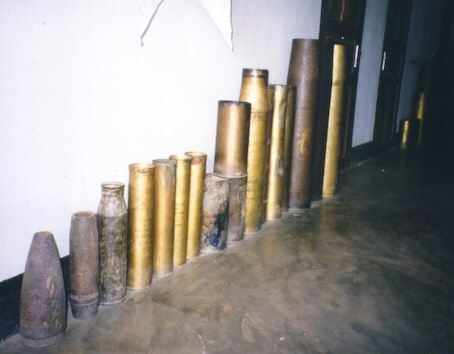
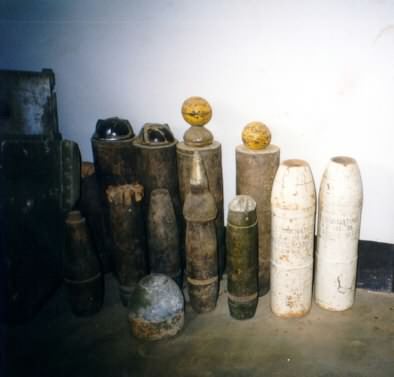
Various types of bombsMore bombs

All the eastern parts of Laos was heavily bombed during the Vietnam War. More bombs were dropped in this area than the number of bombs dropped during the entire Second World War (approximately 10,000 bombs for every citizen of Laos). Laos has the sad reputation of being the most heavily bombed country in the world ...

Ever.

The Ho Chi Min trail went through Laos, and the Americans tried to destroy it with every means. They tried everything from carpet bombing, dropping cases of Budweiser Beer (hoping that the Vietnamese soldiers would get drunk) to dropping washing detergent during the wet season (hoping the trail would get slippery). It is estimated that the Americans only succeeded in stopping 10 percent of the traffic on the trail.


In Vietnam, the Americans were not allowed to bomb within 500 meters from temples and hospitals. Their rules of engagement furthermore said that they were not allowed to return to their home base with a bomb load. The result was that they flew across the border to Laos and dropped all their bombs there. In Laos, there were no rules of engagement. They could bomb whereever they wanted to bomb.
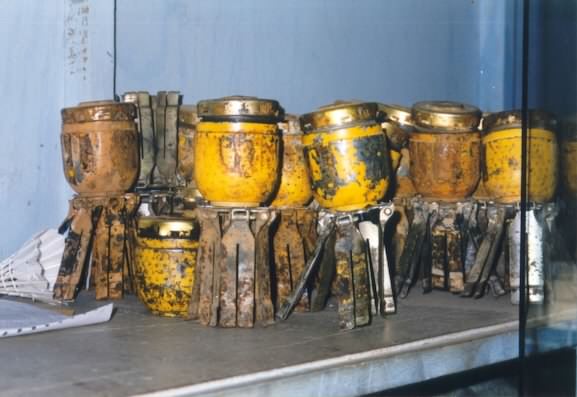
Cluster bombs


This also means that there is quite a large amount of UXO (Unexploded ordnance) in the country. Land mines and unexploded cluster bombs (shown on left) are some of the biggest problems.

In Laos, there are still approximately 4 accidents per day resulting from UXO.
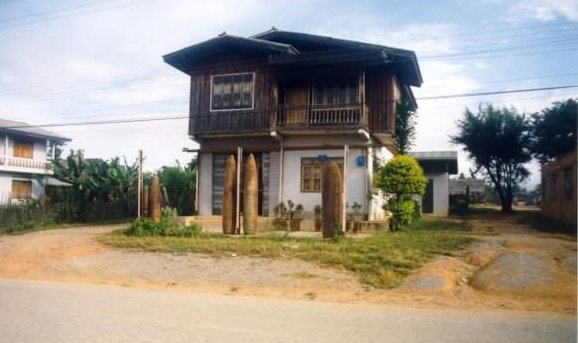
Bombs outside a house


Sad as this may seem, people have been pretty creative about using some of the leftover bombs. In this case they have used a couple of 2000-pound bombs as decoration outside the house.
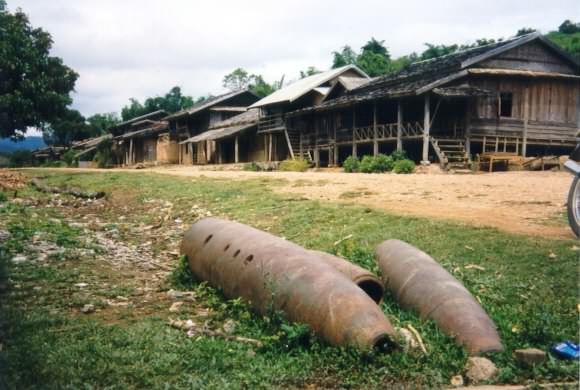
Bombs everywhere


No matter where you go you are reminded of the war.

In all the local villages there are unexploded bombs and shells from the cluster bombs.
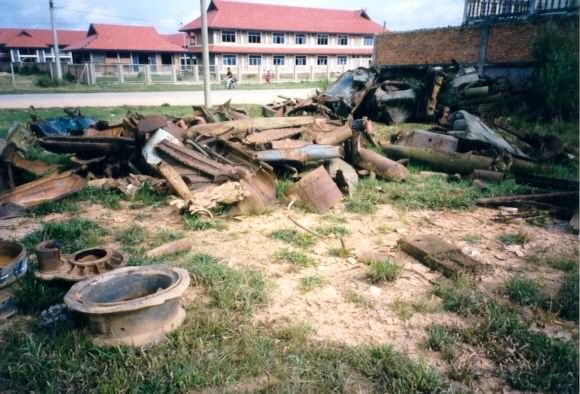
Bombs used as scrap metal


A lot of the remains from the war are sold as scrap metal. In this pile there are shells from cluster bombs, wheels from tanks etc. >>>
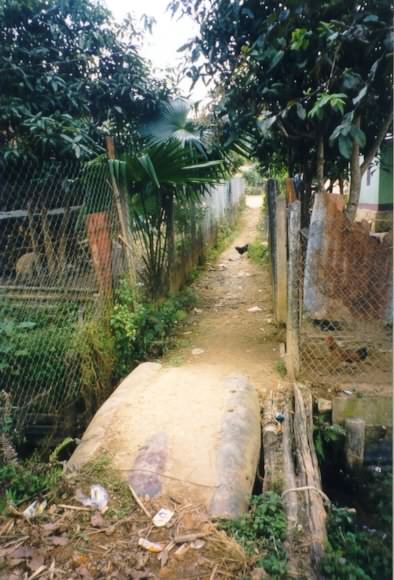

Bridge made from bombs


<<< Shells from the cluster bombs have been used to make this bridge.
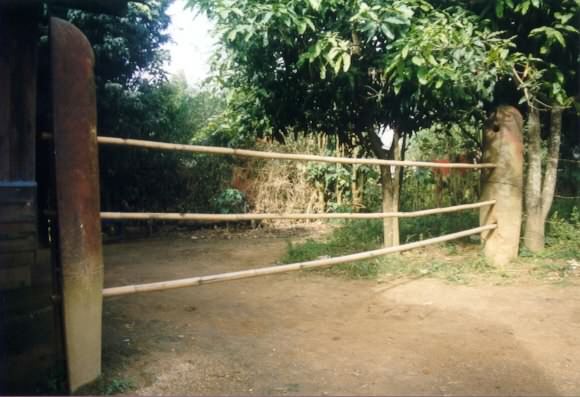

Fences made from bombs


Here as fence posts outside a house. >>>
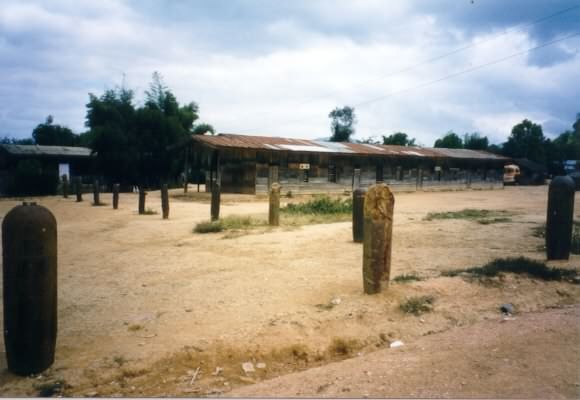
School with bombs


Outside a school, the schoolyard was surrounded by the shells from the American cluster bombs.


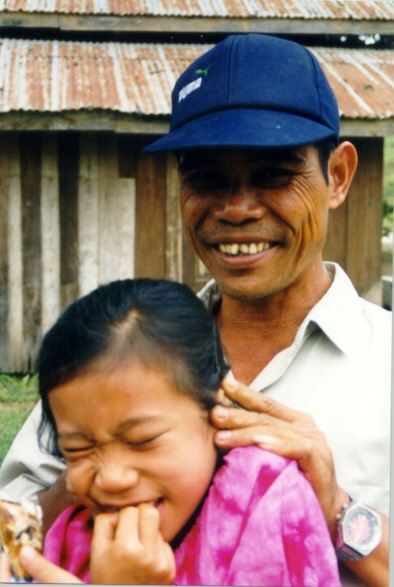
Grandfather  his orphan granddaughterSorrow . . .


This girl's parents were both killed by Hmong guerillas in 1997.

There are still areas where there are lots of problems with guerilla warfare. This is especially the case on Route 7, along the eastern border towards Vietnam and in the western part of Laos west of Vientiane, in the area between the Mekong River and Thailand.

The government is trying to control these problems, but it is difficult with such wast areas of jungle.

Unfortunately such incidents have affected a lot of people. This girl is not the only person in Laos who has lost her family.

Remember that the area has virtually been a permanent warzone since the Vietnam war, until the mid 90’s.

The person behind the girl is her grandfather.
He is now looking after her to make sure that she gets an education

He is after all, her only family left.
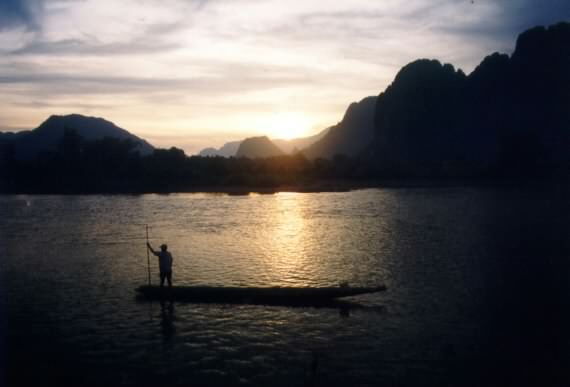


Beautiful SunsetHope . . .


Looking at this beautiful photo, it seems really serene and calm.

You couldn't really tell that things are pretty bad in some parts of the country.

The northern part of Laos is especially poor. The mountainous terrain limits what can be grown. Outdated farming methods using “slash-and-burn” of whole mountainsides are not very appropriate for feeding a growing population. A lot of the western countries are represented in Laos with health care workers. What Laos really needs at the moment is help using more environmentally-friendly farming methods, which at the same time improve the growing of crops. The slash-and-burn method basically means they burn a whole mountainside to grow rice. There is nothing left to hold back the nutrients in the soil, and fertiliser is not added. After a few years there are no more nutrients on this mountainside and they move on to the next mountainside. They need to learn how to grow crops in terraces and add fertiliser from their animals to the soil.
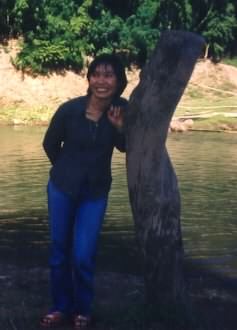

Vinchu - a Red Cross worker

One of the problems with growing rice is that the men are unempleyed most of the year while they are waiting for the rice to grow.

Vinchu is working for the Swiss Red Cross. She intends to buy a piece of land in the 32-kilometre village of Muang Xai, and convert it into a fish farm. This would keep some of the men occupied for most of the year. The profit from the fish farm could be used to take care of the village’s basic needs such as education of the children and buying medicine.

Vinchu is one of the few catholics in the country. She is fluent in English and has had a primary healthcare education. This has enabled her to get a job for one of the foreign representatives in the country, which means she is getting a salary that is considerably higher than what her peers get. Also she gets paid in US dollars instead of kip, the local currency.

On average, the government employed in Laos receives 100.000 kip a month (approx US$30). This is not enough to survive on, so most people have either two jobs or let the wife work as well. Lots of people have small vegetable gardens. This allows them to grow a few things to sell at the markets.
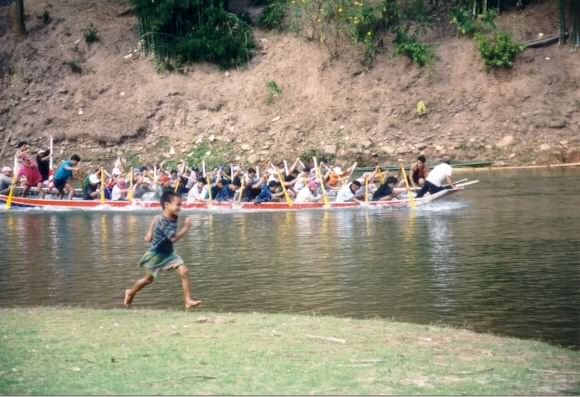

Dragon Boat Race


The employees from the hospital in Muang Xai have not received any money from the government for more than 6 months. The government declared that they should participate in the annual dragon boat race.

Vinchu paid for transportation of the employees to the local river, and other expenses, from her own paycheque.

Most of the people in the boat are doctors and people from the hospital.
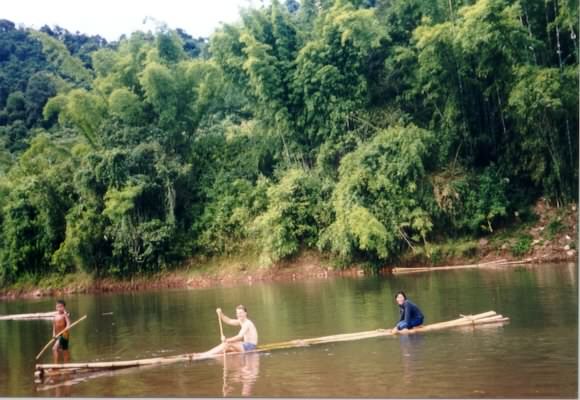


Me in a sailing raft


Vinchu and I in a sailing raft!


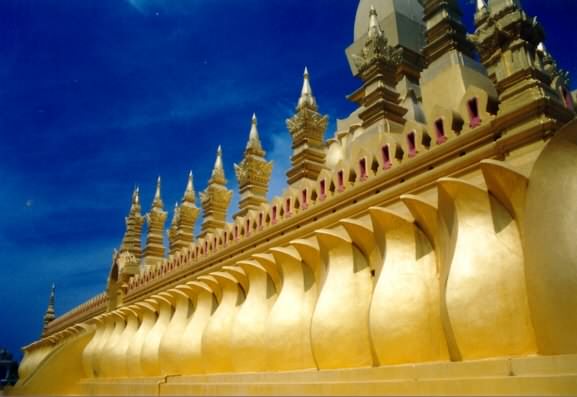
Great Stupa at Vientiene
Religion . . .


Buddhism is a big part of Laos.

The holiest place in Laos is the stupa in Vientiane. There are practically no temples in the eastern part of Laos due to heavy bombardment during the Vietnam War. The only great temples around is the one in Vientiane and Luang Prabang.
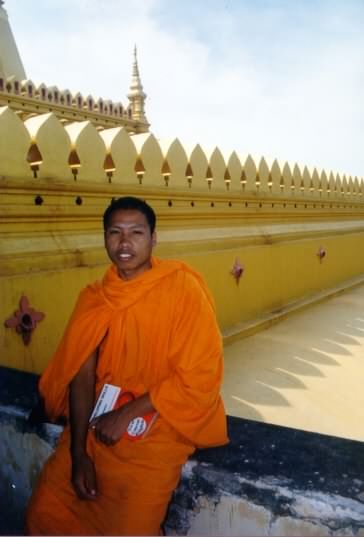

Monk at Great Stupa


The Buddhists in Laos are a bit less extremist than in Thailand. People do not have small alters in their homes, and it is not compulsory for the males to become monks.

In Laos, becoming a monk is voluntary. It is mainly people from the poorer parts of the country that become monks, because it is a good and cheap way to get an education. Some of them are studying English and are therefore very eager to practice their English on the tourists.
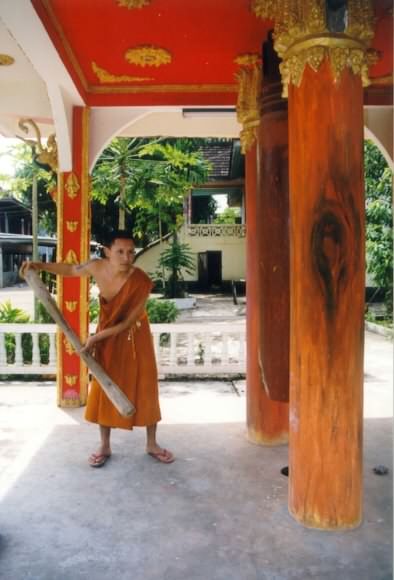
Monk calling for prayer


When they call the monks in for prayer, they either beat a big drum or the use a wooden ram to chime the bell.


Tribes . . .
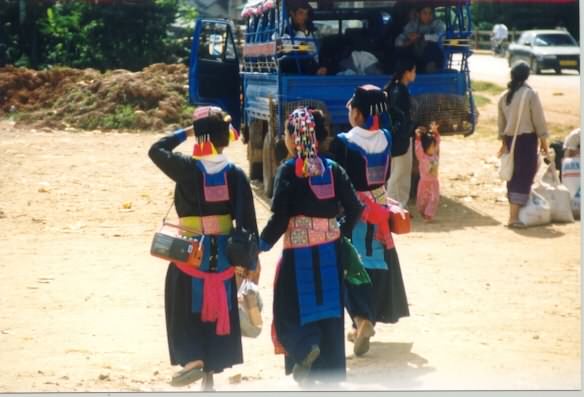
3 Hmong girls in traditional garb

There are three main tribes in Laos. One of these tribes is called Lao Tsung (or HMong).

They live mainly in the northern part of the country.
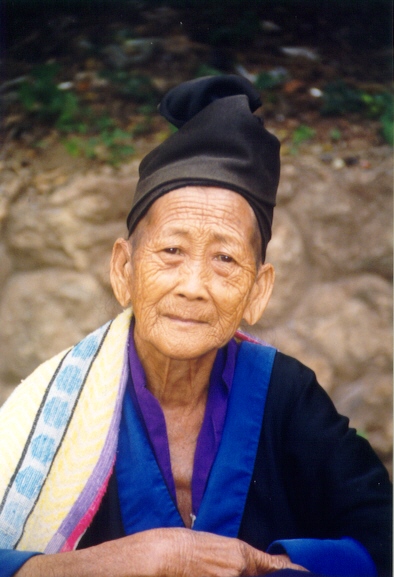
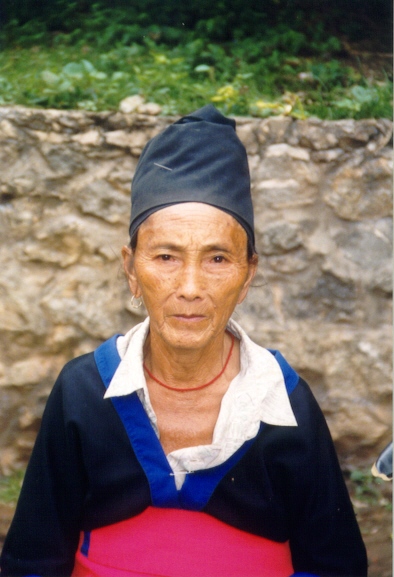
Old Hmong WomanMe wearing a Hmong hatOld Hmong Woman 2

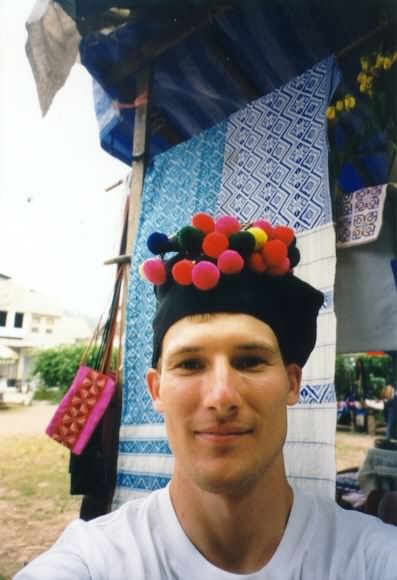
The women still wear traditional clothing. I am wearing a traditional Hmong hat.

A Hmong Woman and I

The Hmong have a dialect that is different from the other tribes. They keep to themselves and are very isolated from the rest of the society.
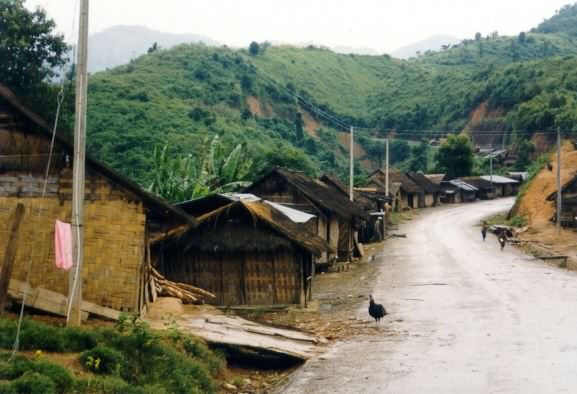
Hmong Village

The difference between the Hmong village and the other villages is that the Hmong build their houses on the ground instead of on stilts.

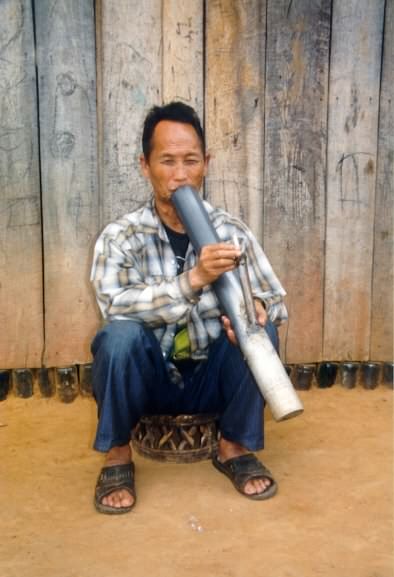
An Opium PortraitMan smoking opium

The Hmong is responsible for most of the opium growing and trading in Laos. The government is trying to stop this trade, but it is difficult as the Hmong live in areas that are not easily accessible.

The Hmong are also responsible for most of the problems in the area around Route 7.


The Children of Laos . . .

The kids in Laos are wonderful. There are always kids around you no matter where you go and they are always very joyful and curious to find out who you are.
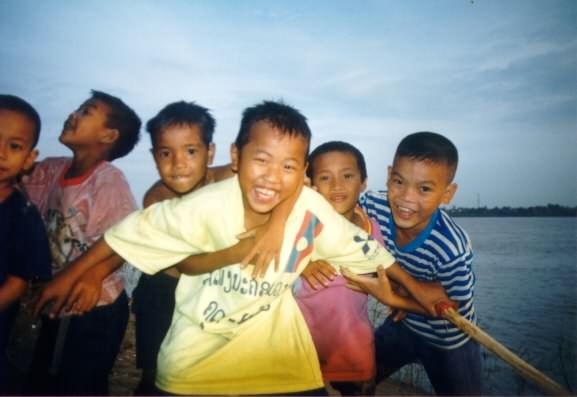
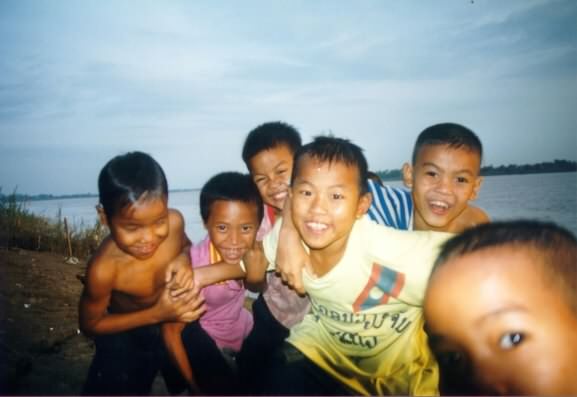
Kids playing by a riverKids playing by a river

You see a lot more kids playing with each other in Laos than in the western world. I guess it also somehow encourages them to grow up being socially responsible. This could be the simple reason why people are so friendly and welcoming in this country.

Lots of people say that it is because of the religion but I believe that it is something more fundamental than that. People in the western world have just forgotten how to be responsible towards each other. Why? Maybe they do not spend enough time in one another's company.
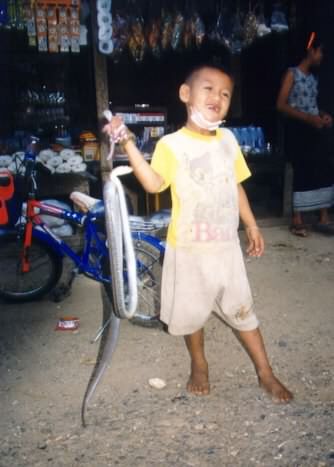
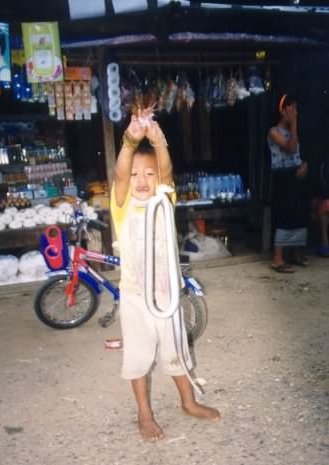
Kid playing snakeKid playing snake

In Vang Vieng, I saw a kid playing around with a snake. It did not seem to bother him or his parents that it might be poisonous.
I don't know if the pad on his chin was caused by the snake. I doubt it though since he had been very sick.

He was pretty proud of his snake.
I am not sure what kind of snake it was. I did see a few other snakes around, especially at the temples.
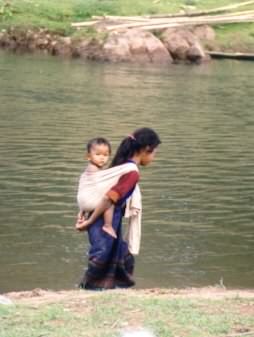
Girl carrying child


It tends to be the elder children’s task to look after their younger brothers and sisters while the parents are busy. The system seems to work fairly well since the whole group of children play together, no matter what their age group. It is therefore not such a big burden as some might think.

The photo was taken approx 40 kilometres north of Muang Xai (where Vinchu was).
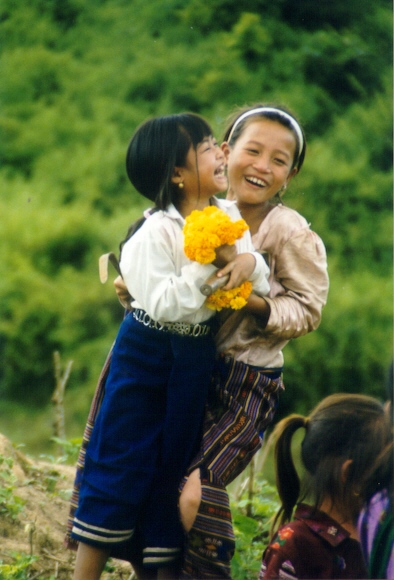
Beautiful flower girls


This photo on the right is one of my favourites.

It was taken in the northern part of Laos, at the 32-kilometer village outside Muang Xai.

The girls were collecting flowers outside one of the local schools.
Beautiful flower girls


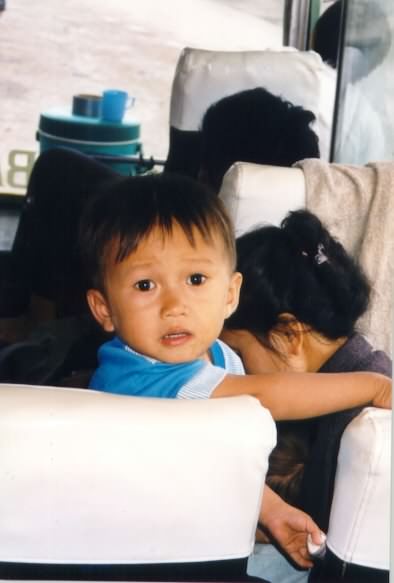
The younger kids tend to be afraid of Europeans. Most of them have never seen a white face before.

This little fellow here was a bit worried about my presence...
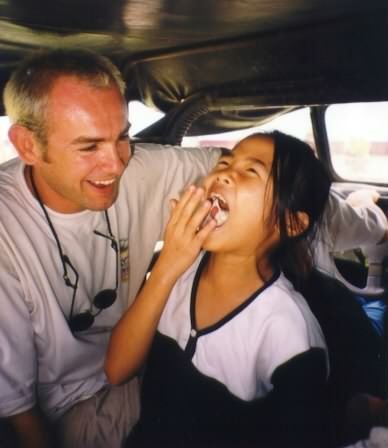
Girl eating chewing gum


This is the girl’s first piece of chewing gum... Pretty interesting to watch! *smile*


In the cities kids love to have their picture taken.
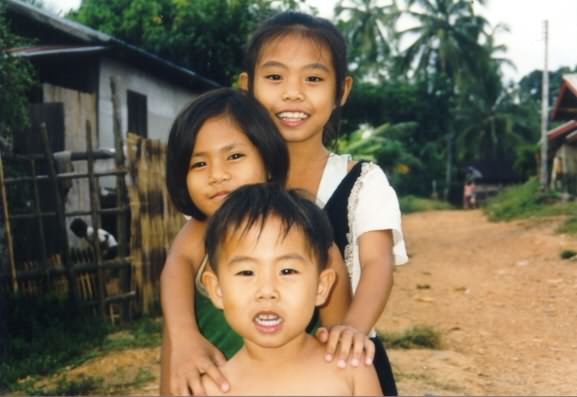
3 kids


Tanoy's mother and friend


The Tanoy Family . . .

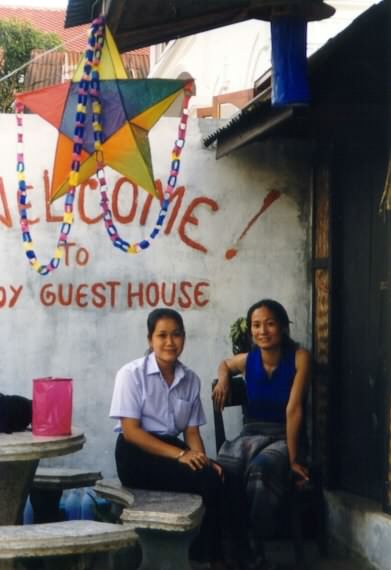
I stayed a few days with a family running the Tanoy Guest house.

The eldest daughter of the place was called Tanoy.

The girl on the left of this photo is one of Tanoy’s friends from school.
The woman on the right is Tanoy's mum. Tanoy’s mum is 40 years old and has had 6 kids. She does not look that old and still looks absolutely stunning.


Below are a series of shots of Tanoy herself.

I guess she will one day take over the guest house.
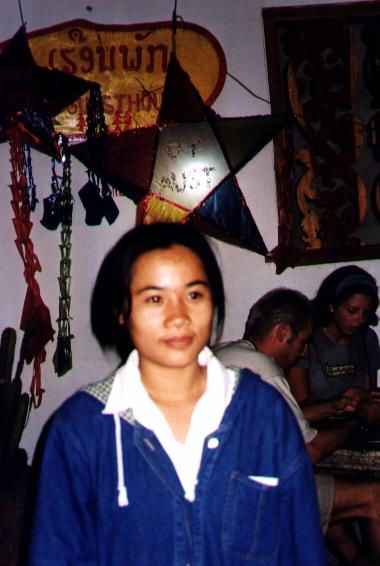

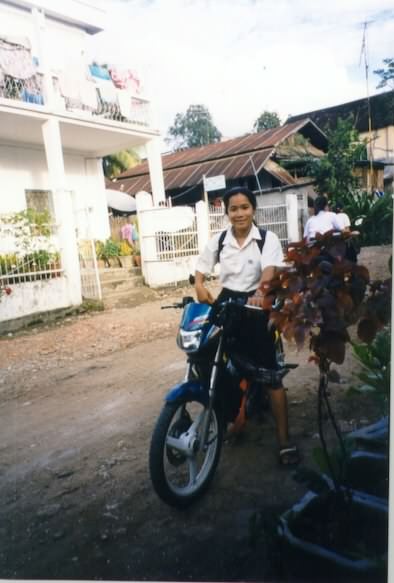
Tanoy herselfTanoyTanoy on scooter

Whilst I was staying at the Tanoy Guest House, I saw the preparations for the annual Water Festival.

Every year when the monsoon ends and Water Festival coincides with the full moon, The festival included Dragon Boat racing.
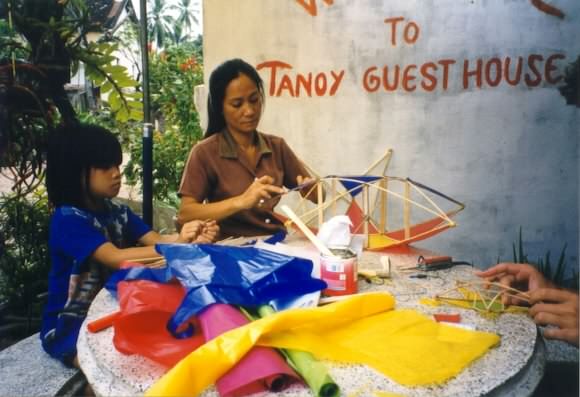
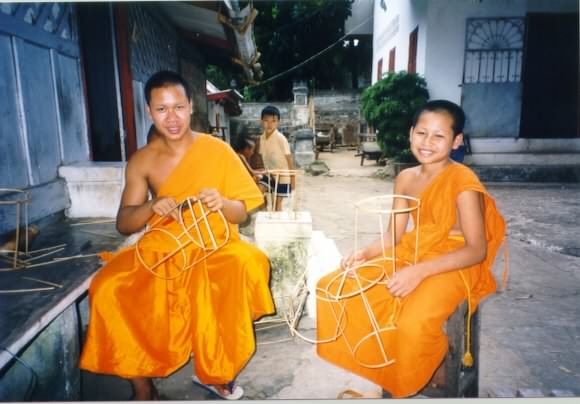
Tanoy's mother making lanterns for the Water FestivalMonks making lanterns for the Water Festival

Everyone was taking part by making lanterns for this festival, including the monks!

All the monks were making lanterns to decorate the temples.
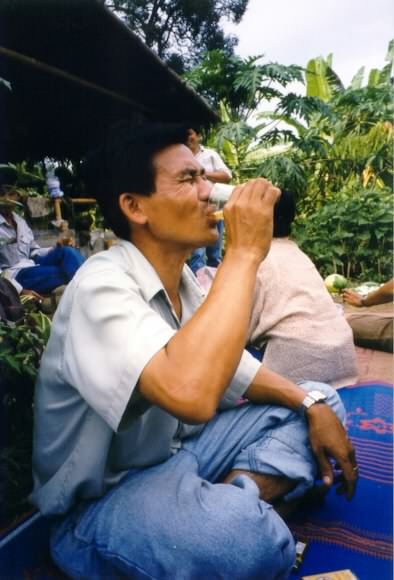
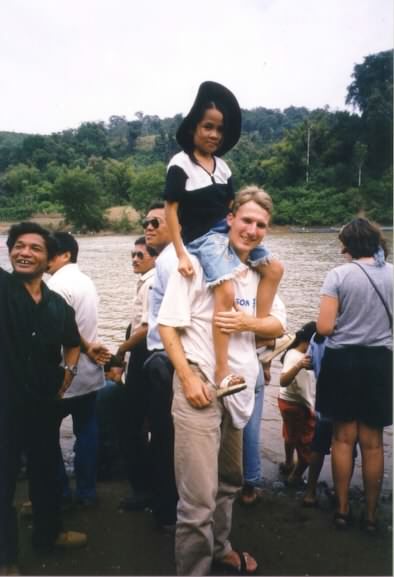
Man drinking already!Party starts!Girl on my shoulders

The festival lasts for three days.

During the festival, they celebrate with all their friends and families. They also drink a lot of “Lao Lao” (or Laos Whisky), which is a kind of rice wine.

Everyone walks down to the river during the day to watch the boat races.

Later in the evening, everyone parties some more and drinks more beer. It does not matter that it is pouring down. The whole village is at the party and everyone is happy.
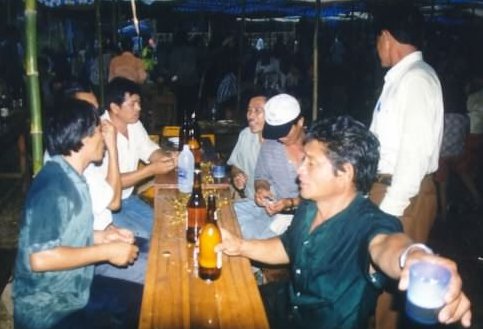
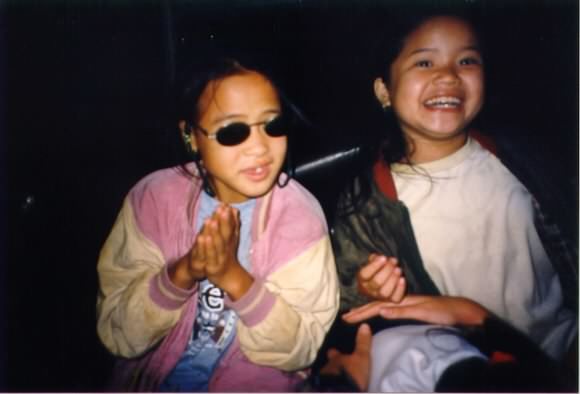
Drinks galore!The kids are also having a good time!

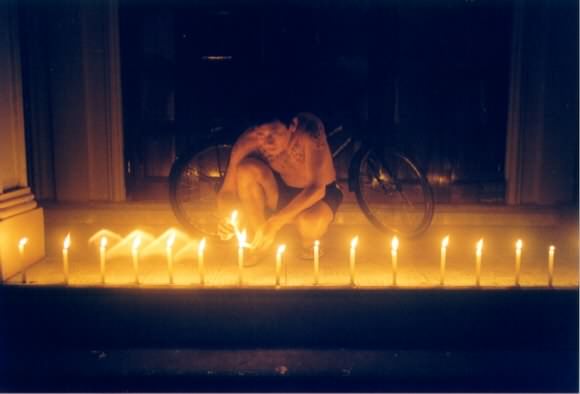
On the night of the festival, people light candles. They also float the candles in the rivers. House lit with candlesMan lighting candles
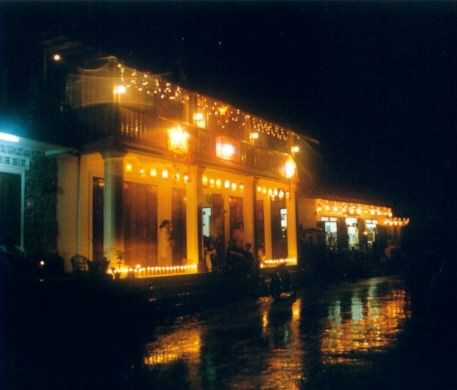
Unfortunately it was raining a lot that night, so people had difficulties keeping the candles lit.
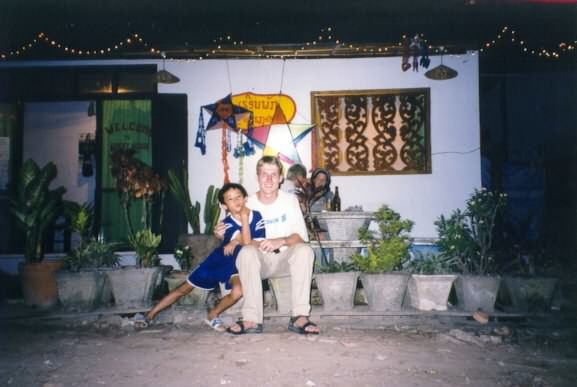
Outside the Tanoy House

At the end of the day, I managed to get a photo of me sitting outside the Tanoy Guest House!


Food . . .
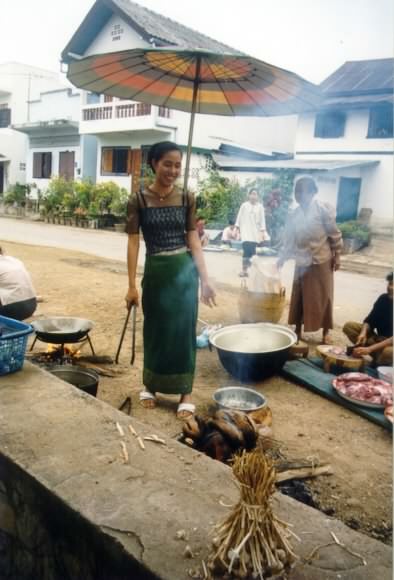
Young woman cookingPig being weighedWater buffalo

The food is excellent in Laos.
It takes some time to get used to eating noodle soup for breakfast, but once you get used to it, it is excellent.

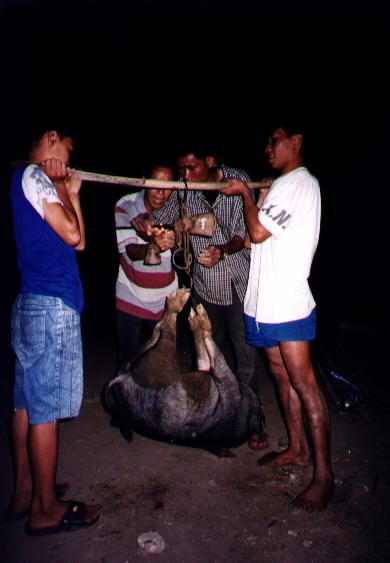
There are pigs and turkeys all over the place. Above is a pig being weighed.

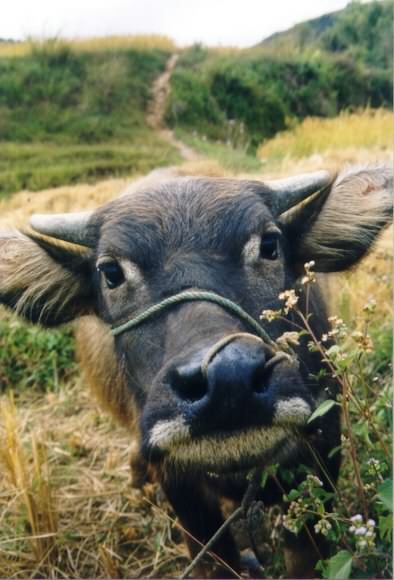
An essential part of farming is the water buffalo - it is important for pulling the heavy plough and there feet are designed to walk in water-logged gxround.
Old woman carrying heavy basketsGirl throwing rice

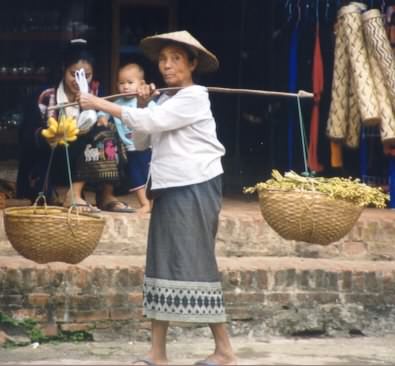
All ingredients used are very fresh. People are walking around selling vegetables on the streets.

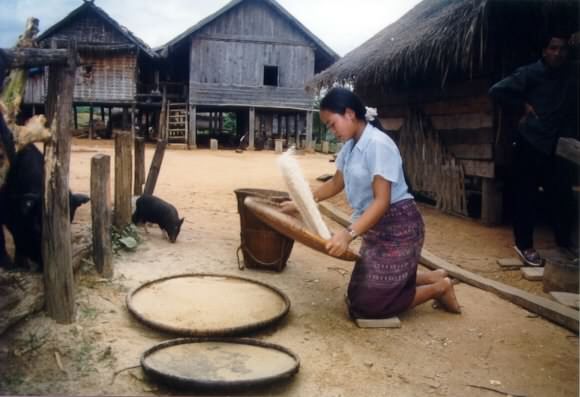
It is hard work getting the rice ready for eating. First the rice is to be pounded to break the husks. Then thrown up in the air to remove the husks from the rice itself.


Created: Jan 2000 Last Updated: 16 Sept 2001

15. March 1999 10:32
by Rene Pallesen
0 Comments

Thailand

15. March 1999 10:32 by Rene Pallesen | 0 Comments

thailand
Statue at Grand Palace
Thailand ( 1999 ) . . .

On my way back from Laos, I stayed in Bangkok for a few days, visiting a friend whom I have known for a long time.

On the right, I am standing in front of a huge statue at the Grand Palace in Bangkok. There are many statues like this, very ornate and detailed. They are brightly coloured and some of them can look scary! As you can see in the background, the architecture and design of the roof is also very detailed and many of these were built a very long time ago by very gifted artists.

Nui


Here is Nui on the left.

She was the girlfriend of one of my friends at University in Denmark. She used to be a lecturer at the University of Bangkok and specialised in software design.

I stayed at her family's house for a few days in the outskirts of Bangkok. It was very nice to get away from all the pollution, noise and chaos of inner city.

You will now be happy to know that Nui has finally married Søren after all these years!

Me on a canal cruise


I am on a canal cruise!

Much of the water near the cities are very polluted, but it is very interesting to see the floating markets in Bangkok - yes, you will see people selling vegetables and meat from little boats...


Created: Jan 2000 Last Updated: 16 Sept 2001
Perfect Moments Photography | A Rene Pallesen Journal

Home

27. March 2019 14:03
by Rene Pallesen
0 Comments

Nikko - Japan

27. March 2019 14:03 by Rene Pallesen | 0 Comments


27. March 2019 14:03
by Rene Pallesen
0 Comments

Kanasawa - Japan

27. March 2019 14:03 by Rene Pallesen | 0 Comments


25. March 2019 10:03
by Rene Pallesen
0 Comments

Australian Formula 1 grand prix

25. March 2019 10:03 by Rene Pallesen | 0 Comments

On the weekend I went to the Formula 1 grand prix in Melbourne. It was a work sponsored event with o
On the weekend I went to the Formula 1 grand prix in Melbourne. It was a work sponsored event with one of our vendors and great access to see the race and the pits.

Here is some of the photos from the event.


5. February 2019 11:02
by Rene Pallesen
0 Comments

Japan - Akihababa

5. February 2019 11:02 by Rene Pallesen | 0 Comments


Perfect Moments Photography | A Rene Pallesen Journal

Home

6. February 2014 04:19
by Rene Pallesen
0 Comments

Aiden pedalling his tricycle

6. February 2014 04:19 by Rene Pallesen | 0 Comments

aiden pedalling his tricycle


Aiden has finally learned how to ride his little tricycle (the one his grandma gave him just before she passed away) by using the pedals.

He is very proud...hopefully he is able to soon using his new skills on the bike he got for christmas.


Even Lucas was proud and gave Aiden the victory jump.


6. February 2014 04:02
by Rene Pallesen
0 Comments

Baking bread - Walnut and Fig bread

6. February 2014 04:02 by Rene Pallesen | 0 Comments

baking bread walnut and fig bread


At the moment I am going through a phase where I Loooveee baking bread.

There is something really satisfying about working with something that is so diverse and alive. And there is nothing like eating a freshly baked bread with a nice crust.


So far I have found a couple of recipes I really like...one of them is this walnut and fig bread.


On the weekend I made it for the family dinner and they wanted the recipe.

- 400g white flour into a bowl
- Add 100g of wholemeal flour
- Add 10g of sea salt flakes
- Add 5g of dry yeast into the bowl
- Add 335ml of water
- Mix it all together using your hand
- Kneed it by stretching it out on a table and then roll it up...do this 3-6 times
- flatten the bread to a thickness of about 15mm and then place walnuts and chopped figs on top. Roll up the bread with the walnuts and figs inside.
- Stretch the bread another couple of time and roll it up until the walnuts and figs are mixed into the bread.
- Put the bread in a bowl and cover it with glad wrap (or better yet, just leave it on the table and cover it with the bowl) for one hour...knock back the bread every 20 minutes (3 times in total).
- Leave the bread for another one hour (without knocking it back). After 30 minutes (30 minutes prior to baking) start preheating the oven with a baking/pizza stone at 250 degrees. Also put a small metal tray in the oven (for the ice cubes)
- Add a bit of semolina (or flour) to the baking stone and to the top of the bread to avoid it sticking.
- Place the bread on the baking stone and make a couple of cuts to the top of the dough.
- Add 3-4 ice cubes to the metal tray
- Close the oven and turn down the temperature to 200 degrees immediately.
- Bake for 30 minutes and remove from the oven.

23. January 2014 12:39
by Rene Pallesen
0 Comments

Hunter Valley Gardens light show.

23. January 2014 12:39 by Rene Pallesen | 0 Comments

hunter valley gardens light show


Every year hunter valley garden put up a light show where they decorate part of the garden in christmas lights.

They leave this open until end of January, so this year we headed up there to have a look....enjoy.


23. January 2014 12:28
by Rene Pallesen
0 Comments

Hunter Valley Trip with family

23. January 2014 12:28 by Rene Pallesen | 0 Comments

hunter valley trip with family


Last weekend we made an overnight trip to the Hunter Valley a couple of hours drive north of Sydney.

The main reason was to see the lights in the Hunter Valley Garden (see separate post), but also to go and taste some wine and generally have a good time.

Pretty soon after we arrived the girls were distracted by the chocolate and cheese places.


We did however go to a couple of places for wine tasting.


We also had some really nice food up there. I was especially impressed by a really nice gnocchi salad I had....it was yummi.


Outside it was really hot...like 39 degrees in the shade. There were a couple of horses relaxing under a couple of trees.


We decided an alternative approach of checking into our hotel and jump in the pool to cool off.

In the evening we went to the light show and on the following day we just did a number of wineries before heading back to Sydney.

17. January 2014 12:11
by Rene Pallesen
0 Comments

Ten Pin Bowling

17. January 2014 12:11 by Rene Pallesen | 0 Comments

ten pin bowling


On the weekend we did some ten pin bowling with the family.


Kim had managed to secure some cheap tickets so it was great to play against the family.

We had one lane for the kids (with rails) and one lane for the adults.


I had a bad start and was behind much of the game, but my luck eventually caught up and I started playing a good game.


Afterwards we had a bit of a play in the games arcade


Aiden was absolutely terrified of the big scary bear (I can see why).


The kids also tried to figure out what this machine was for:


I love some of the old 50's style decor.


17. January 2014 12:08
by Rene Pallesen
0 Comments

Water Play

17. January 2014 12:08 by Rene Pallesen | 0 Comments

water play


It is summer and Lucas and Aiden is enjoying a bit of water play in the back yard on warm days.


15. January 2014 02:32
by Rene Pallesen
0 Comments

Baptism

15. January 2014 02:32 by Rene Pallesen | 0 Comments

babtism


This Sunday we had Aiden and Lucas baptised in the local church in Maroubra. Lucky that both Aiden and Lucas behaved throughout the 2 hour long service.

15. January 2014 02:29
by Rene Pallesen
0 Comments

Malua Bay - Rocks

15. January 2014 02:29 by Rene Pallesen | 0 Comments

malua bay rocks


The rocks at Malua Bay were quite spectacular and dramatic. A couple of times I ventured down to try my luck with some photos around sunset (grey every day)...I really suck at this style and constantly got my tripod soaked.

These were the two best results.


9. January 2014 11:38
by Rene Pallesen
0 Comments

Malua Bay - The Beach

9. January 2014 11:38 by Rene Pallesen | 0 Comments

malua bay the beach


Having the beach so close was great. I went for a run every morning before breakfast.


We also had a lot of fun playing at the beach with the kids.


And everyone was just really enjoying the time there.


9. January 2014 11:33
by Rene Pallesen
0 Comments

Malua Bay - Indian dinner

9. January 2014 11:33 by Rene Pallesen | 0 Comments

malua bay indian dinner


On news years day we had a very nice dinner at an Indian restaurant (I was soooo full afterwards).

The restaurant also had lice indian music as entertainment.


Perfect Moments Photography | A Rene Pallesen Journal

Home

6. February 2018 16:03
by Rene Pallesen
0 Comments

Morning Markets - Laos

6. February 2018 16:03 by Rene Pallesen | 0 Comments

The morning markets are interesting. This is where the locals still go to buy their fresh produce an
The morning markets are interesting. This is where the locals still go to buy their fresh produce and all kinds of specialties are being sold here. It would be easy to go here and get the ingredients for some really delicious food.

There are also some unusual things that we don't see in our western kitchens. such as:

Dried Squids:


Fresh fish - of cause, but this have sharp teeth.


A protein and herb table that would make most chefs (and diners) salivate:


The Chillies in Lao are more hot than in Thailand - We loved the heat.


A pig:


River crabs:


Beetles:


Dried rats:


Caterpillar - these are yummi when fried:


Frogs:

River snails:


Dried squid, shrimps and fish:


5. February 2018 16:03
by Rene Pallesen
0 Comments

Bamboo Bridges - Laos

5. February 2018 16:03 by Rene Pallesen | 0 Comments

During the dry season the people of Luang Prabang builds traditional bamboo bridges across the small
During the dry season the people of Luang Prabang builds traditional bamboo bridges across the smaller river. This saves them a lot of time (and cost) to cross directly into the centre of town rather than a long detour to the other larger bridges.

It also earns them a small income to charge foreigners a small fee to cross the bridges.


5. February 2018 16:03
by Rene Pallesen
0 Comments

Silk - Laos

5. February 2018 16:03 by Rene Pallesen | 0 Comments

They still manufacture silk they way they used to. It was interesting for the kids to see the proces
They still manufacture silk they way they used to. It was interesting for the kids to see the process from small caterpillar eggs that hatch to worms to the production of the silk itself.


I had always wondered where the colour blue (Indigo) came from. I knew it used to come from a seashell, but I was fairly certain that this wouldn't be the case here. It turns out that they use a special leaf from a plant that when mixed with water and left fermenting/oxidising turns into a blue dye.


They also use plants for most of the other colours.


After they spin the thread they use traditional weaves to make it into pieces of garment. These days the silk garments are fairly expensive - hundreds of dollars, but it used to be really cheap.

4. February 2018 22:02
by Rene Pallesen
0 Comments

Pak Ou cave - Laos

4. February 2018 22:02 by Rene Pallesen | 0 Comments

A two hour boat ride north of Luang Prabang is the Pak Ou cave. Since we were traveling two families
A two hour boat ride north of Luang Prabang is the Pak Ou cave. Since we were traveling two families the best way to get there was to hire a slow boat just for us.


The flow boats are long narrow boats that are ideal for navigating the Mekong River. This part of the river is full of underwater rocks but the boats seem to navigate these treacherous waters with ease.

Having the boat for ourselves gave us more flexibility with regards to how long we wanted to spend at the cane and also meant that we have more room to move around.


The front of the boar is where the captain sits and steers the boat. After this there is a section for the passengers followed by a small pump toilet and then the living quarters for the captain and his family. Out the back there is a small kitchen for them to do the cooking.

The cave is upstream into an area full of limestone mountains.


The many boats moor at a long and wobbly floating bamboo bridge that takes you to the cave itself.


The cave itself is not big but it is full of small Buddhas that have been put there over hundreds of years. You can tell that this used to be an important place of worship.


Now however the place is so crowded with tourists (guilty here too) coming in on boats that it is hard to move around. I could not stop myself from taking this photo of Buddha holding up his hands to stop more boats arriving.


At the top of the hill the hill there is what I think is a more 'pleasant' cave. It is equally interesting and much less crowded because most tourists don's make it up the many steps to the top.

4. February 2018 16:03
by Rene Pallesen
0 Comments

Lao Lau (rice whiskey) - Laos

4. February 2018 16:03 by Rene Pallesen | 0 Comments

The traditional Lao Lau is still being made. Just north of Luang Prabang on the river there is a lit
The traditional Lao Lau is still being made. Just north of Luang Prabang on the river there is a little village on the river called Whiskey village whos main income is from the production of Lao Lau.


When I was there two decades ago this is what the locals were drinking (now they drink beer instead). I still remember the foul taste from the home brew that was distilled in large oil drums after having been fermented in large clay pots. Whenever I see it I always wonder if distilling strong alcohol right next to an open flame is the wisest of ideas!?!?


The process itself hasn't changed, but these days most of the whiskey is sold to tourists and I tastes a lot more pleasant that it did back then.


3. February 2018 15:03
by Rene Pallesen
0 Comments

Food - Laos

3. February 2018 15:03 by Rene Pallesen | 0 Comments

The food in Laos is good. It is traditional cooking mostly still cooked over an open fire.You see th
The food in Laos is good. It is traditional cooking mostly still cooked over an open fire.


You see them start cooking the food well before sunrise in big pots.

The food itself is mostly a fusion of Thai and Vietnamese. It has all the noodle soups from Vietnam, but with the more street food and spice of Thailand. The picture below is a typical noodle soup with a traditional cube of coagulated blood.


We were eating a lot from small street type restaurants following the rule that is had to be popular with the locals. The logic behind this is that the locals would know what is good and would also be choosy regarding the quality of the food, so chances are that it would be fresh and not cause food poisoning (none of us or the kids had any issues on the trip).


There are some dubious food there, such as some of the meat BBQ where they sometimes have the meet cooked earlier on the side of the BBQ and then just re-heat it when you order it.


Also be careful with some of the food stalls where the food may have been sitting there for most of the day and often from the day before.


From a 'snack' perspective there are some personal favourites that I absolutely love such as the BBQ fried squid - the packet stuff is just not the same.


Also the Bamboo and coconut fried rice is delicious - they sell them at bus and train stations and especially the purple rice one is yummi!


The freshly made puffed breads over an open fire - they will use two rakes to flip them until they are done.

2. February 2018 00:02
by Rene Pallesen
0 Comments

Temples - Laos

2. February 2018 00:02 by Rene Pallesen | 0 Comments

The temples in Luang Prabang are some of the most beautiful anywhere. Yes, Thailand has some amazing
The temples in Luang Prabang are some of the most beautiful anywhere. Yes, Thailand has some amazing temples, but these are different. They are smaller, and more intricately decorated.


1. February 2018 23:02
by Rene Pallesen
0 Comments

Luang Prabang - Laos

1. February 2018 23:02 by Rene Pallesen | 0 Comments

Luang Prabang is without a doubt the cultural highlight of Laos. The old part of the city is beautif
Luang Prabang is without a doubt the cultural highlight of Laos. The old part of the city is beautiful and there are good reasons why is has been heritage protected.

I believe it has the most beautiful temples of South East Asia - they are not the largest or even the oldest, but the amount of details that has been put into them is absolutely stunning.


In addition to this there are a lot of other very interesting things to see in and do in the city, which I will cover in later posts.

The city itself is situated between two rivers where one of them is the Mekong which is still fairly busy with slow boats and ferries (The chinese are building a large bridge across the river north of the city)


The section between the two rivers form the city itself which consist of four parallel streets each about a kilometer long.


Everything within the city itself can be covered on foot and in the evening the main streets are blocked for card and reserved for pedestrians.

The place is dominated by a big hill with a small temple and stuba on top. It is very popular with tourists to climb the hill around sunset. And there is a great view of the mountains from the top.


There are some things that have changed in the city since I was there the last time. The most noticeable is the amount of tourists and fine hotels - and here it is really the more wealthy middle aged Europeans you see. The main street of the old city is full of modern western European influenced restaurants, souvenir and antique stores.


Fortunately you don't have to travel further that to the parallel streets to fine more low key Laos places to eat.

Also, last time I visited, I stayed in a small guest house near the city centre called Tanoy Guest House. When I stayed here I became good friends with the family and the place was named after the oldest daughter who's name was Tanoy.

The place is still there and apart from a larger fence it looks pretty much unchanged.


29. January 2018 21:01
by Rene Pallesen
0 Comments

The War - Laos

29. January 2018 21:01 by Rene Pallesen | 0 Comments

The &#39;secret&#39; war in the 60&#39;s and 70&#39;s had a major impact on the country. A massive amount of bombs w
The 'secret' war in the 60's and 70's had a major impact on the country. A massive amount of bombs were dropped by mostly the Americans in mostly the Northern and Eastern part of the country. This was partly an internal civil war but also to stop the North Vietnamese using the country as a supply route.

To get an insight into this was I can highly recommend the books by Christoper Robbins called 'The Ravens' and 'Air America'.

The impact today is that un-exploded ordnance (mines, cluster bombs etc.) is covering large parts of the country and that every year lots of people including children gets injured or killed.

It is also very noticable, especially in the Hmong villages that there is no presence of old men. This is because most of these were killed either during the war where especially they took heavy casualties despite the American support or through 'education' camps after the war.

Last time I went to Laos I went to Plains of Jars which was one of the most heavily bombed areas and the debris was everywhere. We weren't going there on this trip, but to give the family and friends an insight into the history and the dangers to present people we visited the COPE organisation in Vientiane.

Here is Aiden in front of an unexploded (disarmed) clusterbomb. Looks just like a ball and tempting for kids to play with.


These were dropped from canisters on aircraft with several hundred in each load. It is estimated that 1/3 of these didn't explode on impact.


This map shows the areas most effected.


If you look for the bombs they you see them everywhere - mostly disarmed and used as fence posts.


There is also remains of anti aircraft guns such as this one in Luang Prabang. The barrel had been removed but everything else still worked on it and they could turn it by rotating the handles, much to the amusement of the kids. During the war kids only a little older than our kids would have been fighting at the front lines.